The Beauty of the Blue Lizard
The blue lizard, with its stunning blue coloration, captivates nature lovers and researchers alike. This article explores the biology, habitat, and behavior of this fascinating reptile, as well as its role in the ecosystem and the threats it faces.
The Fascination of Lizards
The Earth is home to a vast array of fascinating creatures, but few groups are as lovable and diverse as lizards. These reptiles, with their colorful scales and intriguing behaviors, captivate nature enthusiasts and researchers alike. Among them, the blue lizard stands out as a rare gem, showcasing a unique beauty that mesmerizes all who have the privilege of observing it. The vibrant coloration of their bodies, which ranges from bright blue to softer shades, is a sight worthy of spectacle, especially under sunlight. In addition to its apparent elegance, the blue lizard offers a diversity of patterns and behaviors that deserve exploration. This species, primarily found in grassland habitats and open forests, represents a leader in the lizard kingdom in terms of adaptations and special characteristics. The ability to change color to camouflage itself in its environment is a classic strategy for escaping predators. Unlike many of its relatives, the blue lizard is known for its social behavior. They often interact with one another in ways that suggest a deeper bond among group members. This sociability, combined with their impressive appearance, makes the blue lizard an intriguing subject of study in behavioral biology. Each sighting of this creature is an opportunity to witness the beauty of wildlife. To learn more about fascinating creatures that inhabit our planet, visit Jumping Spider: The Most Intelligent Arachnid.
Physical Characteristics of the Blue Lizard
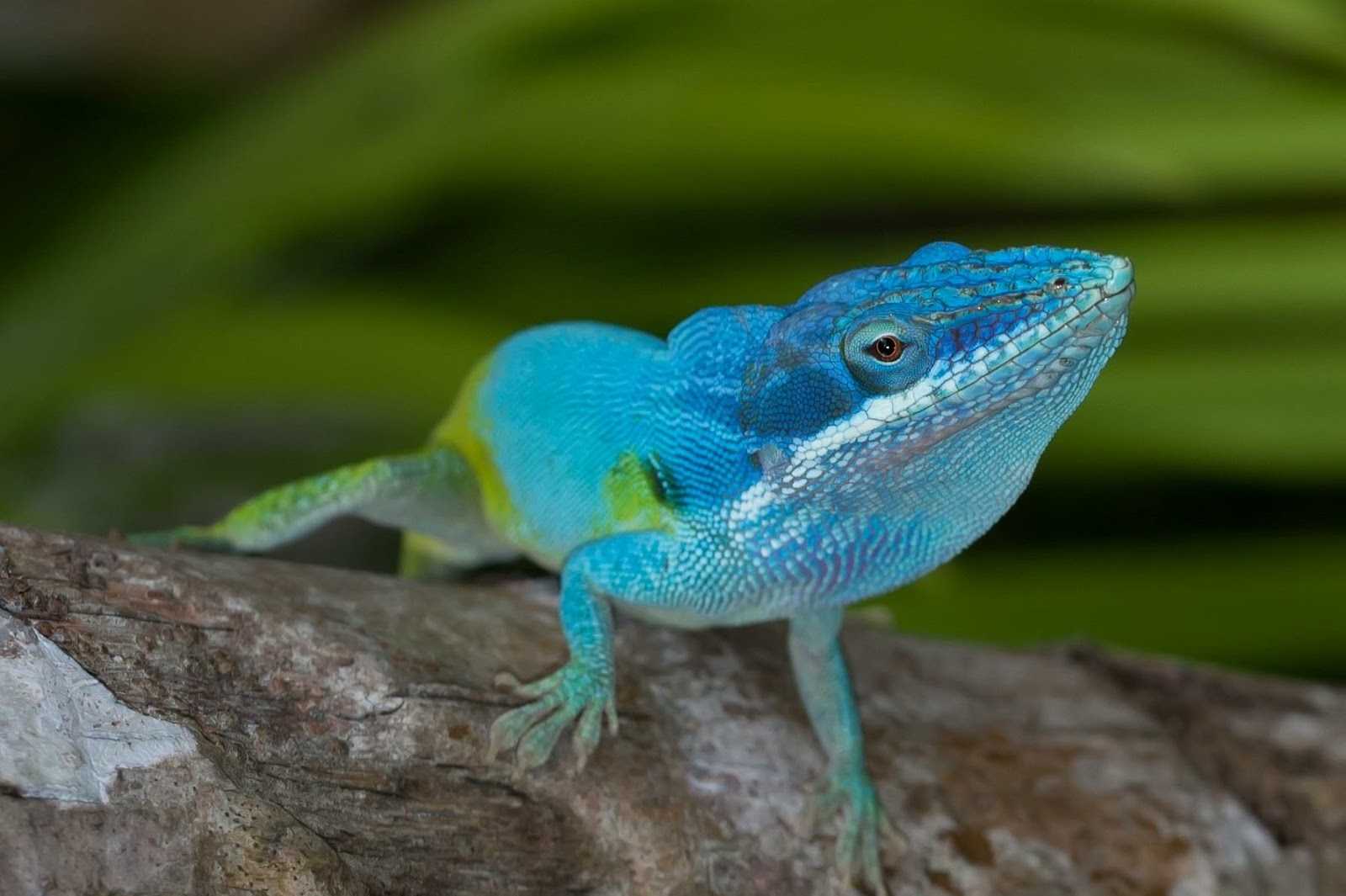
The blue lizard, with its vibrant coloration, stands out in the rich tapestry of nature. Its skin is adorned with an intense blue, resulting from a unique combination of pigments and microscopic structures. This coloration is not only beautiful; it also plays a crucial role in the species’ survival. The blue becomes more intense during the mating season, attracting mates and highlighting the lizard’s health. Females, in contrast, exhibit a more subdued coloration, usually in shades of brown or gray. This difference in coloration between males and females is an evolutionary strategy that helps protect females from predators. The ability of lizards to slightly change their coloration in response to the environment is a remarkable adaptation. They can darken or lighten to better blend into their habitat. In addition to their impressive coloration, the blue lizard has a slender body, with long limbs that favor agility. Its feet, with thin toes and discreet claws, allow it to climb rough surfaces. This characteristic is essential for its life in rocky and shrubby areas, where it seeks shelter and food. Another distinctive aspect is its tail, which is long and provides balance during running and climbing. Such ability proves vital, as the lizard needs to escape quickly from predators. The combination of coloration, agility, and morphological adaptations makes the blue lizard a fascinating and admirable creature, perfectly adapted to its environment. To learn more about the adaptations of some species of fauna, check out the article on the platypus.
Habitat and Distribution
The blue lizard, with its vibrant colors and intriguing behavior, is primarily found in dry and sunny areas. This reptile prefers habitats that offer a combination of low vegetation and rocks, where it can hide and hunt. Open forests and semi-arid areas are equally suitable for its survival. The presence of shrubs and grasses provides ideal spots for camouflage from predators. Its geographical distribution is largely influenced by these habitat aspects. The blue lizard is found in tropical and subtropical regions, where the climate is mild, with temperatures that vary but generally do not drop below 15 degrees Celsius. The humidity of the environment is a crucial factor, as lizards are ectothermic and depend on external heat to regulate their body temperature. The presence of sandy soils is preferred, as it facilitates the digging of burrows. These burrows serve as shelter and a place for egg incubation. Growing urban areas have led some populations to adapt to new environments, but the destruction of their natural habitat has direct impacts on their survival. Analyzing places where their populations are more abundant, it is observed that the preservation of natural environments is fundamental. Any alteration can cause fragmentation of their populations. Therefore, maintaining connectivity between habitats is essential for the future of the blue lizard. To better understand the importance of habitat preservation, learn more about the conservation of large mammals.
Behavior and Interactions
The blue lizard, with its vibrant scales, is not just an aesthetic wonder. It also exhibits intriguing social behavior. Often, these creatures can be seen in small groups. This social behavior offers protection against predators. When in groups, lizards can alert each other to potential threats. Communication, although silent, is conducted through body postures and quick movements. The diet of the blue lizard is varied and includes insects, small arthropods, and occasionally, vegetation. Using its sharp vision, it hunts its prey with precision. Upon spotting an insect, the lizard approaches slowly. In a sudden attack, it captures the prey with its agile and adhesive tongue. In addition to being a predator, the blue lizard plays an important role in its ecosystem by controlling the insect population. The interactions of the blue lizard with other species are equally fascinating. It is often preyed upon by birds of prey and snakes. However, its vibrant coloration may deter some predators, serving as a warning of its toxicity. Blue lizards are also known to cohabit with other lizards, tolerating the presence of their own species or others as a mutual defense strategy. Its ability to adapt to the ecosystem is crucial for its survival. Blue lizards can often hide in holes or under rocks, where they feel safe. These adaptations are vital in their natural habitat. To learn more about the diversity of wildlife and its social behavior, check out this article on jumping spiders.
Conservation and Threats
The blue lizard, with its vibrant coloration, faces significant threats that require our attention and action. Habitat degradation is the primary concern. Urbanization, intensive agriculture, and deforestation reduce the space where this lizard can live. Wildfires also impact its survival, devastating important areas. The introduction of invasive species harms native populations. Predators such as cats and bats, which do not belong to the original ecosystem, threaten the blue lizard. Additionally, pollution resulting from human activities contaminates natural habitats, making them hostile. These combined factors affect not only lizards but the entire ecosystem in which they inhabit. Conservation initiatives are underway to protect this fascinating species. Habitat restoration programs aim to restore degraded areas, creating safe spaces for breeding and feeding. Local organizations work with communities, promoting environmental education. Informing people about the importance of the blue lizard is crucial. Raising awareness can lead to greater involvement in conservation projects. Furthermore, monitoring projects help track blue lizard populations. This data is crucial for measuring the effectiveness of recovery initiatives. An integrated approach, involving researchers, conservationists, and local communities, is essential. Collaboration enables the identification of effective solutions, protecting not only the blue lizard but also its biodiversity. To learn more about the importance of wildlife conservation, click here.
Conclusions…
The blue lizard is more than a visual wonder; it is an essential component of its ecosystem. Understanding its habitat and the threats it faces is vital for the conservation of its species. Protecting this unique creature is a responsibility for all.
Did you know?
Where is the blue lizard found?
The blue lizard is found in specific regions, especially on islands and tropical areas that offer its preferred habitat.
What are the characteristics of the blue lizard?
The main characteristic of the blue lizard is its vibrant coloration, which varies from shades of blue to green, depending on light and temperature.
How does the blue lizard engage in the ecosystem?
This lizard plays a crucial role as a predator of insects, helping to maintain the balance of the ecosystem in which it lives.
What are the threats to the blue lizard?
Threats include habitat loss, introduced predators, and climate change, which compromise its survival.
What measures can be taken to protect the blue lizard?
Conservation efforts, environmental education, and protection of natural habitats are essential to ensure the survival of the blue lizard.