Toucan: The Fascinating Bird of South America
The toucan is more than just a colorful bird: it represents the richness and diversity of South American wildlife. Learning about its life and habits reveals surprising secrets about nature.
A Living Portrait: Characteristics and Appearance of the Toucan
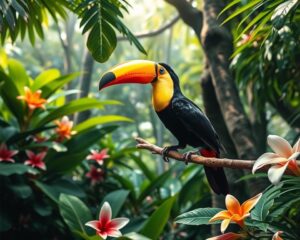
Toucans, these emblematic birds of South America, are instantly recognizable by their vibrant and colorful beaks, a true marvel of evolution. Those who venture into the rainforest may be graced by the sight of these creatures, whose beaks serve as a multifaceted tool essential for their survival.
The Structure of the Beak and Its Functions
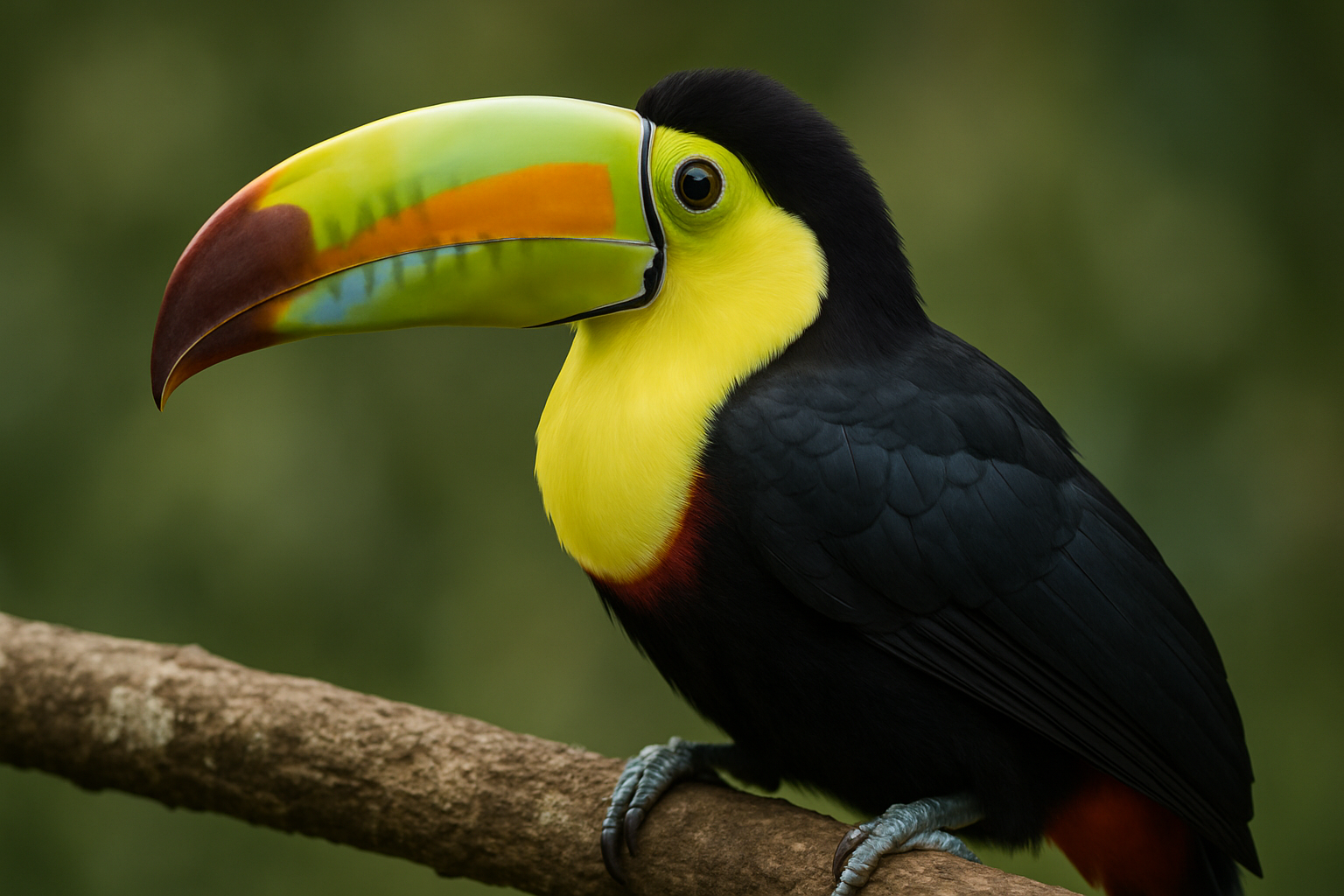
The toucan’s beak, one of its most distinctive features, is not just an ornament. It is surprisingly lightweight, internally composed of a spongy structure. This design aids not only in feeding, by selecting and capturing fruits and small vertebrates, but also in thermal regulation, as it helps in maintaining body temperature. Additionally, the coloration of the beak serves as a vital communication mechanism among individuals and is crucial in attracting mates during the breeding season.
Due to its functionality, the beak reveals an incredible adaptation to the demands of life in the forest, where competition for food is intense and visual communication plays a predominant role.
Variety and Appearance of Toucan Species
Within the genus Ramphastos, diversity is remarkable. There are about forty species, each with unique characteristics. The Toco Toucan, for example, is the largest of all and has an impressive orange beak. Sizes vary significantly, with the Green-billed Toucan being smaller, yet no less spectacular with its multicolored beak. For more details on these differences, check out the post on the Toco Toucan, which explores its characteristics in depth.
Among males and females, the differences are generally subtle, with beak size and color intensity being the most notable variables. Plumage is usually in vibrant tones, with dominant black and striking contrasts in yellow and white, facilitating camouflage among dense foliage and signaling for mating.
As we prepare to dive deeper into the life of the toucan in the next chapter about its natural habitat, we remember that every detail of its anatomy is not just a whim of nature but a survival strategy honed over millennia.
Natural Habitat and Geographic Distribution of the Toucan
As we progress on our journey through the rich ecosystems that host the most vibrant birds, we arrive at the colorful and distinctive toucan, a species that finds its predominant home in the lush tropical forests of South America. In these humid and dense regions, the toucan is not just a regular resident but also a vibrant symbol of the biodiversity that flourishes beneath the towering canopies.
Tropical Forests and the Toucan’s Home
In these forests, which include the vast Amazon, the Atlantic Forest, and the Pantanal, toucans delight in an abundance of fruits and insects. The climatic variability and wealth of resources support the lives of these striking birds, providing them with everything from nests in tall trees to a diverse diet that sustains their vivid colors. It is important to note that for those interested, more details can be explored in the article toucan – the bird that enchants with its beauty.
Adaptations and Environmental Impacts
Indeed, by adapting so closely to the microclimate of the forests, the toucan has developed unique characteristics, such as its large, colorful beak, useful for reaching distant fruits as well as for thermoregulation. However, the fragmentation of these habitats, primarily caused by human activities such as deforestation and agriculture, poses serious threats to the species’ survival. Habitat loss not only reduces the available living space for these birds but also fragments their population, making it difficult to find food and mates for reproduction.
As we conclude this chapter, it is essential to reflect on how every aspect of the toucan’s habitat plays a critical role in its survival and behavior. Our next chapter will explore the intriguing Behavior and Feeding of the Toucan, revealing how these birds behave in their daily lives and survive in a constantly changing world.
Behavior and Feeding: Secrets of the Toucan in Nature
Diet and Feeding Techniques
The toucan’s diet is an odyssey of colors and flavors in the generous tropical nature. With its large, colorful beak, not only an icon of biodiversity but a precise instrument for reaching the most inaccessible fruits. Here, the toucan also reveals its predatory side by devouring small insects, eggs, and chicks of other birds, a necessity to complement its fructose-rich diet. Some interesting studies on the toucan’s feeding behavior can be found in the article about this charming bird.
Communication and Social Life
Toucans are remarkable examples of sociability in the humid forests. Their strong, echoing calls are not just a sound manifestation but a strong bond that unites the group. During the breeding season, communication becomes even more intense, with calls and beak claps resonating through the trees. The behavior of these birds reflects the complexity of the ecosystem in which they live, demonstrating the importance of communication and collective work for survival. Because of this, these interactions are essential for maintaining group cohesion and mutual protection against predators.
The Ecological Role of the Toucan: Much More Than Beauty
As we transition from the fascinating enigma of the toucan’s coloration to its crucial role in the ecological fabric of the forests, we discover that the impact of this bird goes far beyond its vibrant appearance.
Seed Dispersal and Forest Regeneration
The toucan’s unique ability to disperse seeds is vital for the renewal of forests in South America. By consuming fruits, these birds transport seeds over long distances, promoting germination in places where other species have failed to reach. Studies indicate how this dispersal aids in forest regeneration, allowing the proliferation of trees that are essential for the ecosystem, as demonstrated in research that is robust in its methods and conclusions. A reference to concrete examples, such as the study conducted in Manu National Park in Peru, shows a direct correlation between the presence of the toucan and the diversity of plants in the area.
Biological Control and Biodiversity
In addition to its role as a seed disperser, the toucan also exerts a significant influence on pest control. By devouring a variety of insects, especially during the breeding season, these birds help maintain the population balance of insects in the forest. This biological control is crucial not only for the health of plants but also for the biodiversity of other small animals, forming a chain of influence that stabilizes the ecosystem. In summary, the toucan proves to be an active participant in maintaining biodiversity and the health of forests, validating the need to preserve these spectacular winged beings. Following this theme, the next chapter will address Challenges and Conservation: Protecting the Toucan in the 21st Century, analyzing the main threats they face today, including deforestation, hunting, and illegal trade, and highlighting conservation initiatives that are crucial for their survival.
Challenges and Conservation: Protecting the Toucan in the 21st Century
Threats and Impacts on the Population
Toucans are iconic inhabitants of the South American tropical forests; however, their populations are facing a series of challenges that threaten their survival. Deforestation, driven by the expansion of agriculture and logging, has drastically reduced the toucan’s natural habitat, leading to the displacement of these colorful birds. Additionally, hunting for souvenirs and capture for the illegal exotic animal trade exacerbates this problem.
Because of their flashy beaks and vibrant coloration, toucans are especially vulnerable to wildlife trafficking, a dark and lucrative market that threatens many species around the world.
Conservation Initiatives and How to Help
Conservation movements have manifested through significant projects to protect these magnificent birds. In some areas, reserves and natural parks have been established where toucans can live safely and reproduce, away from human threats. Environmental education programs have also been implemented to raise awareness among local communities about the importance of preserving these animals.
As readers and nature lovers, you play a fundamental role in the preservation of toucans by supporting conservation organizations and sharing information about the situation of these birds. To learn more about how you can contribute, visit our detailed article on the beauty and challenges faced by the toucan.
Did you enjoy this post? Like, comment, and share so we can keep creating!
Conclusions…
The toucan is a living symbol of the biodiversity of the tropical forests of South America. Its striking appearance, with its colorful beak and vibrant plumage, draws attention not only for its beauty but also for its adaptability and the ecological roles it plays. Throughout this article, we explored everything from its physical characteristics to its environmental importance, social behavior, and the challenges it faces in nature. This bird, while fascinating, faces threats that reinforce the need for conservation and respect for local wildlife. Our commitment is to bring a different perspective on fauna and flora, revealing curious and often unbelievable details. Nature is not just beautiful – it is ingenious, mysterious, and above all, full of secrets waiting to be discovered. Here, we want not only to inform but also to inspire. We want to awaken the same enchantment we feel when seeing a firefly light up the night or hearing a frog mimic the sound of rain. Did you enjoy this post? Like, comment, and share so we can keep creating!
Did You Know?
What is the toucan?
The toucan is a tropical bird from South America, known for its long, colorful beak and vibrant plumage.
Where does the toucan live?
The toucan primarily inhabits the tropical forests of South America, especially the Amazon and other wooded areas.
What is the function of the toucan’s beak?
In addition to aiding in feeding, the toucan’s beak assists in thermoregulation and is used in social interactions.
Is the toucan a social bird?
Yes, the toucan often lives in groups and exhibits complex social behaviors that include communication and parental care.
What threats does the toucan face?
Deforestation and habitat loss, along with illegal capture and trade of animals, are the main threats to toucan populations.
Is the toucan a cultural symbol of South America?
Yes, the toucan is often associated with South American wildlife and appears in various cultural and environmental representations.
What does the toucan eat?
It is omnivorous, feeding on fruits, insects, eggs, and small animals found in the forest.
How does the toucan help the ecosystem?
The toucan contributes to the seed dispersal of many plants, aiding in the regeneration of forests.