The Stunning Beauty of the Rainbow Sea Slug
When it comes to vibrant marine life, it’s impossible not to mention the rainbow sea slug. This small nudibranch not only captures attention with its vibrant colors but also plays a crucial role in the marine ecosystem. In this article, we will explore the characteristics, habitat, and importance of Babakina anadoni.
Discovering Babakina anadoni
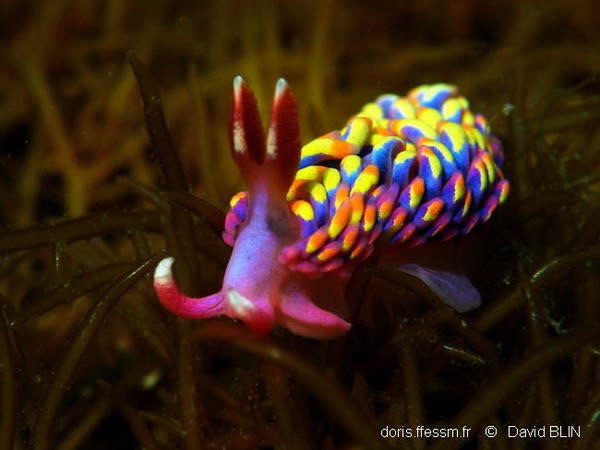
Imagine a creature so vibrant that its splendor seems almost unreal. Babakina anadoni, a magnificent nudibranch, is a remarkable example of marine beauty. Its bright colors and hypnotizing patterns not only captivate the eye but also reveal fascinating secrets about its adaptation and evolution in the ocean.
Distinctive Characteristics
This nudibranch stands out for its intense colors, ranging from blue to green, with touches of purple. These hues are not merely decorative; they play a crucial role in defense against predators. Babakina anadoni possesses a specialized metabolism that allows it to incorporate pigments from its diet, making it a living artist that reflects its food. Additionally, its gills, located at the back of its body, emit a glow that seems to attract the attention of divers and marine life enthusiasts.
A Wonder Beyond the Surface
Furthermore, Babakina anadoni is not only beautiful but also an ingenious survivor. When threatened, the slug secretes toxins that make it undesirable to many predators. This strategy, combined with its camouflage, gives it remarkable resilience in the marine ecosystem. By noticing the fascinating differences among these creatures, we become more aware of the complexity of underwater life, revealing the intricate interactions that are part of this habitat. Thus, we learn that even the simplest creatures, like Babakina anadoni, carry secrets that connect us to the natural world. In the next exploration, we will delve into the diet and habitat of the rainbow sea slug, revealing how these characteristics influence its place in the ecosystem.
The Diet and Habitat of the Rainbow Sea Slug
Amid the vibrant depths of the ocean, the rainbow sea slug emerges as a true treasure of marine life. These fascinating organisms, with their stunning patterns, are not only an impressive sight but also play a vital role in their habitats. To fully understand them, it is essential to explore where they live and what sustains them in this magnificent underwater tapestry.
Habitat of the Rainbow Sea Slugs
Rainbow sea slugs are found in tropical waters, typically in coral reefs. These environments, which are true hubs of diversity, provide not only shelter but also a menu full of sustenance. Generally, these favorable creatures thrive in areas with an abundance of algae and other marine organisms, which serve as their main food sources.
The Unique Diet of Rainbow Sea Slugs
Contrary to what many might imagine, the diet of rainbow sea slugs is quite specific. They primarily feed on algae and small invertebrates, using a mouth adapted to scrape their meals. For example, some species prefer algae, while others are known to feed on cnidarians, such as sea anemones. This selective feeding not only provides sustenance but also plays an important role in maintaining the ecosystem balance by controlling algae proliferation. Thus, rainbow sea slugs are not just creatures of extraordinary beauty; they are, in fact, an essential component for the health of their habitat.
Now, moving away from the fascinating diet and habitat of rainbow sea slugs, we can venture further to explore the crucial ecological role that nudibranchs play in their marine environments.
The Ecological Role of Nudibranchs
Imagine an underwater world where the vibrant colors of nudibranchs dance in harmony with the flow of the waters. In the vastness of the oceans, these invertebrates, like Babakina anadoni, play a vital role that goes far beyond their exotic beauty. They are, in reality, the true alchemists of marine ecosystems, contributing to the health and balance of underwater communities.
The Ocean’s Food Chain
Nudibranchs primarily feed on sponges and other marine organisms, creating an essential link in the food chain. In this way, they help control the populations of their prey. Furthermore, their interaction with algae and corals can promote the development and health of these organisms. Consequently, their presence is an indication of a healthy and resilient ecosystem.
Nutrient Recycling
In addition to serving as predators, nudibranchs also play a role in nutrient recycling in ecosystems. By feeding on organic materials, they break down this matter into simpler particles, facilitating nutrient assimilation by other marine organisms. This dynamic is fundamental for maintaining biodiversity, which is the essence of marine life. Therefore, the stunning beauty of the rainbow sea slug goes far beyond its appearance. Each nudibranch stands as a crucial component of the web of marine life, sustaining the complexity and vitality of its habitats. As we marvel at the vibrant colors of these beings, we must also reflect on the delicate balance they help maintain. The importance of their conservation should never be underestimated, especially as we prepare to explore the threats these wonderful beings face.
The Threats to Sea Slugs
Rainbow sea slugs, with their vibrant colors and unique shapes, are creatures that evoke the pure beauty of the oceans. However, behind this intriguing facade, a series of threats loom over these exalted nudibranchs. As ocean temperatures rise, their habitats are at risk, jeopardizing the survival of these magnificent creatures.
Global Warming and Ocean Acidification
As a notorious reflection of climate change, global warming exerts constant pressure on marine ecosystems. Additionally, ocean acidification makes it more difficult for nudibranchs, which depend on a delicate balance in their environments, to thrive. The decline of coral biodiversity, crucial for the nourishment and shelter of these slugs, creates a domino effect, putting not only nudibranchs but the entire marine ecosystem at risk.
Pollution and Human Activities
Another significant threat comes from human activities, resulting in pollution and habitat destruction. Plastic and chemical contamination is an alarming reality. This situation not only affects the health of sea slugs but also that of other marine life forms. Awareness and community action are essential to mitigate these impacts and promote conservation. Through preservation efforts, such as the creation of protected marine areas, we can provide a safe environment for these extraordinary creatures. Thus, we must remember that by protecting sea slugs and their habitats, we are, in fact, safeguarding the beauty of marine biodiversity. In conclusion, as we reflect on the threats faced by nudibranchs, we can gaze at the light of marine diversity, which will be addressed in the next chapter.
Celebration of Marine Diversity
The rainbow sea slug, with its vibrant colors and hypnotizing patterns, is not just an aesthetic wonder. It represents the complexity and beauty of marine biodiversity. In every contour of its gelatinous body, we find a story that invites us to contemplate the interconnectedness of life beneath the waves. As we watch it gliding smoothly over the marine rocks, we are reminded that every creature plays a vital role in its ecosystem.
The Interdependence of Marine Beings
The marine kingdom is a mosaic of interdependent lives. The rainbow sea slug, for example, has a crucial role in maintaining algae and microbes. This interdependence reflects the resilience of nature. As a result, the health of marine containers, such as coral reefs, depends on seemingly small creatures. Furthermore, as sea slugs feed on algae, they help control the growth of invasive species, allowing biodiversity to thrive.
Lessons in Sustainability
By studying the behavior of the rainbow sea slug, we learn about the importance of preservation. Each extinction inhibits not only beauty but also the functionality of the oceans. Whether through research or conservation, our actions shape the future of biodiversity. Our responsibility is clear: we must protect this incredible ecosystem. Thus, just as the rainbow sea slug in its exuberance, we are also called to celebrate and protect marine diversity for future generations.
Conclusions…
The rainbow sea slug, or Babakina anadoni, is a perfect example of the beauty and complexity of marine life. Its vibrant colors are not just a visual delight but also an indication of the rich biodiversity of the oceans. By understanding the characteristics and crucial role of this species, we can further appreciate the importance of marine conservation. Protecting these small yet powerful beings is essential for maintaining the ecological balance of our seas.
Did You Know?
What is the rainbow sea slug?
The rainbow sea slug is a marine nudibranch, known for its stunning coloration, belonging to the species Babakina anadoni.
What is the importance of the rainbow sea slug in the ecosystem?
These nudibranchs play a crucial role in the marine food chain and help maintain the balance of oceanic ecosystems.
Where can we find the rainbow sea slug?
Babakina anadoni is typically found in shallow tropical waters, where it feeds on algae and small invertebrates.
Why does the rainbow sea slug have such vibrant colors?
The vibrant colors are a defense mechanism and also serve to attract mates during reproduction.
Is the rainbow sea slug endangered?
Although not listed as endangered, the rainbow sea slug can be affected by pollution and climate change.
How can we help in the conservation of nudibranchs?
Supporting marine conservation practices and reducing ocean pollution are effective ways to protect these fascinating creatures.
Are nudibranchs safe to touch?
Although they are not poisonous, it is recommended to avoid touching them, as they can be sensitive and interaction may harm their habitat.
What do they eat?
Rainbow sea slugs primarily feed on algae and small marine organisms.