The Fascinating Blue Dragon of the Ocean
Let’s dive into the world of the Blue Dragon, a marine creature that defies imagination. This fascinating mollusk, with its exotic shape and vibrant colors, inhabits the oceans, revealing secrets about life in deep waters and the importance of marine biodiversity.
What is the Blue Dragon?
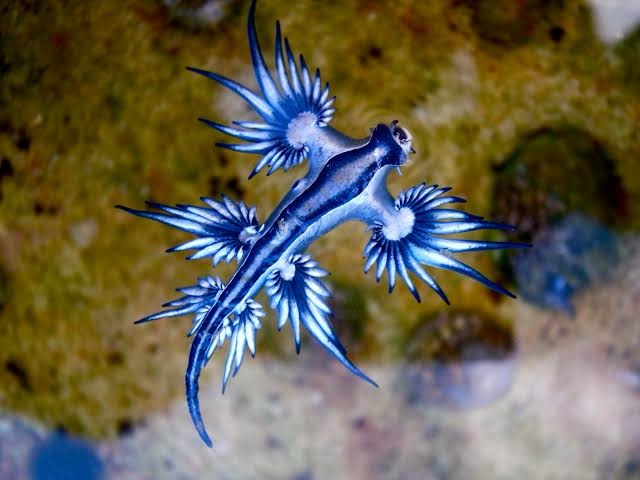
The Blue Dragon, scientifically known as Glaucus atlanticus, is one of the most intriguing members of the nudibranch family. These small marine creatures are, in fact, shell-less gastropod mollusks. Measuring approximately three centimeters in length, the Blue Dragon displays a mesmerizing beauty. Its elongated body is adorned with metallic blue, silver, and white hues, colors that aid in camouflage beneath the shimmering waves of the sea. This vibrant coloration is a fascinating adaptive strategy, as the blue side facing the surface camouflages the animal against the ocean’s blue, while the silver side facing down helps it blend into the bright sky when viewed from below the water.
The body of the Blue Dragon is flattened and covered with long appendages resembling feathers, known as cerata. These appendages are not just decorative but may also assist in buoyancy, as well as store nematocysts, stinging cells obtained from prey such as Portuguese man o’ war. By ingesting them, it becomes an efficient predator immune to their toxins.
Classified in the order Nudibranchia, the Blue Dragon belongs to the subgroup Aeolidida, a group characterized by its peculiar feeding habits and wonderful diversity of shapes and colors. Far from the continents, in its natural habitat, these majestic creatures tend to float with the ocean currents, rarely resting on solid surfaces. Discover more about fascinating marine creatures, such as orcas, our ocean companions that also exhibit peculiar and intriguing behavior in their environment.
Habitat and Distribution
The Blue Dragon, or Glaucus atlanticus, inhabits the surface waters of temperate and tropical oceans. This exceptional nudibranch floats with the ocean currents, taking advantage of the water’s surface tension. The Blue Dragon is frequently found in the Atlantic, Pacific, and Indian Oceans, proving to be a true wanderer of open waters.
Typically, the Blue Dragon remains close to the surface, enjoying sunlight and warmth. The depth it ventures is generally irrelevant, as it predominantly stays in the neuston, the upper layer of the ocean. Mild temperatures and sunlight are essential conditions for its development and survival.
The geographical distribution of the Blue Dragon is influenced by ocean currents. It is commonly sighted along the coasts of Australia, South Africa, and Mozambique. Its presence can be unexpected in subtropical regions, guided by drift currents and prevailing winds that dictate its migration patterns.
The Blue Dragon exhibits seasonal fluctuations that often coincide with the availability of its preferred prey, such as Portuguese man o’ war. During spring and summer, populations can significantly increase when the waters become richer and more conducive to the growth of prey colonies.
Its oceanic journeys define a lifestyle that challenges traditional habitat concepts. Like the animal that has its feet on its head, the squid, the Blue Dragon boasts unique characteristics that make it one of the most intriguing residents of the vast ocean.
Behavior and Feeding
The fascinating Blue Dragon, scientifically known as Glaucus atlanticus, surprises not only with its beauty but also with its intriguing behaviors. This small nudibranch floats upside down on the ocean’s surface, using an air sac in its stomach to stay afloat. This strategy not only ensures its movement but also brings it closer to its preferred prey: the fearsome Portuguese man o’ war.
With bold hunting tactics, it consumes these venomous cnidarians, neutralizing their stinging cells, known as nematocysts. The Blue Dragon stores these toxins in its own tissues, making it an incredibly venomous and formidable creature. This process not only protects the Dragon from potential predators but transforms it into a cunning and relentless hunter, sophisticated in the art of adaptation and survival in a wild environment.
Moreover, its blue-silver coloration serves as extraordinary camouflage. The upper part of its body blends with the blue of the ocean, while the underside resembles the lighter blue of the sky. This coloration pattern helps hide the Blue Dragon from both aerial and marine predators, keeping it almost invisible to ongoing threats.
Interactions with other marine species are minimal, given its role as a top predator concerning cnidarians. Its serene and solitary existence reveals much about the challenges and complexities of life in the ocean. To learn more about marine creatures that share this fascinating type of camouflage, explore the world of orcas through this fascinating link.
Relationship with the Ecosystem
The cunning and enigmatic Blue Dragon, or Glaucus atlanticus, plays a vital role in the delicate marine ecosystem. Despite its diminutive size, this metallic-blue nudibranch is an influential figure in the ocean’s food chains. Feeding primarily on venomous cnidarians, such as the feared Portuguese man o’ war, the Blue Dragon employs a unique strategy. It captures the stinging cells of its prey and incorporates them into its own appendages, providing it with a powerful defense against predators.
In the underwater universe, the Blue Dragon occupies a position of both predator and prey. By consuming toxic organisms, it helps control expanding populations of cnidarians, promoting a delicate balance. This control is crucial, as large clusters of cnidarians can devastate other forms of marine life, competing for resources and poisoning waters where fish, invertebrates, and other predators coexist.
Furthermore, the Blue Dragon serves as food for seabirds, establishing an essential link in the energy exchange between aquatic and terrestrial ecosystems. Its role goes beyond mere survival; it contributes to the dynamism of the marine environment. This nudibranch reflects the intrinsic complexity of species interaction in the plankton, sustaining the health of the ocean.
Just as the symbiosis between marine species, such as the elephant and its ecological function, the Blue Dragon shapes the ecosystem it inhabits. It is a reflection of the extraordinary adaptations that life takes on to not only exist but also thrive. Appreciating this bold beauty is essential to understanding the hidden balance beneath the shimmering waves of the ocean.
Conservation and Threats
In the vast ocean, the Blue Dragon faces challenges that threaten its survival. Climate change, with rising water temperatures, directly impacts its habitat and the ocean currents essential for its movements. These changes also affect the availability of prey, a severe threat for such a specialized predator.
Alongside this, ocean pollution emerges as a growing danger. Microplastics and other contaminating substances are not only harmful to the Blue Dragon but to the entire marine ecosystem. Accidental ingestion of these materials can be lethal, interrupting its biological functions. Moreover, overfishing, while not directly affecting them, alters the food chains they are part of, putting their food supply at risk.
To combat these adversities, conservation initiatives are flourishing worldwide. Marine monitoring projects help map populations and better understand their habits and migration routes. Such data is crucial for developing effective conservation strategies. Education and environmental awareness play a vital role, encouraging sustainable practices and changes in human behaviors that harm ocean ecosystems.
International organizations promote relevant actions such as reducing plastic use and establishing marine protected areas. These areas create a safe refuge for various species, providing a space where they can thrive without the pressure of human activities. To learn about other fascinating species and the threats they face, visit the article on the fantastic world of orcas.
Protecting the Blue Dragon requires joint efforts among nations, scientists, and citizens. The key lies in the harmony between human development and the preservation of our precious seas.
Conclusions…
The Blue Dragon is a natural wonder that reminds us of the importance of preserving marine life. By admiring this creature, we are encouraged to protect the oceans and the biodiversity they harbor, reflecting on the role we all play in environmental conservation.
Did You Know?
What is the Blue Dragon?
The Blue Dragon is a marine mollusk known for its peculiar appearance and vibrant colors, being a member of the nudibranch family.
Where can we find the Blue Dragon?
This mollusk is primarily found in temperate waters of the oceans, often appearing in open waters and coastal areas.
What is the diet of the Blue Dragon?
The Blue Dragon primarily feeds on creatures like jellyfish, using its mucous coating to capture and digest its prey.
What is the ecological role of the Blue Dragon?
The Blue Dragon plays a crucial role in the marine ecosystem, helping to control jellyfish populations and acting as an indicator of environmental health.
How to protect the Blue Dragon and its habitat?
Protecting the Blue Dragon involves conserving the oceans, reducing marine pollution, and supporting biodiversity preservation initiatives.