Pig-Nosed Turtle: A Fascinating Marine Creature
The pig-nosed turtle is a curious creature that blends unique characteristics of turtles and pigs. With a flexible shell and peculiar snout, it is one of the most intriguing inhabitants of the oceans.
Physical Characteristics of the Pig-Nosed Turtle
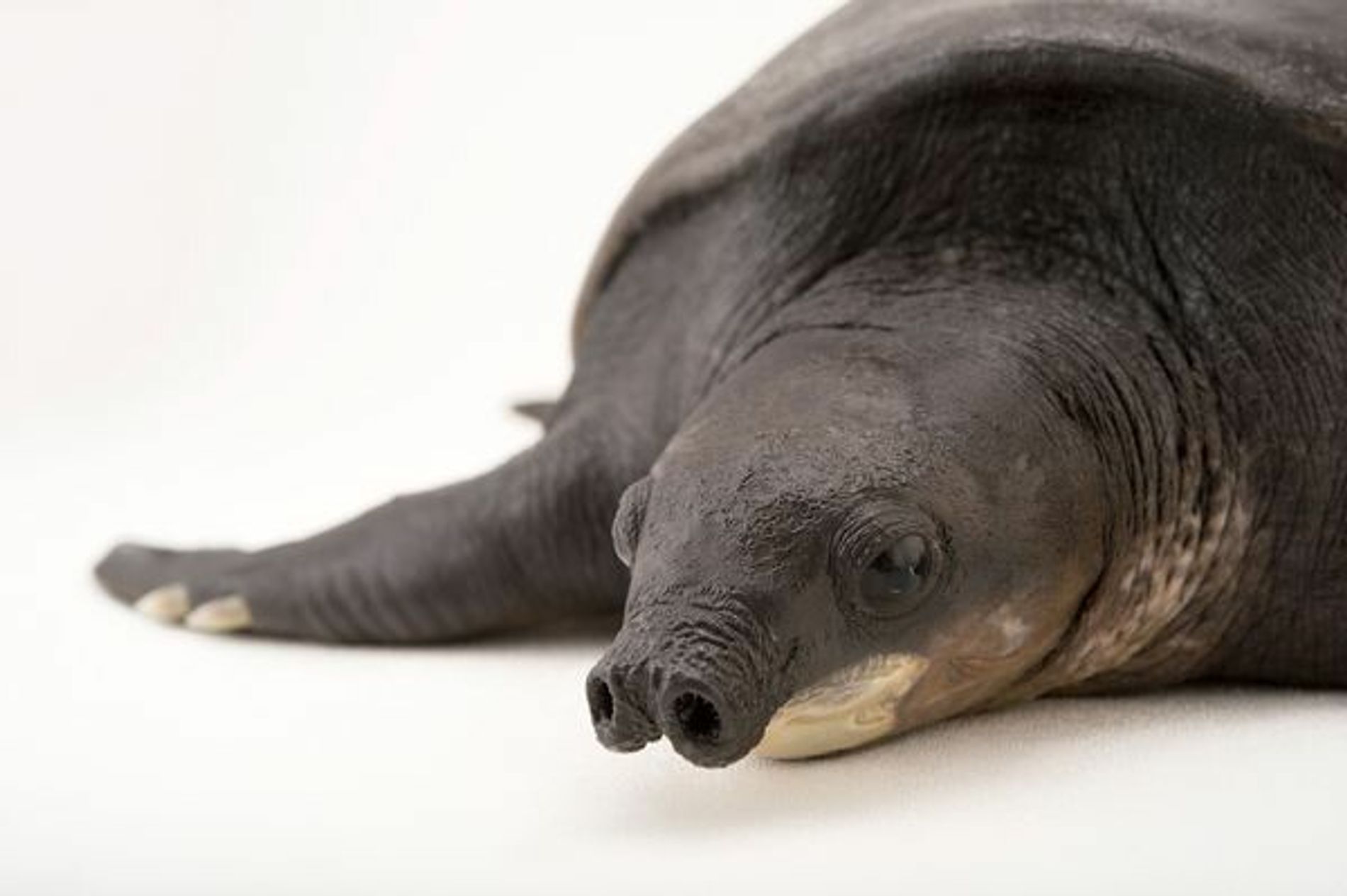
At first glance, the pig-nosed turtle reveals a peculiar and charming appearance that immediately captures the attention of any observer. With its distinctive snout, resembling that of a pig, it is one of the most intriguing and unique marine species on our planet. As we delve deeper into its physical characteristics, we can see how each trait has been shaped to meet its needs in the various marine ecosystems it inhabits.
Unusual Physiology
With its robust body and oval shell, the pig-nosed turtle stands out among other species. Its coloration varies between shades of gray and olive green, providing excellent camouflage in deep marine environments. What truly impresses is its snout, which is not only curious but also functional. Thanks to this structure, the turtle can suck in water, capturing small prey and efficiently filtering food.
Moreover, its wide and muscular flippers allow this creature to move gracefully through the water. As they glide beneath the ocean’s surface, their agility seems almost hypnotic. To complement its impressive anatomy, its scales are smooth, providing a unique tactile experience.
Natural Adaptations
The adaptations of the pig-nosed turtle go beyond its external appearance. Its diving ability reaches significant depths, allowing it to explore food-rich areas. These adaptations are essential for its survival in an environment where competition for resources is intense. Therefore, each physical characteristic, from the snout to the shell structure, serves a greater purpose: survival.
As we explore its impressive traits, we are led to reflect on the feeding habits and communication of this fascinating creature in the next chapter.
Feeding Habits and Communication
The pig-nosed turtle, with its distinctive shape and intriguing behavior, reveals a marine life full of nuances. These charming beings not only fascinate us with their appearance but also with what they consume in their underwater environment. Thus, as we dive into their feeding habits, we begin to understand how they adapt and interact with the world around them.
Feeding Habits
The diet of the pig-nosed turtle is surprisingly varied. It primarily feeds on mollusks, crustaceans, and algae, reflecting the richness of its habitat. By using its tubular snout, the turtle dives in search of prey hidden among rocks and sediments. This ability makes it one of the main consumers of marine invertebrates. Therefore, the presence of various species of invertebrates can indicate the health of the marine ecosystem.
Communication
In addition to their feeding habits, pig-nosed turtles have unique ways of communicating. They use a combination of gestures and vocalizations to interact with their peers, especially during mating season. These sounds, often underwater, help establish social bonds and recognize individuals. Indeed, in a world where communication is key to survival, every signal emitted tells an exciting story about their marine life. Thus, the connection between feeding habits and communication among pig-nosed turtles is undeniable, as these practices shape their interactions and their role within the ecosystem. Consequently, by understanding these aspects, we can appreciate even more the complexity of marine life, preparing us to explore where these fascinating creatures dwell and how their environment influences their behaviors.
Habitat and Geographic Distribution
Imagine diving into an underwater realm, where a singular creature, the pig-nosed turtle, glides gracefully among vibrant corals and seaweed. Native to the coastal waters of South America, this turtle is a fascinating example of adaptation. Along the shores of various Brazilian regions, such as the coast of Bahia and areas in the Northern Region, it finds its home in mangroves, estuaries, and shallow waters. This diverse habitat not only sustains its survival but forms the basis of a complex and intriguing behavior.
Adaptations to Habitat
The environment in which the pig-nosed turtle lives plays a crucial role in its daily life. The shallow waters are rich in crustaceans and aquatic vegetation, providing the essential diet that is predominantly herbivorous. Furthermore, the marine habitat allows the turtle to develop a foraging strategy that involves meticulous searching for food on the ocean floor. These tactics, resulting from an intrinsic relationship between the turtle and its environment, exemplify the resilience of marine life.
Sensitivity to Environmental Changes
However, the habitat of the pig-nosed turtle is not without threats. The degradation of mangroves and water pollution make these areas vulnerable. Changes in the environment not only affect food availability but also the turtle’s behavior, which may be forced to migrate to less ideal areas. Thus, its future depends on healthy and balanced ecosystems, reinforcing the importance of protecting these crucial habitats. As we observe these wonderful creatures in their natural habitat, their adaptations and challenges reflect the complexity and beauty of the marine world. Understanding where they live and how their ties to the environment shape their lives is the first step toward ensuring the preservation of these magnificent turtles. Now, we venture into a new phase of their existence, where reproduction and the life cycle offer an even more intriguing glimpse into this fascinating marine reptile.
Reproduction and Life Cycle
The journey of the pig-nosed turtle, one of the most intriguing marine creatures, begins at one of the most crucial moments of its life: reproduction. In this fascinating process, females lay eggs on sandy beaches, returning to these sands time and again, driven by ancestral instinct. Thus, under the moonlight and the gentle sound of the waves, the female digs holes in the sand and lays 2 to 5 eggs. This laying is a ritual that repeats over several seasons throughout its life.
Incubation and Development
After laying, the eggs remain buried, incubating under the sun’s heat for about 60 to 90 days. The heat is vital, as it determines the sex of the hatchlings; higher temperatures generally result in more females, while lower temperatures favor males. This phenomenon, known as temperature determination, is a crucial aspect of this species’ life cycle. After incubation, the hatchlings break free from their shells, emerging from the sand on a risky journey toward the ocean.
Parental Care and First Steps
Unlike many other turtles, the pig-nosed turtle does not exhibit parental care after laying. Once the hatchlings venture into the sea, they face a world filled with dangers. These agile and sun-loving creatures often blend into the marine environment, using their camouflage skills. Thus, initial survival is a challenge that requires luck and cunning.
Understanding the reproduction and life cycle of the pig-nosed turtle gives us a broader view of its adaptations and challenges. In a rapidly changing world, these creatures continue to fight against the difficulties imposed by the marine environment, preparing for the next chapter of their lives: conservation and the threats they face.
Conservation and Threats
As we dive into the depths of marine life, we encounter the vulnerabilities of the pig-nosed turtle. This charismatic creature, with its distinctive snout, faces a series of threats that compromise its survival. Among the main challenges is the destruction of its habitat, caused by pollution and the degradation of coral reefs, which are fundamental for its diet and reproduction.
Main Threats
One of the greatest threats to the pig-nosed turtle is accidental capture in fishing nets. These encounters, often fatal, result in the death of countless turtles each year. Additionally, marine pollution, especially plastics, is becoming an increasing risk. Studies show that the ingestion of plastics significantly affects their health, leading to digestive problems and even death. Furthermore, climate change alters beach temperatures, affecting nesting sites and the viability of the eggs.
Conservation Initiatives
To combat these challenges, various conservation initiatives are being implemented. Non-governmental organizations are working on education and awareness projects about the importance of preservation. Simultaneously, population monitoring programs help to better understand the habits of this fascinating turtle. In some regions, protection zones have been established, where fishing is restricted. These efforts are essential to ensure that future generations can admire the pig-nosed turtle in its full glory. Thus, in a world where nature is increasingly threatened, the fight for the conservation of the pig-nosed turtle becomes a symbol of hope and resilience.
In this way, exploring the vital role that turtles play in marine ecosystems paves the way for discussing the intricate relationships between species and environments, initiating a new journey of understanding.
Conclusions…
The pig-nosed turtle represents a fascinating intersection of characteristics that, despite being unusual, play vital roles in its ecosystem. Its flexible body and flipper-like legs are impressive adaptations, and its unique snout is not just a curiosity but an example of how nature adjusts to needs. By learning more about this species, we expand our understanding of biodiversity and the importance of conserving these marine inhabitants. Preserving its habitat is essential to ensure that future generations can also marvel at this incredible creature.
Did you know?
- What is the main characteristic of the pig-nosed turtle? Its soft and flexible shell, along with its pig-like snout, are its main features.
- Where does the pig-nosed turtle live? It is usually found in shallow and warm waters of tropical and subtropical oceans.
- What do pig-nosed turtles eat? They primarily feed on mollusks, crustaceans, and seaweed.
- Is the pig-nosed turtle endangered? Yes, habitat loss and pollution are major threats to this species.
- How do pig-nosed turtles reproduce? They reproduce by laying eggs, which are deposited on beaches for incubation.
- What is the importance of the pig-nosed turtle in the marine ecosystem? They help maintain the balance of marine ecosystems by controlling the populations of their prey.
- What is the average size of the pig-nosed turtle? They can reach an average length of 1 to 1.5 meters.
- Who are the main predators of pig-nosed turtles? The main predators include sharks and orcas.