The Fascinating Life of the Frilled Lizard
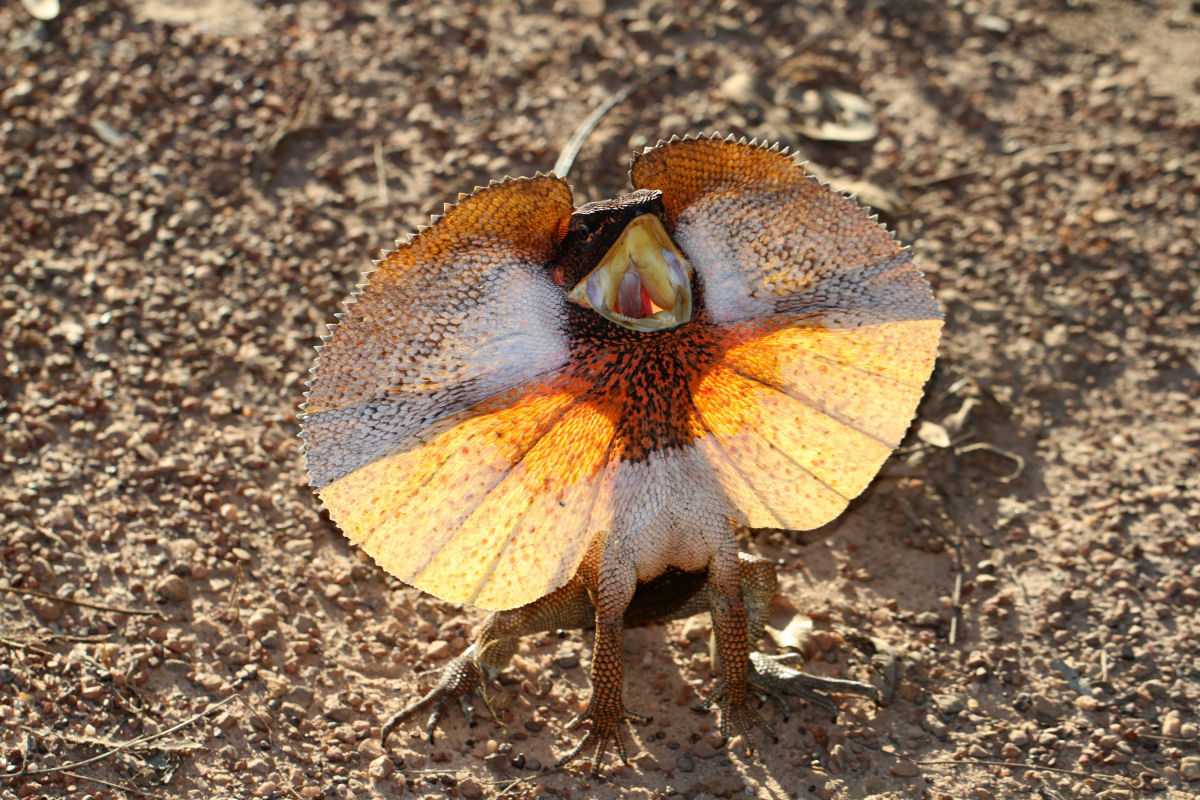
The frilled lizard, one of the jewels of Australian biodiversity, is famous for its impressive ability to expand its frill. This behavior serves as a method of intimidation, helping the lizard protect itself from predators and establish territory. We will delve into the peculiarities and habitat of this magnificent reptile.
Habitat and Distribution
The frilled lizard, a true gem of Australian fauna, primarily makes its home in forests, savannas, and open areas. These lizards possess impressive camouflage in their natural environments, aiding them in hunting and hiding from predators. The diversity of the Australian biome provides ideal conditions for the survival of this fascinating species.
Preferring warm and sunny climates, the frilled lizard is very active during the day. It seeks high temperatures while feeding on insects and small invertebrates. The ability to regulate its body temperature by moving between shaded and illuminated areas is crucial for its survival.
During the dry season, the habitat of the frilled lizard becomes even more challenging. High temperatures and water scarcity can affect its survival, but these lizards are adaptable. They take refuge in burrows or under dense foliage, where moisture is preserved.
The Australian climate, marked by severe droughts and periods of intense rainfall, shapes not only the habitats but also the behavior of the frilled lizard. During the rains, these creatures become more active, seeking abundant food. In sandy soil areas, where temperatures fluctuate rapidly, they find comfort and safety.
If you wish to better understand the complexities of wildlife, know that each creature has its invaluable role in the web of life. The frilled lizard, with its adaptability and resilience, is a testament to the beauty of Australian nature.
Adaptations and Behaviors
The frilled lizard, magnificently adapted, possesses exceptional survival characteristics. One of its most notable adaptations is the expandable frill. This structure can be raised in moments of stress or during the defense of its territory. When predators approach, the lizard quickly displays its frill, becoming visually more imposing. This intimidating behavior serves as an effective warning, reflecting the strength and fighting capability of the lizard. In cases of persistent threat, it does not hesitate to use this display as a mere distraction, preparing for a swift escape.
In addition to this impressive frill, the body of the frilled lizard is equally designed for success. Its skin is covered with scales that help it camouflage in the natural environment. These lizards, which inhabit arid regions, exhibit earthy colors and patterns that make them almost invisible among rocks and dry vegetation.
Another fascinating aspect of the frilled lizard’s behavior is its climbing ability. It adapts to the conditions of its habitat, frequently climbing trees or rocks. This not only offers a broader view of potential predators but also facilitates the search for prey. By moving in three dimensions, it can escape threats more easily.
Urban legends about this lizard are not limited to its appearance. Its exuberant and adaptive defensive behavior is a remarkable demonstration of the struggle for survival in nature. For more on animal defense techniques, see this article on the jumping spider.
Feeding and Diet
The frilled lizard, an impressive inhabitant of Australian ecosystems, is primarily insectivorous. Its diet consists of a variety of insects, such as crickets, grasshoppers, and flies. These small predators are skilled hunters, using their excellent vision to detect subtle movements among the vegetation. When they spot prey, they attack with speed and precision. In many cases, they can consume prey that is up to half their size.
A fascinating aspect of their hunting technique is their camouflage ability. The frilled lizard often blends perfectly into the environment, allowing it to approach its prey unnoticed. It is also capable of using speed and agility to chase insects, making it an effective and adaptable predator.
The diet of the frilled lizard not only impacts its survival but also plays a crucial role in its ecosystem. By controlling insect populations, these lizards help maintain ecological balance. Their presence reduces the overpopulation of insects that could harm plants and, consequently, other animals.
The interactions of the frilled lizard with its environment are, therefore, a clear demonstration of how each species is connected in an ecosystem. Its feeding and hunting habits not only ensure its own survival but also contribute to the health of the surrounding environment. To learn more about the dynamics between predators and their prey, one can explore the fascinating world of other species, such as the jumping spider, a meticulous insect predator.
Reproduction and Life Cycle
The life of the frilled lizard is marked by reproductive rituals and an intriguing journey of growth. During the mating season, which occurs annually, males become exhibitionists. They display their most imposing characteristics, inflating their frill to attract females. This display is a spectacle of color and movement, designed to impress their partners. Males compete fiercely, using displays of strength and speed to capture female attention. After copulation, females will choose suitable locations for laying eggs, preferring warm and safe areas where the young lizards will have a better chance of survival.
After an incubation period that can vary, the eggs hatch and reveal small versions of the adults. The hatchlings are independent from the start and promptly set off in search of their own territories. The diet of young lizards consists mainly of small insects, providing the necessary nutrients for their rapid growth. They grow quickly in a safe environment but remain constantly vigilant against predators.
Parental care among frilled lizards is virtually nonexistent after egg-laying. This strategy increases the chance of survival for females, who can energetically prepare for the next mating season. Despite this, parental presence can be observed during moments of interaction, where egg protection is crucial. To appreciate the complexities of this natural dynamic, observing other reptiles, such as the fascinating jumping spiders, reveals more about the diversity of reproductive strategies in the animal kingdom.
Importance in Culture and Conservation
The frilled lizard, with its impressive appearance and intriguing behavior, is a symbol of biological diversity. Its ability to expand its frill is fascinating and has been represented in various forms in popular culture. From documentaries to works of art, this reptile is often mentioned as an example of adaptation and resilience. In literature and cinema, the image of the frilled lizard is used to convey themes of survival and defense. This ability to display for intimidation is a powerful metaphor. We often associate this lizard with ideas of courage and bravery, symbolizing the struggle for survival in a world facing constant changes.
The importance of the frilled lizard goes beyond its symbolic value. This animal plays an essential ecological role in its habitat. The conservation of its species is fundamental to maintaining the balance of ecosystems. Unfortunately, the frilled lizard faces threats such as habitat loss and climate change. Protecting this lizard is indeed a matter of preserving biodiversity. Each frilled lizard carries with it a vital piece of ecological history. Awareness of its preservation must be amplified. Among conservation efforts, educational programs and community initiatives are crucial to ensuring the future of this magnificent reptile. Humans have the responsibility to ensure that future generations can witness the beauty of the frilled lizard in nature. Only then can we ensure that its impressive characteristics and behavior continue to inspire and fascinate us all. For more information on the diversity of fauna, read about the **sacred ibis**.
Conclusions…
The frilled lizard reveals the richness of animal behavior in Australia, highlighting adaptations that allow survival in challenging environments. With its impressive abilities, this reptile serves as a reminder of the importance of conservation and respect for the unique biodiversity of our planet.
Did you know?
What is the habitat of the frilled lizard? The frilled lizard is found in dry forests and shrubland regions of Australia, where it can camouflage among the vegetation.
How does the frilled lizard use its frill? It expands its frill as a sign of intimidation against predators or to attract mates during the mating season.
Is the frilled lizard venomous? No, the frilled lizard is not venomous; its defense lies in its visual displays and quick maneuvers to escape predators.