The Fascinating World of the Leopard Gecko
The Leopard Gecko is a charming nocturnal lizard, widely admired for its beauty and gentle nature. In this article, we will explore its characteristics, habitat, care, and the reasons for its popularity as a pet.
Characteristics and Behavior
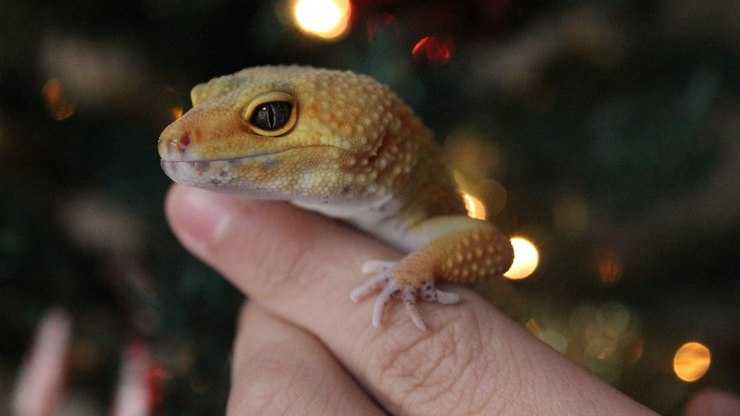
The Leopard Gecko, a marvel of nature, is nocturnal by excellence. Its physical characteristics reflect exquisite adaptations to this lifestyle. The skin of the gecko is adorned with spots that, besides being charming, act as camouflage. This camouflage allows it to effectively hide from predators and approach its prey unnoticed.
The eyes of the Leopard Gecko are large and well-developed, adapted for night vision. Its pupils can dilate considerably in dark environments, allowing more light to enter. Thus, it can detect subtle movements at night, a crucial feature in the search for food.
The gecko’s tongue is long and sticky, perfect for capturing agile insects in an instant. This becomes an advantage on hunting nights when agility is essential. The gecko is also known for its ability to climb vertical surfaces with ease. The lamellae on its feet provide grip on any type of surface.
Its social behavior is equally interesting. The Leopard Gecko is mostly solitary, except during the mating season. During these interactions, males may display courtship behaviors, such as vocalizations and dances. This fascinating ritual is a spectacle to behold.
The morphology of the Leopard Gecko is perfectly tuned to its ecology. Every part of its body plays a role in nocturnal survival. This gecko is one of the best examples of how nature adapts to ensure the continuity of life in a challenging environment. To learn more about these fascinating night dwellers, see this link.
Natural Habitat
The Leopard Gecko, a small wonder of nature, inhabits the arid and semi-arid regions of Central Asia and the Middle East. This reptile prefers rocky soils and deserts, where temperatures can fluctuate dramatically. Adaptation to this harsh environment is crucial for its survival. The crevices in rocks, underground burrows, and areas of sparse vegetation provide shelter and hunting grounds. The preference for these areas gives the Leopard Gecko a significant advantage. The environment is not just a home but a safety trap against predators.
One of the most fascinating features of this reptile is its camouflage ability. The Leopard Gecko’s skin pattern, with spots and markings resembling rocks and sand, allows it to blend in with its surroundings. This disguise is an effective defense. When threatened, it becomes almost invisible. During the day, geckos are nearly inactive, taking advantage of the warmer hours to rest in their crevices. At night, however, it becomes an agile and cunning predator. Night hunting is a vital part of its routine, where it feeds on insects and small invertebrates. Camouflage is not its only defense. The Leopard Gecko can also shed its tail during an attack, distracting predators and allowing its escape. Thus, its adaptations to the arid habitat are a testament to the ingenuity of evolution and survival in a hostile world.
Like the jumping spider, the Leopard Gecko uses its camouflage skills to escape threats.
Care in Captivity
To ensure the health and well-being of the Leopard Gecko in captivity, it is vital to create a suitable environment. A spacious terrarium, with minimum dimensions of 60 cm x 45 cm, provides freedom of movement. The bottom should be covered with appropriate substrate, such as paper towels or specific sand, avoiding those that may cause impactions if ingested. Temperature also plays a crucial role. The terrarium needs a thermal gradient, with a warm zone between 30°C to 32°C and a cooler area of about 20°C to 24°C. A heater or heat lamp can help maintain these temperatures. One should not forget the nighttime resting period, where temperatures can be slightly reduced.
Lighting is also essential, even though geckos do not require intense UVB light. A daylight bulb is beneficial for the circadian cycle. The environment should include hiding spots, such as burrows or rocks, as these reptiles naturally seek shelter. The diet of a Leopard Gecko in captivity is varied and nutrient-rich. Insects such as crickets, cockroaches, and mealworms should be the basis of their diet. It is essential to offer calcium and vitamin supplements to ensure strong bones and immunity. Additionally, monitoring the health of your Leopard Gecko is fundamental. Any change in behavior or appearance may indicate problems. Regular consultation with a veterinarian specialized in reptiles is highly recommended. For more information on captive care, you can explore this article.
Popularity as a Pet
The Leopard Gecko has won the hearts of many admirers, standing out among pet reptiles. This popularity can be attributed to several fascinating characteristics. Firstly, the appearance of this small reptile is undeniably captivating. Its pattern of yellow and black spots resembles the beauty of a wild animal, even when domesticated. Moreover, these geckos are known for their intriguing behaviors, offering a unique experience for observers.
Another factor contributing to its popularity is its docility. The Leopard Gecko is generally gentle and can be handled easily, making it ideal for those new to the world of reptiles. They are not prone to biting and, with patience, can become very sociable. This interaction allows owners to develop a special bond with their pets.
The maintenance of the Leopard Gecko is also a crucial point. The care requirements are not as complicated compared to other pets. A simple terrarium, proper heating, and a diet containing insects are sufficient to ensure their health. Additionally, their long lifespan makes them an attractive choice for those seeking a long-term pet.
Finally, accessibility has made the Leopard Gecko a favorite. With the growing popularity of reptiles, they are widely available in pet stores and breeders. For more information on the fascinating variety of wildlife and care, you can explore the diversity of pets.
Fun Facts about the Leopard Gecko
The Leopard Gecko, with its stunning coat pattern, is one of the most intriguing reptiles. Its ability to change body temperature is remarkable. They are ectothermic, meaning they rely on external heat to regulate their temperature. This adaptation allows them to thrive in varied environments, from arid deserts to tropical forests.
A fascinating aspect of the Leopard Gecko is its tongue. Extremely long and sticky, it is a vital tool for capturing prey. This agile tongue also helps in cleaning its eyes, an important task for maintaining vision.
Behaviorally, these geckos are solitary, often marking territory. Ancient myths claimed they were mystical beings, bearers of good luck. However, popular culture still portrays them as strange and fascinating creatures.
The reproduction of the Leopard Gecko involves a complex courtship dance, where the male performs a series of movements to impress the female. Once accepted, she will lay between two to fifty eggs, depending on her conditions and health.
Geckos are known for their curiosity. Observing them in their habitat reveals cunning behavior and an impressive ability to hide. Effective camouflage protects them from natural predators. Additionally, many mistakenly believe that their tails will regenerate indefinitely, as happens with other species. While they can lose their tail as a defense, regenerating it is a process that occurs only once per animal.
To discover more about falcons, creatures that, like the Leopard Gecko, are fascinating in their own right, explore toucans and their wonders.
Conclusions…
The Leopard Gecko is an excellent choice for those seeking a gentle and fascinating pet. With proper care and a suitable environment, these lizards can bring much joy and curiosity to nature lovers.
Did You Know?
What are the characteristics of the Leopard Gecko?
The Leopard Gecko has a vibrant coloration with spots, a fat-filled tail, and large eyes, providing a captivating and adorable appearance.
How to care for a Leopard Gecko?
Caring for a Leopard Gecko involves maintaining a terrarium with appropriate temperature, humidity control, a balanced diet, and a secure structure for hiding.
Where is the natural habitat of the Leopard Gecko?
The natural habitat of the Leopard Gecko is in the arid and semi-arid regions of Central Asia, where they can be found in rocks and soil burrows.
Why is the Leopard Gecko a good pet?
The Leopard Gecko is popular as a pet due to its gentle nature, ease of care, and charming appearance that captivates reptile lovers.
What is the ideal diet for a Leopard Gecko?
A Leopard Gecko should be fed insects such as crickets and cockroaches, along with calcium and vitamin supplements to ensure its health.