Unveiling the Lanternfly: The Marvel of Fulgora laternaria
The Lanternfly (Fulgora laternaria) is a fascinating insect, notable for its unique characteristics and impressive adaptations. This article explores its peculiarities and ecological importance.
General Characteristics of the Lanternfly
With an appearance that blends the bizarre and the enchanting, the Lanternfly (Fulgora laternaria) is one of the most captivating creatures in our tropical ecosystems. This species, commonly found in the Amazon rainforest, intrigues both scientists and nature enthusiasts with its unique features and surprising adaptations.
A Striking Appearance
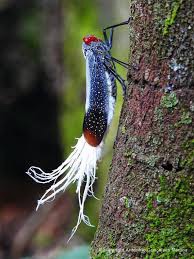
The Lanternfly has a robust body that can reach up to 10 centimeters in length. But what truly catches the eye are its wide, colorful wings, resembling a mix of tissue paper and multicolored ceramics. The wings not only serve an aesthetic purpose but also a functional one, as when opened, they make the Lanternfly look somewhat like a leaf or a flower. This camouflage is vital for evading predators.
Impressive Structures
Another remarkable feature is its ‘lantern’—actually an extension of the head that resembles a horn. This structure can be used to attract mates during the mating season, as well as to confuse predators. This ability to disguise itself while simultaneously drawing attention makes it a master of survival in its habitat. As the Lanternfly moves, its shiny body reflects light, evoking a glow that might, at first glance, seem magical, but is actually a meticulously fine-tuned evolutionary adaptation. Thus, each characteristic of the Lanternfly is not just an element of beauty but a crucial piece of the puzzle that is life in tropical forests.
Therefore, as we explore the beauty and complexity of the Lanternfly, we can appreciate the interconnectedness of its existence. Like the Lanternfly, many beings in nature possess characteristics that help them adapt and survive in challenging environments. In the next chapter, we will delve into the incredible habitat of the Lanternfly, discovering what truly makes it a product of this lush biodiversity.
The Habitat of the Lanternfly
Imagine a scenario where light, seemingly magical, meets the dense shadows of the forest. This is the home of the Lanternfly (Fulgora laternaria), a fascinating being whose presence enchants and provokes curiosity. Found in the tropical forests of South America, specifically in the Amazon, this wonder of nature not only boasts beauty but also requires specific conditions to thrive.
The Tropical Forest: The Ideal Refuge
The Lanternfly primarily inhabits tropical forests, where high humidity and elevated temperatures provide a favorable environment for its survival. For these insects to reproduce, it is essential that there are robust and varied trees, as their larvae feed on the sap of these plants. The presence of dense canopies is crucial, as they offer both food and protection from predators. It is in the tropical forests of Brazil that we find the perfect balance of light and shadow, creating an ideal microclimate. The leaves of the trees not only filter sunlight but also retain moisture, creating the humid environment necessary for the Lanternfly’s life. Moreover, interaction with other insect species is vital; thus, this coexistence enriches the surrounding ecosystem.
Challenges and Adaptations
However, the survival of the Lanternfly faces challenges. The degradation of natural habitats is a constant threat. As forests are deforested, the environment that provides shelter and nutrition diminishes. Therefore, protecting these ecosystems is not just a matter of preserving natural beauty but of ensuring the survival of this fascinating species and many others. For more information on the importance of biodiversity in natural environments, refer to a study on small predators and their ecological roles. Thus, as we walk through the mysteries of nature, we are invited to reflect on the complexity and beauty of the Lanternfly’s habitat. Its wonders are not limited to appearance but extend to the intricate fabric of life that depends on it. As we head into the next chapter, we will explore the ingenious defense techniques that allow the Lanternfly to survive in its wonderful yet hostile habitat.
Defense and Camouflage
The Lanternfly (Fulgora laternaria) is one of nature’s most intriguing creations, surprising not only with its vibrant colors but also with its impressive defense techniques. Thus, when encountering this magnificent insect, an observer might easily wonder: how does such a stunning being manage to survive in a world filled with predators lurking around?
The Spectacular Play of Colors
The spots that adorn the wings and body of the Lanternfly reveal a fascinating strategy. These sophisticated patterns, commonly compared to the eyes of a snake, serve as an impressive form of camouflage. When exposed to predators, these spots deceive, making the insect appear larger and more threatening than it actually is. Naturally, many predators, including birds and reptiles, hesitate when faced with what they think is an eye watching them. In this way, the Lanternfly ensures its survival amidst a hostile environment through a simple illusion.
The Power of Confusion
In addition to camouflage, the Lanternfly also employs subtle and sudden movements to disorient predators. When threatened, it can adopt postures that further accentuate its distinctive markings. This ability to confuse its enemies, combined with the skill of blending into the environment, makes the Lanternfly a true master of evasion. As a result, the Lanternfly stands out, demonstrating that beauty serves not only as attraction but also as armor in the vast ecosystem it inhabits. As the Lanternfly reveals its defense strategies, it is fascinating to think about the role it plays in its natural habitat. Thus, in the next chapter, we will explore its relationship with the ecosystem, highlighting its importance in pollination and the delicate food chain.
Relationship with the Ecosystem
Imagine a world where the vibrant colors of nature intertwine with the soft sounds of the environment. In this fascinating realm, the Lanternfly, or Fulgora laternaria, stands out as one of the jewels of biodiversity. This exuberant creature is not only a visual spectacle but also plays a vital role in its ecosystem, affecting the life around it in surprising ways.
Pollination and Floral Interactions
The Lanternfly is one of the most underestimated pollinators in the forest. As it seeks to feed on nectar, it accidentally transfers pollen from one flower to another. This process, far from being merely accidental, results in a significant increase in fertilization and seed production. In this way, plants become more robust, and biodiversity expands, highlighting the interdependence between species. It is no coincidence that the preservation of pollinators is essential for the health of ecosystems, as seen in other examples of nature, such as spiders that also play important roles.
Importance in the Food Chain
In addition to its role as a pollinator, the Lanternfly occupies a strategic position in the food chain. Its predators, which include birds and larger insects, are attracted by the glow and movement of its light. Its presence, therefore, not only benefits plants but also sustains various species within the ecosystem. The health of the Lanternfly is, therefore, indicative of the overall health of the environment, reflecting its essential role in maintaining the delicate balance of nature. As we step away from this fascinating cycle of life, we are reminded of the importance of every small being in the grand fabric of life. The next chapter will take us to explore the threats that this majestic being faces as we continue the journey of discovery of the Lanternfly.
Conservation and Threats
Just like the smoke that dissipates into the wind, the vulnerability of the glasswing butterfly is an alarming reality. The Greta oto, known for its ethereal and almost magical appearance, faces significant threats due to habitat destruction and changing climatic conditions. This chapter delves into the adversities that this incredible creature must face, revealing the various layers of fragility that surround its existence.
Direct Threats to Habitat
The tropical forests of Central America, where the Greta oto resides, are constantly threatened by deforestation, unsustainable agricultural practices, and urbanization. This human imposition transforms intricate ecosystems into ecological deserts. As their environments fragment, butterflies lose not only places to live but also essential resources such as food and breeding sites.
The Influence of Climate Change
In addition to direct threats, climate change plays a devastating role. Rising temperatures and changes in precipitation patterns affect the availability of nectar in flowers, reducing the food sources for butterflies. The Greta oto, with its delicate life cycle and high dependence on a specific habitat, becomes even more vulnerable. Without a concerted effort to preserve its ecosystem, these unsettling changes could result in the extinction of one of nature’s most beautiful manifestations.
Consequently, the conservation of the Greta oto is not just a matter of saving a species but a call to protect a delicate balance of nature. This mission requires the involvement of all, as what is at stake is the very essence of biodiversity. Therefore, as we understand the beauty and threats surrounding this butterfly, we take on the responsibility to act and preserve what remains of its enchanted habitat.
Conclusions…
The Lanternfly is not just an example of beauty in nature but also a testament to the incredible adaptations that insects can develop to face environmental challenges. Through its unique characteristics, it has taught us about the importance of biological diversity and respect for the species that inhabit our planet.
Did you know?
What are the unique characteristics of the Lanternfly?
The Lanternfly stands out for its elongated head resembling a small reptile and for its spots that mimic snake eyes to confuse predators.
Where does the Lanternfly live?
This insect can be found in tropical regions, especially in forests where it feeds on tree sap.
How does the Lanternfly defend itself from predators?
It uses its spots that mimic eyes to scare off predators, increasing its chances of survival.
Is the Lanternfly important to the ecosystem?
Yes, like many insects, it helps in pollination and nutrient cycling, contributing to the health of the ecosystem.
How do Lanternflies reproduce?
Females lay eggs on tree trunks, where the young develop before becoming adults.
What does the Lanternfly eat?
It primarily feeds on tree sap, using its specialized mouthparts.
How do Lanternflies differ from other insects?
Their distinct morphology and camouflage adaptations set them apart, along with their curious behavior.
What is the life cycle of the Lanternfly?
The life cycle involves stages of egg, larva, and adult, with transformation occurring in arboreal environments.