Assassin Bug: The Lethal Predator of the Insect World
Explore the realm of assassin bugs and understand the complexity of a lethal predator. Their toxic saliva and hunting habits make them deadly enemies of many other insects.
The Structure and Behavior of the Assassin Bug
Imagine the tense silence of the forest, where life unfolds in whispers and shadows. There, a small predator stands out: the assassin bug. With a structure as fascinating as its hunting technique, this insect is a true master of survival.
Anatomy to Perfection
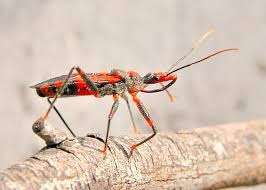
The anatomy of the assassin bug reflects its predatory ingenuity. Equipped with a slender body, ranging from 10 to 30 mm, its coloration can vary between browns and greens, allowing it to camouflage masterfully in its environment. The long antennae are sensory tools, detecting even the slightest movements of its prey. Among its most notable features, the piercing mouthparts are essential. This sharp, often retractable structure allows the bug to pierce the exoskeleton of its victim with millimetric precision. Consequently, this organ is not just an accessory but the key to the assassin bug’s success. Along with well-developed claws, it can firmly anchor itself to its prey during feeding. Additionally, the bug has long legs adapted for rapid locomotion, crucial in the search for food or in escaping predators.
Exceptional Hunting Behavior
As a true artist of hunting, the assassin bug displays impressive behavior. It employs a strategy that combines patience and agility. With a motionless posture, it disguises itself as part of the vegetation, waiting for the ideal moment to strike. When prey approaches, the bug responds with astonishing speed, delivering a fatal blow with its bite. This behavior requires calm and patience, reflecting an adaptive evolution that has secured its position in the ecosystem. As we observe them, their methods resemble a natural spectacle, where every subtle movement becomes vital for survival. Studying the behavior of the assassin bug is not only fascinating but helps us understand the complexity of life in nature, revealing the importance of each being within the grand scheme of the food chain.
As we continue our journey, prepare to delve into a new intriguing aspect of these predators’ lives: the toxic saliva and its crucial role in digestion, revealing more secrets about their hunting abilities.
Toxic Saliva and Its Role in Digestion
In the insect kingdom, many stand out for their remarkable abilities, but few are as fascinating as the assassin bug. This predator not only captures its prey impressively but also possesses one of the most intriguing digestion techniques in the animal world. The key to its effectiveness lies in its toxic saliva, a true biological weapon in the life cycle of this remarkable insect.
The Wonder of Toxic Saliva
When an assassin bug attacks, it incapacitates its prey—usually smaller insects—with a quick and efficient bite, injecting its highly digestible saliva. This saliva is not mere substance; it is a combination of enzymes that can dissolve tissues, facilitating nutrient absorption. The saliva acts as a liquefying agent, turning the prey’s flesh into a nutritious soup that can then be sipped by the bug. Moreover, this external digestion ability allows the bug to maximize its nutritional efficiency without the need to chew its prey, thus saving energy and time, which is crucial in a competitive environment. Meanwhile, the victims are at the mercy of this ruthless predator, often without any prior warning before being captured.
The Impact on Ecology
This digestion mechanism, paradoxically, does not only affect the prey. The use of toxic saliva also shapes the dynamics of insect populations, contributing to the regulation of prey populations in the local ecology. When the assassin bug exerts its predatory control, it establishes a balance, being fundamental for controlling other insect species. Therefore, the saliva of the assassin bug not only plays a vital role in its survival but also impacts the entire ecosystem where it resides. This leads us to consider the broader role these creatures play in the balance of life. In the next chapter, we will explore in more detail the ecology and function of assassin bugs in the food web, revealing how these predators influence their insect communities.
Ecology and Function in the Ecosystem
In the intricate fabric of life, every creature plays a significant role, and assassin bugs, from the family Reduviidae, emerge as masters of population control in the insect kingdom. With their predatory skills, they not only impact the species they hunt but also influence the entire balance of the ecosystem. As we delve into the world of these lethal predators, we begin to understand their vital importance in food chains.
The Predatory Politics of Assassin Bugs
Assassin bugs are voracious predators, especially known for their effectiveness in controlling populations of herbivorous insects. In agricultural ecosystems, for example, their presence can be a blessing for farmers. By reducing the number of pests that feed on crops, they help maintain the natural balance, minimizing the need for pesticides. This dynamic not only benefits the plants but also ensures soil health and, ultimately, biodiversity. Indeed, their actions as predators contribute to the well-being of other species, as when they prey on harmful insects, they help prevent overpopulation that could lead to ecosystem collapse.
Impact on Insect Communities
Besides their active roles as predators, assassin bugs also play a crucial role in the dynamics of insect communities. Their hunting method often involves skilled ambushes, which not only facilitates their captures but also puts other insects on alert, promoting adaptations and defensive behaviors. Thus, the impact they cause extends beyond mere individual deaths: they influence the evolutionary trajectories of their prey. For example, while assassin bugs attack the insects that are most vulnerable, those that survive often develop traits that increase their resistance, resulting in a co-evolution between predator and prey.
In conclusion, as we explore the ecology of assassin bugs, we realize that they occupy a unique place in the complex web that represents life. Like a conductor orchestrating a symphony, they ensure that the harmony of the ecosystem is maintained, setting the stage for the chapters that follow, in which we will unveil the hunting tactics that make these insects true icons of predatory efficiency.
Hunting Strategies: The Style of the Assassin Bug
Amidst the silence of fields and forests, there exists a predator that stands out for its cunning and impeccable skills: the assassin bug. These insects, members of the family Reduviidae, are masters of strategy and have become icons of hunting efficacy. With behavior that evokes both fear and admiration, they adopt ambush tactics that ensure their supremacy over unsuspecting prey.
Deadly Ambushes
The assassin bug’s ability to camouflage itself is one of its great advantages. Utilizing the environment around it, it patiently waits for an opportunity to attack. Often, this insect positions itself in strategic locations, such as leaves or branches, where it remains motionless, waiting for its prey, which can be an ant, a fly, or another insect. As soon as the victim approaches, the bug lunges with lethal precision, using its beak to inject venom and paralyze the prey, rendering it incapable of resistance. This ambush technique demonstrates not only patience but also rigorous planning to maximize its chances of success.
Adaptation to Environments
In addition to its ambush skill, the assassin bug excels in its incredible ability to adapt to different environments. This predator is found in ecosystems ranging from dense tropical forests to arid meadows. In each habitat, the hunting tactics may change, being refined to suit the specifics of the terrain and climate. For example, in dry environments, they may use changes in skin color and texture to blend in with the soil and carry out stealthy attacks, while in forests, they take advantage of dense foliage to camouflage themselves.
In the way they act, assassin bugs remind us that in nature, silence can be synonymous with death. However, by exploring their interactions, such as those with other organisms in their habitat, we can further understand the dynamics that govern survival in this fascinating environment.
Interactions with Other Organisms
Nothing compares to the spectacle that is the struggle for survival in the vibrant world of assassin bugs. These insects, from the family Reduviidae, are not only formidable predators; their interactions with other organisms shape the ecosystem around them in fascinating and complex ways. While hunting their prey, they often encounter challenges that include competitors, predators, and even potential partners, each playing a vital role in their ecological story.
Assassin bugs, with their exceptional capture ability, find themselves in competition with other predators. Among them, insects from the spider family, such as tarantulas, are part of the same ecological menu. With an agile form and a slender body, they compete rigorously for food resources, often resulting in a deadly dance where only the most cunning survive. Additionally, assassin bugs, when in groups, can establish hierarchies similar to those of other predators, where dominance and territoriality directly affect their hunting success rate.
On the other hand, in a world where predators are not always on top, these bugs face significant challenges. Insectivorous birds, such as hummingbirds, are a constant threat, capable of capturing them while they feed. However, what seems to be an end is, in reality, a continuous cycle of adaptation and resilience. Assassin bugs must always be alert, developing camouflage and stealth strategies to avoid being devoured. Thus, in the complex game of life, each interaction is a rich and vibrant painting of survival that teaches us about the intricate web of life.
In summary, the interactions of assassin bugs with other organisms not only shape their own existence but also influence the ecosystem more broadly. Thus, as we continue our journey through nature, we are reminded that the balance of life depends on the interconnection between all creatures. In the next chapter, we will dive into another fascinating component of nature: the intriguing biology of the golden tortoise beetle.
Conclusions…
Assassin bugs, with their potent saliva and formidable attack tactics, reveal a fascinating and often feared side of insects. Understanding their role in the ecosystem helps us appreciate the complexity of life, even of the smallest and most feared creatures. They are not only efficient predators but also essential for ecological balance. Therefore, the next time you hear about an assassin bug, remember how extraordinary this survival story is.
Did You Know?
- What is the natural habitat of the assassin bug? Assassin bugs are often found in areas with abundant vegetation, where they can camouflage and hunt their prey.
- How does the saliva of the assassin bug affect its prey? The saliva of assassin bugs contains enzymes that dissolve the organs of the prey, allowing for easier and faster digestion.
- Are assassin bugs dangerous to humans? Although the bite can be painful, assassin bugs are not considered dangerous to humans, as their toxins are not lethal.
- What insects are the main prey of the assassin bug? Assassin bugs primarily feed on smaller insects, such as flies, ants, and even other assassin bugs.
- What is the diet of assassin bugs? The diet of assassin bugs is carnivorous, focusing on subduing their prey before feeding.
- How many species of assassin bugs are there? There are over 700 known species of assassin bugs, many of which have specific adaptations for their diet and habitat.
- How do assassin bugs hunt their prey? Assassin bugs use ambush tactics, attacking quickly and efficiently as soon as their prey approaches.
- What is the environmental impact of assassin bugs? As predators, assassin bugs help control insect populations, which can benefit the health of the ecosystem.