King Cobra: The Majesty of Snakes
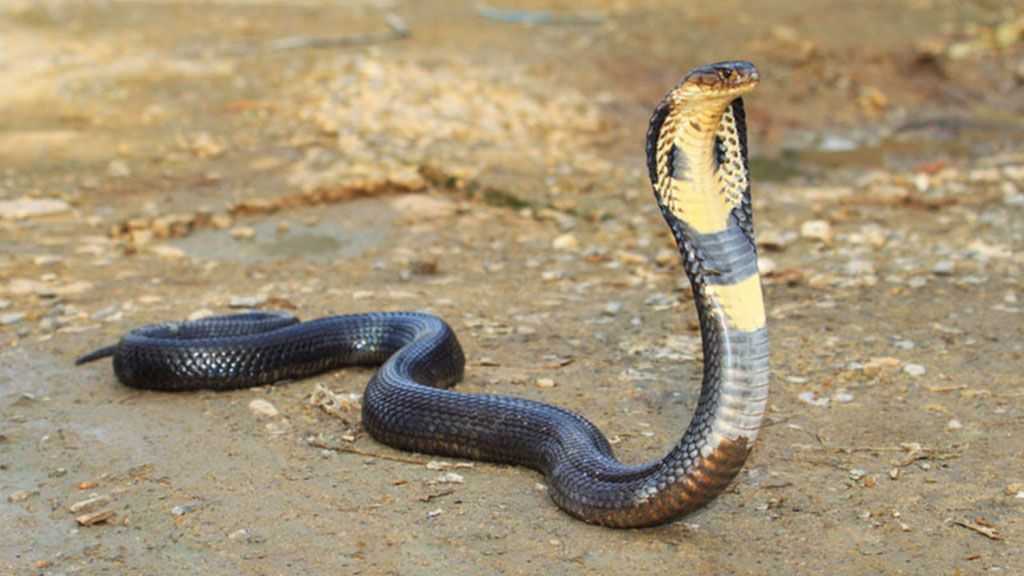
The King Cobra, the largest venomous snake on the planet, fascinates scholars and nature lovers alike. Its hunting skills and unique characteristics reveal the complexity of its existence. We will explore the life, habitat, venom, and ecological role of this majestic creature.
Natural Habitat
The King Cobra, or Ophiophagus hannah, is often found in habitats ranging from dense tropical forests to humid wetlands. These regions are rich in biodiversity, providing an abundance of prey, especially the presence of other snakes. As it moves through these forests, the King Cobra perfectly adapts to the dense vegetation and fallen trunks, allowing it to hunt stealthily. Its ability to camouflage is crucial for its survival. During the day, it tends to hide among leaves and branches, avoiding natural predators and taking advantage of the forest canopy’s shade.
Wetlands also play a crucial role in the behavior of this majestic snake. They are places where the King Cobra is often seen bathing. The high humidity of these areas provides the necessary hydration for its skin. Additionally, aquatic environments facilitate access to prey, as many snakes are attracted to these locations in search of food. The King Cobra is not just an agile predator; it has also become a specialist in exploring these ecosystems.
Over time, evolution has shaped its behavior in response to these habitats. The adaptation to life in forests and wetlands has increased its effectiveness as a hunter. With a diet primarily composed of other snakes, it stands out as a top predator. The ability to traverse different habitats influences not only its survival but also the structure of the communities it inhabits. For more information about aquatic life, check out this article.
Physical Characteristics
The coral snake, often called the queen of venomous snakes, displays a stunning pattern of vibrant colors. Its skin scales feature a striking combination of red, yellow, and black. This arrangement is not mere coincidence; each color plays a crucial role in the species’ survival.
The color patterns not only beautify but also carry profound significance. The intense coloration serves as a warning to potential predators. The bright hues signal the presence of venom, warning animals to stay away. Thus, these patterns function as an effective defense mechanism, preempting attacks even before the snake can react.
In addition to these vibrant colors, the coral snake exhibits distinct physical characteristics. Its body is slender and elegant, allowing for swift movements through dense vegetation. These agile movements are necessary in its quest for prey. The large, expressive eyes provide sharp vision, facilitating the detection of movement in its habitat.
The color of the scales also influences the snake’s body temperature. The interplay of light and heat helps regulate its internal temperature, vital for its metabolism. During the day, the snake remains hidden, opting to expose itself only in the shade or during hunting moments.
Therefore, the beauty of the coral snake is more than aesthetic; it is an intelligent adaptation to its environment. If you wish to learn more about the fascinating adaptations of fauna, click here to discover.
Hunting Behavior
The King Cobra, one of nature’s most impressive snakes, exhibits a hunting behavior that is truly fascinating. This highly specialized predator focuses almost exclusively on other snakes. This dietary choice is aided by a series of sophisticated hunting tactics. With its slender body and powerful muscles, the King Cobra moves with hypnotic grace, gliding through the underbrush in search of its prey.
A remarkable aspect of its hunting ability is its capacity to detect vibrations in the ground. This ability allows the King Cobra to perceive the movement of other snakes even from a distance. It’s as if it is tuned into a specific frequency, helping it identify the exact location where its prey is hiding.
Once it locates a victim, the King Cobra employs an ambush strategy. It positions itself silently, waiting for the right moment to launch a stealthy attack. When the prey approaches, the King Cobra strikes with impressive speed, using its agile body to capture and dominate the victim with extraordinary efficiency.
Moreover, its coloration and patterns help camouflage it in the environment. This camouflage is vital, allowing it to approach its prey unnoticed. The potent venom of the King Cobra plays a crucial role in its capture, quickly paralyzing its prey, which are usually smaller snakes. This venom is an important aspect of its strategy, ensuring that the hunt has no chance of escape.
The ability of this majesty of snakes to hunt and dominate its prey makes it one of the most effective predators in its habitat. To learn more about the fascinating biology of predators in nature, check out this article about the jumping spider, an example of an animal that also possesses remarkable hunting skills.
Venom and Effects
The King Cobra is one of the most fascinating snakes on the planet, not only for its imposing appearance but also for its venom. This venom is one of nature’s most powerful weapons. With a complex chemical composition, the venom of the King Cobra is neurotoxic and cardiotoxic, rapidly affecting the nervous system and heart of its prey. As soon as the snake strikes, the venom spreads within seconds, paralyzing the victim. This is crucial for capturing prey, as it allows the snake to feed on other reptiles, including smaller snakes, which make up a significant part of its diet.
In humans, the venom can be devastating. A bite from a King Cobra can cause, in severe cases, respiratory paralysis and cardiac arrhythmia. Although incidents are rare, the consequences can be fatal. The neurotoxin blocks the transmission of nerve impulses, leading to loss of muscle function and, if not treated quickly, death. In areas where these snakes are found, respect for them is crucial.
Understanding the venom of the King Cobra gives us a deeper insight into survival in nature. For the snake, venom is more than a weapon; it is a vital component of its ecosystem. This snake not only regulates reptile populations in its habitat but also plays an important role in the health of the ecosystem. Thus, the venom of the King Cobra exemplifies the Darwinian struggle for life, allowing a majestic species to persist in a wild and complex world. For more on the fascinating diversity of snakes, see this article about the captivating nature.
Ecological Importance
The King Cobra, with its majestic presence, plays a vital role in maintaining ecological balance. As the supreme predator of snakes, it acts as an effective population controller, preventing the overpopulation of these species. This is especially important in habitats where snake diversity is high. By regulating populations, the King Cobra helps prevent excessive competition for resources, allowing other species to thrive.
The impact of the King Cobra on the food chain is profound and multifaceted. It primarily feeds on snakes, including both venomous and non-venomous species. By controlling these species, the King Cobra ensures that the local fauna remains in a healthy balance. This action not only protects prey populations but also benefits other predators in the ecosystem, who can focus on their preferred prey without the pressure of an excess of snakes.
Furthermore, the presence of the King Cobra can influence the behavior of other predators. Many birds and mammalian predators modify their hunting patterns in response to this iconic snake. The presence of an alpha predator like the King Cobra brings a natural order to the habitat, allowing entire ecosystems to flourish.
Thus, the King Cobra is not just a beautiful specimen of nature but a crucial component of the web of life. Its ecological importance is such that its presence is an indicator of the health of its habitat. For a deeper understanding of the dynamics of snakes in the ecosystem, you can explore this article about spiders as insect predators, which also play an essential role in the food chain.
Conclusions…
The King Cobra, with its impressive presence and unique hunting ability, is a masterpiece of nature. Education about snakes is crucial for preserving them and promoting peaceful coexistence. Preserving its habitat ensures the continuity of its fascinating story.
Did you know?
Where is the King Cobra found?
The King Cobra is predominantly found in the tropical forests of Asia, including countries like India, Thailand, and Indonesia.
What is the diet of the King Cobra?
The diet of the King Cobra primarily consists of other snakes, as well as small mammals and lizards when necessary.
Is the King Cobra dangerous to humans?
Although the King Cobra has potent venom, attacks on humans are rare and usually occur in defense.
What is the average size of the King Cobra?
An adult King Cobra can reach up to 18 feet in length, making it one of the longest snakes in the world.
How does the King Cobra impact its habitat?
The King Cobra plays an important role in maintaining ecological balance by controlling the populations of smaller snakes and other animals.