Alligator Turtle: The Majesty of Rivers
The alligator turtle, one of the most fascinating freshwater creatures, combines an imposing appearance with intriguing behavior. In this article, we will examine its habitat, diet, physical characteristics, and the impressive strength of its bite.
The Origin and Habitat of the Alligator Turtle
The alligator turtle, one of the most fascinating aquatic creatures, has roots that date back to times when dinosaurs dominated the Earth. This species is an evolutionary relic, belonging to the family Chelydridae, which has masterfully adapted to the ecosystem of rivers and swamps. Its natural habitat, characterized by slow-moving waterways, lakes, and marshy areas, reflects its long evolutionary history. Encountering the alligator turtle is an experience that evokes the ancient and the primitive; it reveals itself as a true relic of a distant past.
Distributed mainly across the United States and parts of Mexico, alligator turtles live in aquatic environments that offer a combination of dense vegetation and calm waters. These characteristics are crucial for their survival. The habitat favors their camouflage ability, allowing them to blend in with the roots and debris where they hide from predators and wait for their prey. The still water, rich in nutrients, provides an abundance of food.
During the day, they are often found submerged, with only their eyes and nostrils visible, taking advantage of this stealthy behavior to avoid being noticed. This aquatic lifestyle is closely linked to how the alligator turtle feeds. It is an opportunistic predator, feeding on fish, small mammals, and even birds that venture too close to its waters. Every element in its habitat, from vegetation to water depth, influences its behavior and hunting strategies. For a more detailed view of how turtles adapt in aquatic habitats, I recommend reading about the cormorant, a bird that has also successfully adapted to this environment.
Impressive Physical Characteristics
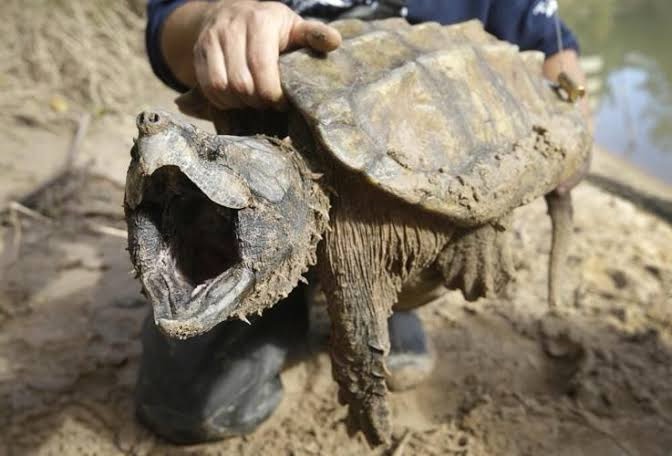
The alligator turtle, a true majesty of rivers, boasts physical characteristics that make it imposing in its habitat. This fascinating creature can reach up to two meters in length, making it one of the largest freshwater turtles. Its size is a notable defense, as predators know that facing it may not be a simple task. Its shell, robust and textured like the bark of a tree, offers protection against attacks. With a shape that allows it to mimic the muddy bottoms, it camouflages itself masterfully in its natural environment, becoming invisible to the eyes of its prey and enemies.
The limbs of the alligator turtle are a marvel of adaptability. Its sharp, long claws allow it to grip firmly on aquatic surfaces. This ability is vital for climbing rocks or clinging to floating logs, where it can bask in the sun. The strength of these claws also aids in its primary activity: hunting. When hunting, the alligator turtle is cunning and patient, using its ability to hide and attack with surprising speed.
Moreover, its powerful jaws are equipped with a row of sharp teeth, making it a formidable predator. This structure, combined with its imposing size, places it at the top of the food chain. This exceptional combination of size, protection, and adaptability makes the alligator turtle a splendid example of nature in action. To understand more about the beauty of aquatic creatures, check out this article on the cormorant, a bird that also stands out in aquatic environments.
Behavior and Diet
The alligator turtle, with its large and robust body, is a remarkable artist of camouflage. Submerged in the murky waters of rivers and swamps, it becomes almost invisible. This stealthy behavior is an effective strategy for capturing its prey. As a top predator, it feeds on an impressive variety of animals. Its diet includes fish, aquatic birds, and even small mammals that approach the water. The hunting method is equally fascinating. It patiently observes, blends into the surroundings, and then strikes with surprising speed, using its powerful shell to trap its victims.
The social interaction among alligator turtles is subtle but no less interesting. During mating periods, males become more active and may display flashy behaviors to attract females. These rituals include vocalizations and movements that resemble aquatic dances. They are observed gathering at certain locations to bask in the sun or protect themselves from predators. Although generally solitary, some turtles can be seen in small groups, especially during the breeding season. This behavior of isolation and gathering highlights the versatility of this incredible species. The impact of their diet on the ecosystem is profound. By controlling the populations of their prey, the alligator turtle helps maintain the natural balance. Its role as a top predator is essential for the healthy functioning of its habitat. For more information on the importance of predators in ecosystems, see this interesting article on aquatic life.
The Bite Force: An Irreplaceable Power
The alligator turtle, one of the most formidable aquatic predators, possesses one of the most powerful bites in the animal kingdom. Its bite force, estimated at up to 1,400 pounds (approximately 635 kg) per square inch, is unparalleled. This impressive muscular apparatus allows it to crush robust shells and capture agile prey with ease. Unlike other predators, this turtle not only feeds on small fish but also on crustaceans and aquatic mammals. The strength of its bite has a profound impact on the dynamics of its ecosystem.
When the alligator turtle attacks, it removes prey that could otherwise proliferate rapidly. This helps maintain population balance among species. For example, by regulating fish populations, its powerful bite ensures that aquatic communities remain healthy and sustainable.
Furthermore, its feeding habits directly influence the growth of underwater vegetation. By consuming herbivorous fish, the alligator turtle allows aquatic plants to thrive, which in turn provides shelter and food for other species. This interconnectedness highlights the beauty of nature: each bite has a ripple effect throughout the food chain. Toucans, for instance, depend on these healthy habitats for their survival and reproduction. The bite force of the alligator turtle is not just a fascinating phenomenon of biology; it is a vital component in the functioning of the ecosystem it inhabits.
Conservation and Threats
The alligator turtle, a majestic creature of the rivers, faces significant challenges in its habitat. The destruction of its environment, primarily caused by urbanization and pollution, poses an increasing threat. The rivers, once its natural homes, are becoming less habitable. Deforestation along riverbanks compromises water quality, increasing siltation. This results in a damaged aquatic ecosystem, where the alligator turtle struggles to survive.
Another major risk comes from overhunting. The demand for alligator turtle meat and products has led to a drastic decline in their populations. Indiscriminate hunting not only reduces the number of individuals but also affects the species’ regeneration. Additionally, accidental capture in fishing nets is a problem that many do not consider. Many alligator turtles become trapped, leading many to die before being released.
To combat these threats, efforts are underway to preserve their habitat. Ecosystem restoration projects aim to revitalize rivers and adjacent areas. Local and international organizations are fighting for legislation to protect the alligator turtle. Public education is crucial, raising awareness about the importance of conserving this unique species.
The preservation of the alligator turtle is an effort that involves not only biologists but also the community. Engaging people is vital. Together, we must ensure that this remarkable creature continues to live in the rivers it has always called home. For a broader perspective on conservation, you can explore this article on species conservation.
Conclusions…
The alligator turtle is a striking example of evolutionary adaptation and power in freshwater. With its unique behavior and impressive characteristics, this reptile continues to captivate and intrigue biologists and nature enthusiasts around the world.
Did You Know?
- What is the bite force of the alligator turtle? The bite force of the alligator turtle can reach up to 1,500 psi (pounds per square inch), making it one of the most powerful in the animal kingdom.
- What does the alligator turtle eat? The alligator turtle is carnivorous, feeding on fish, amphibians, and even small mammals that approach the water.
- How long does an alligator turtle live? An alligator turtle can live up to 70 years in captivity and up to 50 years in the wild.
- Which turtle has the strongest bite? The alligator turtle is known to have the strongest bite among turtles, followed by other species, but to a lesser extent.
- Which turtle is dangerous? The alligator turtle is considered dangerous due to its powerful bite and territorial behavior.
- Which turtle eats meat? The alligator turtle is one of the carnivorous turtles, with a diet primarily composed of meat.
- Which animal has the strongest bite in the world? The animal with the strongest bite in the world is the Nile crocodile, with an average bite force of 3,700 psi.
- Which is the fastest turtle? The fastest turtle is the leatherback turtle, which can reach speeds of up to 35 km/h.