Green Anaconda: The Majesty of Waters
The green anaconda, one of the largest snakes in the world, dominates the aquatic ecosystems of South America. With its robust body and impressive abilities, this predator is a marvel of nature that deserves to be explored in depth. In this article, we will unveil the secrets and characteristics of this magnificent creature.
The Habitat of the Green Anaconda
The green anaconda, one of the largest snakes in the world, inhabits the lush tropical forests and swamps of South America. These humid environments provide the perfect habitat for this magnificent creature. Anacondas prefer areas close to bodies of water, such as rivers, lakes, and marshes. Water is not only essential for their survival but also for their daily activities and hunting strategies. They are masters at swimming, using their muscular bodies to glide smoothly through the water currents.
The climate of the green anaconda’s habitats is typically warm and humid, characteristic of tropical regions. Daytime temperatures can reach up to 30 degrees Celsius, while nights usually bring a mild breeze. This environment favors the abundance of their prey, which includes fish, birds, and mammals that approach the water. The ecosystems they inhabit are teeming with biodiversity. Anacondas are found in flooded forests, where they camouflage among the aquatic vegetation. This cunning behavior not only helps them avoid predators but also to surprise their prey. Due to their adaptation to aquatic areas, the green anaconda does not require constant terrestrial shelter. Instead, it hides among the roots of trees or in the emergent vegetation underwater. The balance of wildlife in these habitats is intriguing, as can be appreciated when reading about the **biguá**, a bird that also depends on water for survival.
Impressive Physical Characteristics
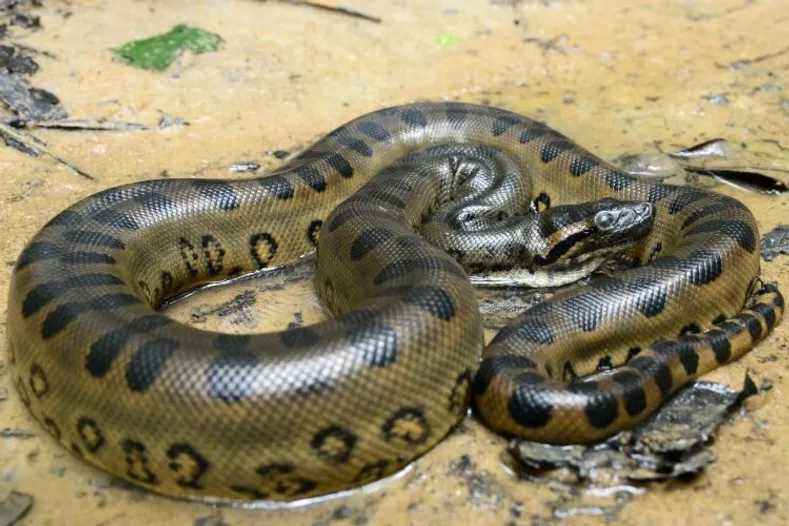
The green anaconda is one of the largest snakes in the world, a true colossus that inhabits the murky waters of South America. Its impressive size can reach lengths of up to 9 meters and weigh as much as 250 kilograms. This snake, commonly found in swamps and rivers, has a robust and muscular body, perfectly adapted to the aquatic environment in which it lives. Its coloration is a true masterpiece. The vibrant green of its skin is adorned with dark spots, providing effective camouflage among the aquatic vegetation. This characteristic is vital for the anaconda, allowing it to blend into its surroundings while waiting for its prey.
The anatomy of the green anaconda is a perfect combination of strength and agility. Its jaw is designed to open at wide angles, facilitating the capture of prey that is considerably larger than its own head. The snake has sharp, curved teeth that help keep its prey firmly grasped. This adaptation is crucial, as the anaconda often feeds on animals such as capybaras and aquatic birds. In addition to its hunting capabilities, the green anaconda displays a surprising behavior by moving gracefully and discreetly in the water. Its swimming ability is enhanced by its hydrodynamic shape. The ventral scales, shaped like small saws, make its movements even smoother. This combination of impressive coloration and muscular strength makes the green anaconda an effective, majestic, and feared predator of the waters. To learn more about the aquatic vertebrates that coexist in this ecosystem, check out this article on Brazilian water birds.
Behavior and Hunting Habits
The majestic green anaconda, one of the largest snakes in the world, exhibits fascinating behavior. This snake is predominantly aquatic, gliding gracefully through the rivers and swamps of South America. Its green color and dark spots allow it to camouflage among the aquatic vegetation. This makes it a cunning and effective predator. The hunting of the green anaconda is an impressive spectacle. It relies on ambush, remaining motionless for long periods. Using its keen sense of smell and ability to detect vibrations in the water, the snake waits for unsuspecting prey to approach. The anaconda’s diet is varied, including birds, mammals, and even other reptiles, such as caimans. When prey approaches, the anaconda reacts quickly. It uses its powerful muscles to launch a lightning-fast attack. With a firm bite, it grips the prey before wrapping the victim in a lethal embrace.
The movement of the anaconda is predominantly aquatic, but it also moves skillfully on land. On land, its locomotion is a spectacle of strength and agility. To find shelter, anacondas make burrows in banks or hide among the leaves. The interaction with its environment is a crucial aspect of its survival. It finds refuge in dense vegetation and shallow waters, where it can rest and hunt. In many ways, the green anaconda represents a delicate ecological balance. To learn more about the dynamics of the environment it inhabits, visit this link.
Reproduction and Development
The majesty of the green anaconda is not limited to its size and strength; it is also revealed in its fascinating life cycle. This genus of snake, known for its impressive adaptability, has an intriguing and effective reproductive method. The mating season occurs between April and May, when males and females come together in an impressive spectacle. Males compete, often intertwining in a dance that can last for hours. After mating, the female retains the sperm and may choose to fertilize the eggs later. This is a mechanism that ensures the female can choose the ideal time for producing offspring, balancing favorable environmental conditions with the need for reproduction.
After about six months, the female gives birth to a litter that can vary from 20 to 80 young. The young are born fully formed and independent, a fascinating characteristic of their development. Upon leaving maternal protection, each hatchling enters a world full of challenges. Avoiding predators, such as large birds and other reptiles, they need to quickly develop their hunting skills. They grow rapidly, feeding on fish, small mammals, and birds. Although anacondas do not exhibit active parental care after birth, the choice of birth location is vital. They choose environments close to water sources, where the likelihood of survival is greater. Growth is accelerated, with most remaining anacondas reaching impressive sizes within a year. To learn more about how other snakes adapt and survive in their habitats, see this article.
Conservation and Threats
The majesty of the green anaconda is threatened by both natural and human factors. Much of its habitat is found in vulnerable regions, susceptible to the impacts of human activity. Deforestation and river pollution cause the degradation of the ecosystems where these majestic snakes live. Natural threats exist but are often exacerbated by human interference. Flooding, a common phenomenon in the Amazon, can alter the aquatic habitats of the green anaconda, hindering its hunting ability. Climate change also poses a logical challenge, affecting water temperature and, consequently, the reproduction of the prey that feeds the snake.
The capture and illegal trade of wildlife represent one of the most direct threats to the green anaconda. These snakes are often hunted for their skin and enigmatic fame. This uncontrolled commercial exploitation harms the population health of the species. The preservation of the green anaconda is not just a matter of saving a species. The green anaconda plays a crucial role in controlling the population of other animals, contributing to the balance of the ecosystem. Furthermore, its presence in flooded areas indicates the environmental health of the region. Therefore, conservation efforts are vital. Protecting the natural habitats of the green anaconda is essential to ensure its future. Public awareness and effective conservation policies are imperative. To understand more about the importance of snakes in our ecosystem, check out this article.
Conclusions…
The green anaconda reveals itself not only as an icon of South American biodiversity but also as an example of the beauty and complexity of wildlife. Its presence in ecosystems is vital, and understanding its characteristics and behaviors helps us to further appreciate our rich nature. Respecting and protecting this species is a commitment for all of us.
Did you know?
What is the geographical distribution of the green anaconda? The green anaconda is predominantly found in swamps, rivers, and flooded forests of South America, being most common in the Amazon basin.
How much can a green anaconda weigh? These snakes can weigh over 200 kg, with some reports of individuals reaching up to 250 kg.
What is the diet of the green anaconda? The green anaconda primarily feeds on fish, birds, and mammals, using its strength to capture and swallow its prey whole.
How does the green anaconda reproduce? Reproduction occurs through ovoviviparity, where the female gives birth to fully formed young, usually between 20 to 40, after a gestation period of about six months.
Is the green anaconda dangerous to humans? Although the green anaconda is a powerful snake, attacks on humans are extremely rare, as they generally avoid contact with people.