Coral Snake: The Queen of Venomous Snakes
The coral snake is one of the most fascinating and feared snakes in America. With its vibrant color pattern, it stands out for both beauty and potential lethality. Delving into its habitats, behaviors, and myths can provide a deeper understanding of this enigmatic creature.
Habitat and Distribution
The coral snake, a magnificent representative of serpentine fauna, typically occupies a wide range of habitats. It is often found in tropical forests, savannas, open fields, and even in drier environments, such as the caatinga. These environments vary in climatic conditions and vegetation, providing varied refuge and resources. This allows the species to adapt to different ecosystems, from humid to semi-arid.
Its geographical distribution extends across various regions of the Americas, especially in tropical zones. They are particularly common in the forests of Central America, where the dense green cover offers an ideal environment. Additionally, their notable presence in the southern states of the United States and parts of Brazil and Colombia highlights the versatility of the coral snake. They are also adaptable and can be spotted in urban or disturbed areas where vegetation persists.
These snakes are not picky about habitat, but their preference for places that offer shelter and prey is notable. The coral snake is often observed camouflaged among dry leaves or fallen logs. Remaining unnoticed in its natural environment is vital for its survival, as it not only protects itself from predators but can efficiently ambush its prey.
This ability to adapt and survive in various habitats makes the coral snake a true queen among venomous snakes. To learn more about the fauna that coexists in similar habitats, visit this article about birds.
Physical Characteristics
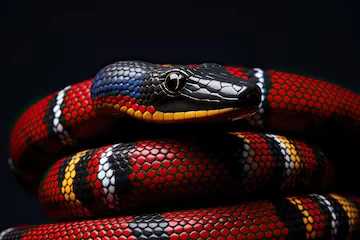
The coral snake, often called the queen of venomous snakes, displays a stunning pattern of vibrant colors. The scales of its skin feature a striking combination of red, yellow, and black. This arrangement is not mere coincidence; each color plays a crucial role in the species’ survival.
The color patterns not only beautify but also have a profound meaning. The intense coloration serves as a warning to potential predators. The bright hues signal the presence of venom, warning animals to stay away. Thus, these patterns function as an effective defense mechanism, preempting attacks even before the snake can react.
In addition to these vibrant colors, the coral snake has distinct physical characteristics. Its body is slender and elegant, allowing for quick movements through dense vegetation. These agile movements are necessary in its quest for prey. The large, expressive eyes provide sharp vision, facilitating the detection of movement in its habitat.
The color of the scales also influences the snake’s body temperature. The interplay of light and heat helps regulate its internal temperature, vital for its metabolism. During the day, the snake remains hidden, choosing to expose itself only in the shade or during hunting moments.
Therefore, the beauty of the coral snake is more than aesthetic; it is an intelligent adaptation to its environment. If you wish to learn more about the fascinating adaptations of fauna, click here to discover.
Behavior and Feeding
The coral snake, with its slender body and vibrant colors, exemplifies an intriguing behavior pattern. Predominantly nocturnal, it emerges under the moonlight, appearing agile and cautious. Its hunting tactics are meticulously adapted, utilizing stealth to approach its prey. Its diet consists mainly of small lizards and amphibians. In a silent dance, the coral snake glides, waiting for opportune moments for a fatal capture. The bright colors are not just for show; they play a crucial role in its survival. By displaying vibrant patterns, the coral snake signals its toxicity to potential predators, such as birds and mammals. This defensive behavior allows it to move confidently in its habitat. This, in turn, influences the structure of the ecosystem in which it resides.
The venom delivery technique is sophisticated. With prey equipped to inject venom in minutes, the snake is an example of efficiency. After a successful strike, it patiently waits for its prey to lose mobility. This positions it as a top predator in the food chain. The interaction between coral snakes and their predators highlights the need for a delicate balance. The unique dynamics between the coral snake and its environment reveal how evolution has shaped its characteristics. This complex process has helped establish its place in the ecosystem’s infrastructure. To better understand interactions in nature, it is worth exploring the incredible resilience of other living beings.
Dangers and Myths
The coral snake, with its slender body and vibrant colors, is often perceived as one of the most dangerous reptiles in nature. However, the dangers associated with this snake are truly complex. Although its venom is lethal, accidents are rare, as it tends to avoid human contact. Most bites occur due to attempts at handling or misidentification with harmless species. This confusion generates a certain fear and perpetuates myths surrounding the coral snake.
One of the most common myths is the idea that the color of a coral snake’s stripes can serve as a clear guide for identification. However, several snakes have similar patterns, making this criterion insufficient. Another myth is that the coral snake pursues its predators, when in reality, it usually hides and retreats from danger. The true wisdom lies in leaving these creatures in peace, respecting their habitat.
Education about the coral snake is essential for public safety. After all, demystifying these jungle sirens is a crucial step in preventing accidents. Awareness of the importance of the coral snake in the ecosystem is also vital. By learning about their behaviors, characteristics, and habitats, people can reduce fear and promote peaceful coexistence. Educational resources can include guided nature walks or workshops on snake identification. This helps cultivate a more harmonious relationship between humans and the wonders that nature offers. For more information on human-animal interactions, see Is the orca a whale or a dolphin?.
Conservation and Coexistence
As we explore the complexities of wildlife, the coral snake emerges as an icon of biodiversity. However, its beauty and venom present unique challenges for conservation. Preserving this essential snake requires an integrated approach. Firstly, environmental education is crucial. Knowledge reduces fear and promotes coexistence. When people understand the ecological role of the coral snake, its value becomes more evident. Furthermore, strict enforcement against illegal wildlife trafficking is necessary. Coral snakes are often captured for trade, and without protection, their population can drastically decline.
The coral snake’s natural habitat, which includes tropical forests and tropical areas, also needs attention. The destruction of these environments by human activities is harmful not only to the snake but to the entire ecosystem. Measures to reduce deforestation, implement protected areas, and promote sustainable land-use practices are essential. Creating natural reserves focused on coral snake conservation would help restore its habitat and ensure its survival.
The interaction between humans and snakes can be harmonious. It is possible to create safe spaces, with signage indicating the presence of coral snakes. Thus, awareness can prevent accidents, benefiting both sides. Promoting rehabilitation programs for local populations, considering conservation while addressing human needs, is also vital. Peaceful coexistence is not only desirable but essential for protecting this magnificent species. For more on how snakes affect ecological balance, see our studies on wildlife.
Conclusions…
The coral snake is a creature shrouded in mysteries and legends. Understanding its behavior and ecological importance is essential for conservation and coexistence. Respecting the nature of these magnificent creatures is vital for protecting biodiversity.
Did you know?
Where are coral snakes found?
Coral snakes are primarily found in the Americas, from the southern United States to South America, inhabiting tropical forests and savannas.
How to identify a true coral snake?
A true coral snake has a pattern of vibrant colors, typically with red, black, and yellow rings. It is important to know these characteristics to avoid confusion with non-venomous species.
What is the behavior of the coral snake?
Coral snakes are generally shy and prefer to avoid human contact. They are nocturnal and primarily use their venom for hunting.
Is the coral snake really that dangerous?
Yes, the coral snake has potent venom. However, attacks on humans are rare, as they tend to hide rather than attack when threatened.
What myths are associated with the coral snake?
Many myths surround the coral snake, including its reputation for being fatally venomous. It is important to distinguish between accurate information and popular exaggerations.