Boa Constrictor: The Master of Mystery
The boa constrictor, a majestic snake found in Central and South America, is famous for its impressive hunting method. This article will dive into the curiosities, habitats, and behaviors of this magnificent creature, revealing its vital role in the ecosystem and the fascination it holds for humans.
The Biology of the Boa Constrictor
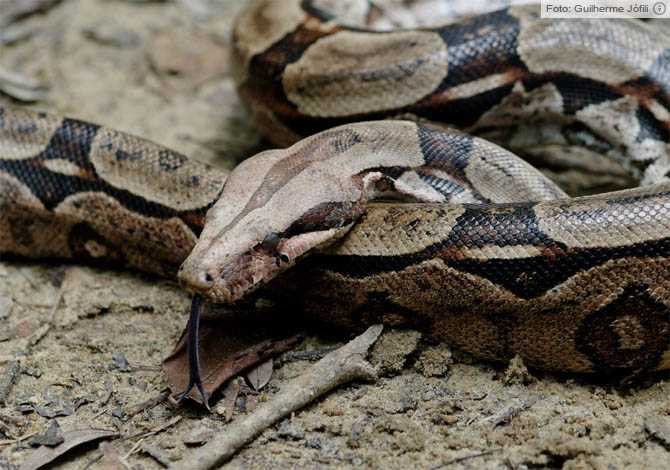
The boa constrictor, known for its striking appearance, is a snake that captures everyone’s attention. Adults can reach lengths of up to 10 feet, with some exceptional records exceeding 13 feet. Its robustness is a notable characteristic, resulting in a muscular and thick body. This anatomy allows boa constrictors to efficiently constrict their prey. Color is an essential factor for their camouflage. The scales vary in shades of green, brown, and gray, often displaying patterns that mimic the natural environment. This allows them to blend into dense forests and swampy areas. When it comes to adaptations, their scales have a unique texture, providing not only protection but also aiding in movement across varied environments. The eyes are generally a yellowish color, giving the snake an enigmatic expression. The nostrils, positioned on top, assist in detecting scents, crucial for their stealthy hunting.
Internally, the boa constrictor has a structure that allows it to swallow large prey. Its jaw dislocates, enabling the snake to consume prey that can be several times larger than the width of its body. This ability is a vital adaptation in an environment where food availability can be unpredictable. Therefore, the boa constrictor, with its impressive physical characteristics, secures its place as a master of mystery in nature. To learn more about the impressive diversity of animal life, visit this link.
Habitat and Distribution
The boa constrictor, a magnificent representative of the serpentine fauna, typically occupies a wide range of habitats. It is often found in tropical forests, savannas, open fields, and even in drier environments like the caatinga. These environments vary in climatic conditions and vegetation, providing refuge and varied resources. This allows the species to adapt to different ecosystems, from humid to semi-arid.
Its geographical distribution extends across various regions of the Americas, especially in tropical zones. They are particularly common in the forests of Central America, where the dense green canopy offers an ideal environment. Additionally, their notable presence in the southern states of the United States and parts of Brazil and Colombia highlights the versatility of the boa constrictor. They are also adaptable and can be spotted in urban or disturbed areas where vegetation persists.
These snakes are not picky about habitat, but their preference for locations that offer shelter and prey is notable. The boa constrictor is often seen camouflaged among dry leaves or fallen logs. Remaining unnoticed in its natural environment is vital for its survival, as it not only protects itself from predators but can also ambush its prey efficiently.
This adaptability and survival in diverse habitats make the boa constrictor a true queen among venomous snakes. To learn more about the fauna that coexists in similar habitats, check out this article on birds.
The Art of Hunting
The boa constrictor, with its imposing presence, is an artist in the art of hunting. It utilizes its constriction ability, a technique that is both effective and fascinating. When approaching its prey, the boa remains silent and camouflaged, using its robust body to blend into the environment. This cunning behavior is crucial for the success of its capture.
When the prey is identified, whether a small mammal, a bird, or even a reptile, the boa strikes with surprising speed. After wrapping around the prey, it slowly tightens, demonstrating a masterful display of strength. This method of constriction halts blood circulation, causing the prey to succumb. It is a spectacle of nature: brute force combined with subtle strategy.
The prey of the boa constrictor varies. It prefers rodents, such as rats and squirrels, which are abundant in its habitat. Additionally, birds, such as sparrows and small finches, are also part of its dietary repertoire. Another less common target, but occasionally captured, is small lizards.
After a successful hunt, the boa ingests the prey whole, a process that can take several hours. The ability to adapt to different types of prey is a characteristic that distinguishes the boa constrictor in the animal kingdom. Its role as a predator is essential for the balance of the ecosystem, where each capture is a dance of life and death. To learn more about the fascinating world of predators, see rhinoceros, which also plays a vital role in its habitat.
Behavior and Habitat
The boa constrictor is a fascinating creature, living in tropical forests and areas near watercourses. Its social behavior is intriguing. Although generally solitary, the boa groups during the breeding season, in a display of fascinating behavior. Males compete for females in a ritual of intertwining. Females choose partners based on strength and skill, ensuring the strongest offspring.
When it comes to defense, the boa adopts a cunning strategy. It can camouflage itself, adopting the colors and textures of the environment. Instead of attacking, the boa prefers to flee. Its size and strength make it feared by many predators, but it is not immune to them. Young boas face dangers from birds of prey, while adults may be attacked by large felines.
Interacting with other animals is an essential part of its behavior. Boas can associate with other reptiles and small mammals, but they are often seen as top predators in the food chain. They feed on birds, rodents, and even other reptiles. The hunting method is impressive: it involves silent searching for prey, followed by a quick attack and a constricting grip, suffocating the victim before consuming it.
The boa constrictor is a master of mystery, remarkably adapting to its environment. To understand more about the diversity of life in the natural habitat, you can access information about the fascinating waterbird of Brazil, which also inhabits these rich and dynamic ecosystems.
Conservation and Threats
The boa constrictor, one of nature’s most fascinating creations, faces significant challenges for its survival. Conservation efforts have intensified, but the situation remains critical. The primary enemy of the boa constrictor is habitat destruction. Agricultural expansion and urbanization have reduced the tropical forests where these magnificent reptiles live.
Deforestation areas, especially in the Amazon, are an alarming focus. Diligent mapping and research are conducted to monitor boa constrictor populations. This data allows the identification of critical areas that need immediate protection. Additionally, local organizations focus on preserving natural habitats and promoting sustainable land-use practices.
Environmental rehabilitation and restoration projects are gaining attention. Scientific and educational articles are being distributed to raise awareness about the importance of the boa constrictor and its ecological role. Communities are encouraged to participate, promoting the protection of these reptiles.
However, the illegal capture of the boa constrictor, often for the pet trade, is an ongoing threat. Enforcing laws against this practice, in collaboration with authorities, represents a vital part of the species’ conservation. To delve deeper into the importance of environmental preservation, it is recommended to read about the new discovery of fungi in the Amazon, illustrating the complexities of ecological interactions.
Protecting the boa constrictor is, therefore, a reflection of the need to respect and care for our environment. Despite the challenges, hope lies in the resilience of nature and the dedicated efforts towards its conservation.
Conclusions…
The boa constrictor, with its impressive constriction ability and adaptability, is one of the most fascinating creatures in nature. Protecting it is essential for the health of the ecosystem, and understanding its biology offers us a deep insight into wildlife. We must always respect and preserve these remarkable animals.
Did You Know?
- What is the maximum size a boa constrictor can reach?
The boa constrictor can reach lengths of up to 10 feet, although some exceptional individuals can reach 13 feet. - Is the boa constrictor dangerous to humans?
No, the boa constrictor is non-venomous and generally avoids contact with humans, preferring isolated habitats. - How does the boa constrictor reproduce?
Boa constrictors are ovoviviparous, meaning they give birth to fully developed young after a gestation period. - What do boa constrictors eat?
They primarily feed on mammals and birds, using their constriction technique to capture and immobilize prey. - What are the main threats to the boa constrictor?
The main threats include habitat destruction due to urbanization and agriculture, and hunting for their skins.