Chameleon: The Magic of Change
Chameleons are extraordinary creatures, known for their incredible ability to change color and their independently moving eyes. In this article, we will explore the biology of these magnificent lizards, their adaptations, behaviors, and the vital role they play in the ecosystem.
What is a Chameleon?
The chameleon is a fascinating creature, famous for its unique adaptation and camouflage abilities. Classified in the family Chamaeleonidae, these reptiles are primarily found in the warm regions of Africa, although some species inhabit Asia and Europe. There are about 160 distinct species, each exhibiting unique characteristics and behaviors. For example, the panther chameleon, known for its vibrant colors, contrasts with the spiny-nosed chameleon, notable for its peculiar nasal protrusion.
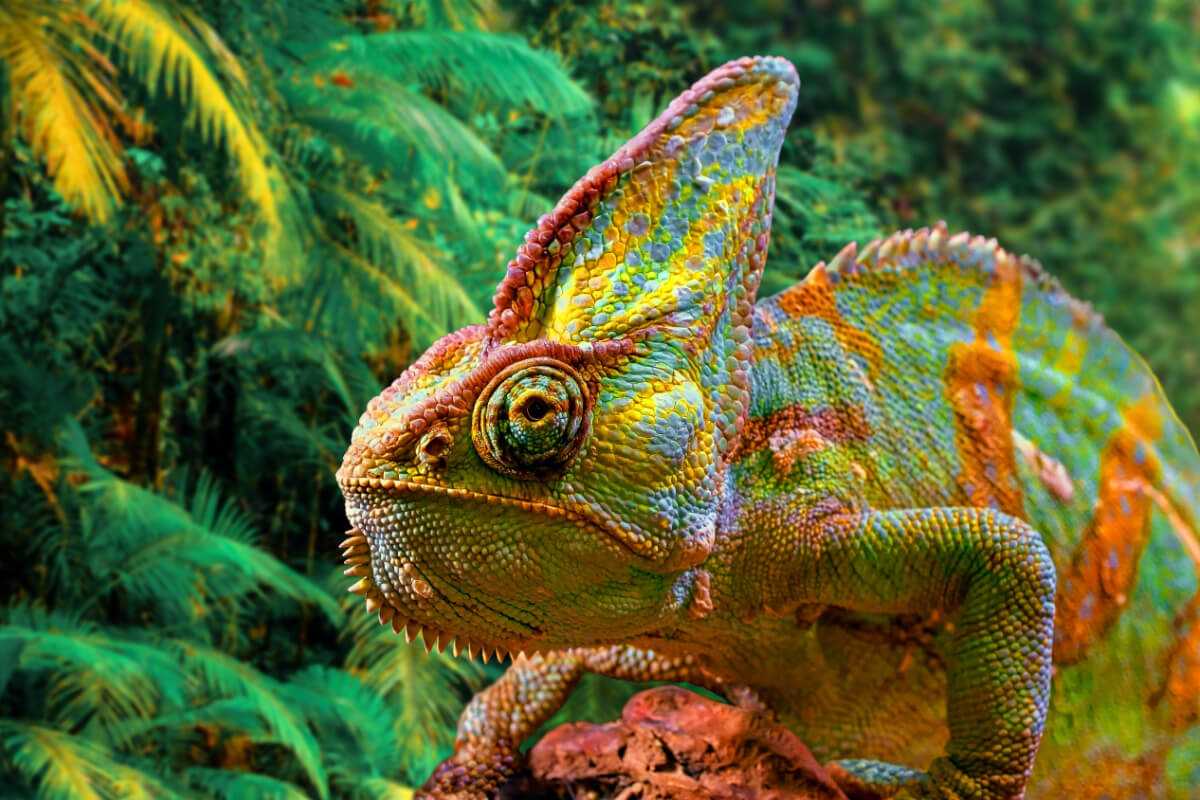
One of the most impressive features of chameleons is their incredible color change. This phenomenon is not just a form of camouflage to escape predators but also a means of communication. Through colors, chameleons can express emotions such as anger or fear and communicate during mating.
Chameleons possess wonderful adaptations to their environment. They have eyes that can move independently, allowing for nearly 360-degree vision. Additionally, their long, sticky tongues are a remarkable method of capturing prey, reaching exceptional sizes. The pace of life for these creatures is often meditative, with slow, deliberate movements that help them avoid the watchful eyes of predators.
These adaptations make chameleons not only fascinating but also brilliant examples of the diversity and complexity of life in nature. To explore more about the incredible lives of adaptive creatures, visit the platypus, which also displays interesting adaptive behavior.
How Their Colors Work
Chameleons are famous for their ability to change color. This magical phenomenon is a fascinating adaptation of the biology of these reptiles. Color change occurs through a combination of factors, primarily in a system of specialized cells called chromatophores. These chromatophores contain pigments that, when exposed to stimuli, expand or contract, altering the color of the animal’s skin. In addition to chromatophores, chameleons have cells called iridophores, which reflect light and create an impressive range of colors, depending on the angle of light and the structure of their cells.
Camouflage is one of the main functions of this incredible visual trick. By changing color, chameleons can blend into their environment, becoming almost invisible to predators and prey. This strategy is vital for their survival, as many chameleons fall prey to birds and other predators. By camouflaging themselves in green leaves or brown stones, for example, they reduce the likelihood of being detected.
Besides camouflage, color change also plays an important role in communication. Chameleons use vibrant colors to express emotions such as aggression or attraction. During mating season, males display bright colors to attract females, showcasing their strength and vitality. Therefore, color is not just a layer of protection; it is a visual language.
To explore more about how visual language is crucial in nature, check out this article on jumping spiders.
The Unique Eyes of the Chameleon
Chameleons are among the most fascinating examples of evolutionary adaptation in nature. One of the most impressive traits of these reptiles is their eyes, which can move independently. Each eye can rotate in different directions, allowing them to have a panoramic view that encompasses nearly 360 degrees. This provides an immeasurable advantage for both hunting and defense. While one eye focuses on a potential prey, the other can monitor the presence of predators. This ability is vital in environments where safety and hunting efficiency are essential for survival.
In addition to their lateral vision, chameleons’ eyes also possess an exceptional depth perception capability. They can accurately calculate distances, which is crucial when launching their sticky tongues to capture insects. When a chameleon spots prey, it quickly calculates the distance and strikes with remarkable precision. The combination of eye mobility and depth perception transforms each hunt into a demonstration of impressive visual skills.
In terms of defense, the ability to observe the environment without being noticed is a crucial advantage. Chameleons often inhabit dense and flowering environments, where camouflage is their best friend. By moving only their eyes, they can assess threats without exposing themselves. By keeping their heads and bodies still, they increase their chances of going unnoticed. This duality between hunting and defense is an elegant dance that exemplifies the magic of change that permeates the lives of these creatures. For an even deeper insight into survival in nature, also see the fascinating world of insects.
The Ecological Role of the Chameleon
Chameleons play a vital role in the ecosystems they inhabit. These incredible reptiles act as both predators and prey, maintaining the natural balance. They consume a variety of insects, helping to control pest populations that could cause disasters in crops. Their camouflage ability not only protects them but also turns them into stealthy hunters. By blending into their environment, they surprise their prey, ensuring efficient feeding.
Moreover, chameleons serve as food for a variety of predators, such as birds and mammals. This interactivity within the food chain demonstrates the interdependence between species. The extinction of chameleons could have cascading effects, destabilizing the balance of the ecosystem. When their populations decline, pests can proliferate uncontrollably, and the wildlife that depends on them for food may suffer.
Therefore, the preservation of chameleon species is of utmost importance. Habitat destruction due to urbanization and improper agricultural practices threatens their survival. Conserving these ecosystems is crucial, not only for chameleons but for all biodiversity that depends on them.
Mobilizing conservation efforts may include educational programs and the creation of natural reserves. Other initiatives, such as habitat rehabilitation, are equally essential. Protecting chameleons means ensuring that these fascinating creatures continue to be an integral part of the natural world. The beauty and complexity of the environment must be respected and protected for future generations. To learn more about the importance of wildlife preservation, check out this article on rhinoceroses.
Conservation and Care
Chameleons, these fascinating creatures, face a series of threats in their natural habitat. Habitat loss is one of the main causes of their decline. Deforestation and urbanization are destroying the forests that these animals call home. Additionally, capture for illegal trade and pollution also threaten their populations. The introduction of invasive species, which compete for resources, further exacerbates the situation. In response to these threats, organizations are working on conservation projects. Educational and awareness programs are essential to sensitize local communities about the importance of chameleons. Legal measures are being implemented to protect their habitats. Research is also being conducted to better understand their ecological and behavioral needs. For those who choose to keep chameleons as pets, proper care is essential. First, it is vital to provide an appropriate environment, with controlled temperature and humidity. Chameleons need space to move, so a large terrarium is advisable. The diet should include a variety of insects, and it is important to ensure that these insects are nutritious. Providing UVB light is crucial, as it aids in the synthesis of vitamin D3, promoting bone health. Always keep fresh water available. Sudden changes in temperature or lighting should be avoided, as they can cause stress. For more information on biodiversity and conservation, explore this article on rhinoceroses, which discusses similar challenges faced by another vulnerable species.
Conclusions…
In summary, chameleons are true wonders of nature, fascinating for their adaptations and behavior. They not only enchant with their ability to change color but also play a crucial role in their habitat. Protecting these creatures is essential for the preservation of a healthy ecosystem.
Did You Know?
How do chameleons change color?
Chameleons change color through special cells called chromatophores, which contain pigments and can expand or contract to reveal different colors.
What is the natural habitat of chameleons?
Chameleons predominantly inhabit tropical forests, savannas, and arid regions in Africa, Madagascar, and parts of Asia. They prefer environments rich in vegetation where they can camouflage.
Are chameleons good pets?
Chameleons can be challenging as pets, requiring specific care regarding temperature, humidity, and feeding. It is important for owners to be well-informed.
What are the main species of chameleons?
Among the main species of chameleons are the panther chameleon, Yemen chameleon, and tomato chameleon, each with unique characteristics.
What is the impact of habitat destruction on chameleons?
Habitat destruction significantly affects chameleons, leading to population and diversity loss, as they depend on specific environments to survive.