Wolf Spider: The Agile Hunter of Shadows
The Wolf Spider, a remarkable hunter, is often observed in a wide variety of habitats. Unlike many of its relatives, it does not build webs but uses its incredible agility to capture prey. This article will explore the unique characteristics, fascinating behaviors, and ecological role of this spider in nature.
Characteristics of the Wolf Spider
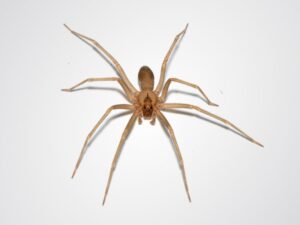
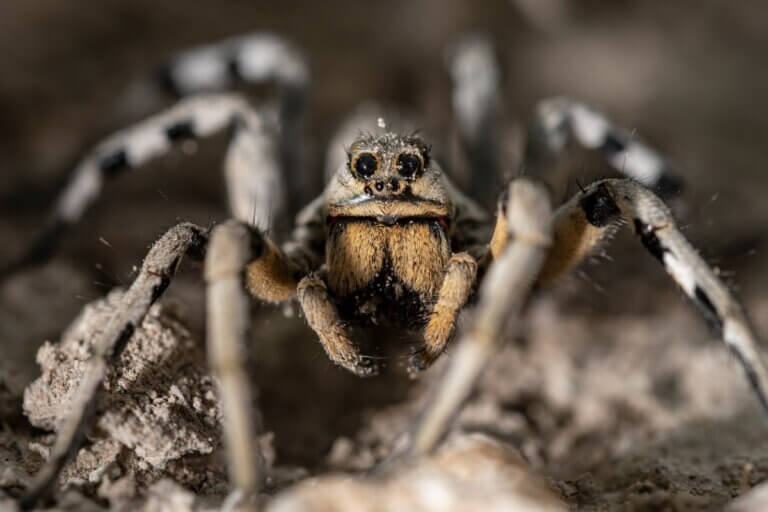
The Wolf Spider, one of the fascinating creatures of the animal kingdom, exhibits intriguing morphology. Its body is robust and composed of eight long legs, which give it remarkable agility. These legs are often covered with fine hairs that help detect vibrations, an important adaptation for sensing prey and predators. The coloration of the Wolf Spider varies between shades of brown and gray, providing effective camouflage in dry soil habitats or among fallen leaves.
The large, well-positioned eyes allow for excellent vision, essential for its hunting ability. They reflect light in a beautiful display of nighttime shimmer, making the spider even more enigmatic in its environment. Its color and overall shape help it blend into the surroundings, making detection by potential predators difficult.
The Wolf Spider is also equipped with strong chelicerae, which are its jaws. These jaws are designed to quickly capture and immobilize its prey. Its ability to strike with precision is an adaptation that ensures its survival, particularly in ecosystems where competition for food is intense. Additionally, the Wolf Spider possesses a resilient exoskeleton, which not only protects it from physical damage but also from dehydration in arid environments. This resilience allows it to thrive in places where many other species fail. To learn more about how different creatures adapt to their environment, check out this article on intelligent spiders.
Behavior and Hunting
The Wolf Spider is a master of camouflage and agility. In its habitat, it hides in places that offer shade and protection. Its behavior is shaped by the needs of hunting and survival. Primarily active at night, the Wolf Spider uses the darkness to approach its prey. When temperatures drop, it becomes more active, taking advantage of the inactivity of many insects. This nocturnal strategy is one of the reasons it is so efficient.
The hunting techniques of the Wolf Spider are varied. Unlike other spiders that build webs, it pursues its prey. This approach makes it an agile hunter, capable of explosive attacks. When approaching prey, the Wolf Spider not only sneaks up stealthily but also demonstrates a remarkable ability to jump. This jump is not only fast but also directed, ensuring that the prey has little chance of escape.
In addition to its agility, the Wolf Spider uses the environment to its advantage. Often, it hides among leaves and logs, observing movements around it. When it detects movement, its reaction is almost instantaneous. Once the prey is captured, the spider uses its jaws to inject venom, effectively immobilizing its victim.
Each movement is a dance with nature, where the Wolf Spider stands out as an agile and relentless hunter. To delve deeper into the fascinating life of spiders, you can visit this article on jumping spiders, which will share more about how these arachnids behave in their environments.
Habitat and Distribution
The Wolf Spider, elegant and cunning, adapts to various habitats around the world. It settles in dense forests, open prairies, urban areas, and even deserts. Its geographical distribution is vast, covering the continents of America, Europe, Asia, and parts of Africa. Each of these locations offers unique environmental conditions that shape its behavior and physical characteristics.
In forests, the Wolf Spider camouflages itself among leaves and logs, using its coloration to hide from predators such as birds and reptiles. These humid environments favor its life cycle, as moisture is crucial for the species’ survival. In prairies, they excel in their agile movements, using low vegetation to ambush prey.
Urbanization also presents a new habitat for these spiders. In gardens and parks, they find an abundance of insects, making urban areas a true feast. The adaptation to this new environment showcases the resilience of the Wolf Spider. In deserts, its ability to dig holes and hide among rocks protects it from extreme heat and predators.
Its predatory behavior is influenced by its geographical distribution. Local variations in temperature and humidity impact activity and feeding times. The flexibility of the Wolf Spider to adapt to different environments is a testament to its evolution. For more information on habitats and adaptations in nature, see this link about the jumping spider, which also excels in the quest for survival in varied environments.
Ecological Relationships
The Wolf Spider, with its cunning nature, plays a crucial role in its ecosystem. It stands out as a voracious predator, using its speed and camouflage to capture prey. Its diet primarily consists of insects, including crickets and grasshoppers, which are attracted to its habitat. When hunting, the spider employs a unique ambush strategy. It hides among leaves and soil, waiting for the perfect moment to leap. This ability allows it to maintain balance in its habitat by regulating insect populations.
On the other hand, the Wolf Spider is not without predators. Birds, reptiles, and even small mammals are its natural threats. Constant vigilance and quick movements are essential for survival. Often, it will blend in with the surrounding landscape, providing effective defense against these predators.
This web of interactions creates an interesting dynamic between the Wolf Spider and the organisms in its environment. Prey keeps their populations in constant adaptation, while predators play an equally important role in controlling spider populations. This web of life illustrates the complexity of nature and the interdependent relationships between species. Thus, the Wolf Spider, with its agility and cunning, is a true hunter of the shadows, not only seeking its survival but also shaping its ecosystem. To better understand species interactions, one can consult the article on the Toucan, a fascinating example of a predator in the same habitat.
Importance of Conservation
The Wolf Spider plays a vital role in the ecosystems it inhabits. This nocturnal arachnid is not only an agile hunter but also a natural controller of insect populations. By capturing prey such as crickets and grasshoppers, the Wolf Spider contributes to maintaining ecological balance. This control of insects is crucial to prevent them from becoming pests, whose increase can harm other species and local vegetation.
Wolf spiders are perfectly adapted to their environment. Their hunting and camouflage skills ensure they are efficient predators. However, what is often overlooked is the fragility of the habitats that house these incredible arachnids. Climate change, urbanization, and pesticide use directly affect their populations and, consequently, the health of ecosystems.
Protecting the Wolf Spider also means protecting the intricate web of life in which it is embedded. A healthy population of this predator is indicative of a balanced and resilient ecosystem. However, habitat degradation threatens not only the Wolf Spider but also the number of species it helps control. Therefore, it is crucial to promote conservation practices, ensuring that not only the Wolf Spider but all biodiversity can thrive.
Thus, protecting the habitat of the Wolf Spider is a fundamental step in preserving ecological balance. To better understand the importance of predators in our environment, explore this article on spiders that also highlights the importance of arachnids in nature.
Conclusions…
The Wolf Spider is a fascinating representative of wildlife that exemplifies adaptability and the complexity of wildlife. Its ability to hunt efficiently without relying on webs showcases its ecological importance and the unique role it plays in ecosystems. Understanding these creatures helps us appreciate biodiversity and the importance of conservation.
Did You Know?
What is the Wolf Spider?
The Wolf Spider is a spider belonging to the family Lycosidae, known for its agile hunting ability and for not building webs.
Where is the Wolf Spider found?
It can be found in various habitats around the world, including forests, fields, and urban areas.
How does the Wolf Spider hunt its prey?
This spider uses its agility and speed, running after its prey instead of waiting in a web.
Is the Wolf Spider dangerous to humans?
Although it has venom, the Wolf Spider rarely poses a danger to humans, and its bites are similar to those of other spiders.
What is the ecological role of the Wolf Spider?
It helps control insect populations, contributing to the ecological balance of the environments it inhabits.