The Viperfish and Its Frightening Mouth
The viperfish, with its peculiar anatomy, inspires fascination and fear. But how does a fish manage to swallow another much larger than itself? This intriguing topic reveals the surprising adaptability of underwater life.
Exceptional Anatomy of the Viperfish
If we were submerged in the dark depths of the ocean, a surprising spectacle would unfold: the viperfish. With a mouth that could be described as the embodiment of a marine nightmare, this creature possesses an anatomy that is, at best, exceptional. What makes it so fascinating is, above all, its unique physical structure, which not only provokes awe but also stands as a testament to evolution in action.
Flexible Jaws
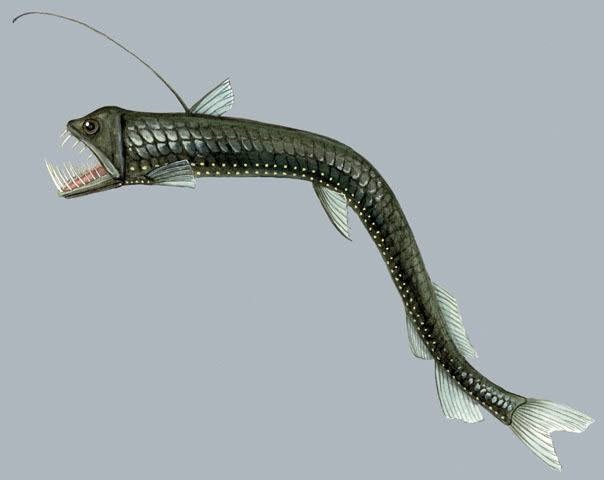
The jaws of the viperfish are a true marvel of nature. They are incredibly flexible, allowing the mouth to open in extraordinary ways. This mechanism enables the viperfish to swallow prey that is often larger than itself. Unlike many aquatic species that have rigid jaws, the viperfish can expand its mouth in ways that seem almost impossible. This flexibility is not just an advantage; it is essential for its survival. Imagine a duel of skill between predator and prey, where the mouth of the viperfish transforms into a deadly trap.
Function and Adaptation
In addition to its jaws, the flexible mouth of the viperfish plays a crucial role in its feeding. The bizarre and wide shape allows it to capture not only small fish but also crustaceans and other unprepared aquatic creatures. With the help of sharp, inward-facing teeth, it ensures that any prey daring enough to enter its mouth cannot escape. Thus, this combination of sophisticated design and lethal function exemplifies how the anatomy of the viperfish favors its hunting strategy. This exceptional physical structure is a marvel of adaptation, establishing a deep link between function and survival in the cruel underwater world. As we explore more about the intriguing viperfish, our understanding of its hunting methods is about to be revealed.
Hunting and Feeding Mechanisms
Imagine a predator whose capture methods would challenge even the most fertile imagination. Such is the viperfish, an incredible inhabitant of the deep sea that employs truly impressive hunting techniques. With an adaptive mouth, the viperfish captures prey effectively, proving to be a great hunter in its habitat.
Hunting Strategies
The viperfish has an elongated and slippery body, allowing it to camouflage among seaweed and debris on the ocean floor. This camouflage is one of the many strategies it uses to approach its prey unnoticed. Once an unsuspecting fish swims nearby, the viperfish can launch a quick and precise attack. Its jaws, which seem more suited for a horror movie monster, play a crucial role in this process. They are involved in an almost continuous movement and can stretch considerably. This feature allows the viperfish to swallow larger prey, often bigger than the width of its own body. With sharp, inward-facing teeth, it ensures that once captured, the prey has no chance of escape.
Capture and Feeding
The mouth of the viperfish is undoubtedly a fascinating adaptation to its way of life. After a successful capture, it begins the feeding process. Using efficient chewing techniques, the viperfish not only consumes but also absorbs the necessary nutrients to survive in rocky depths. This remarkable predator is, thus, a masterpiece of evolution, showcasing how nature can create such elaborate and efficient hunting mechanisms. After understanding the fascinating capture techniques of the viperfish, we must take a closer look at its habitat and distribution, factors that shape its behavior and diet.
Habitat and Distribution
In the murmuring depths of the ocean, where sunlight barely penetrates, resides an extraordinary creature: the viperfish. With its unsettling appearance and frightening mouth, this predator has adapted to a habitat where few would dare to venture. From deep waters to the abyssal darkness, the viperfish reveals a world that is both fascinating and terrifying.
Distribution of the Viperfish
The viperfish is primarily found in the tropical and subtropical waters of the Atlantic, Pacific, and Indian Oceans. However, its true domain lies in the depths of the sea, especially in abyssal regions at depths of up to 2,000 meters. In this unknown expanse, its distribution is both a consequence of dietary needs and behavioral adaptations. Notably, its habitat directly influences its approach to hunting. Here, the viperfish becomes a master illusionist, using its elongated body and subtle colors as camouflage.
Impact of Habitat on Behavior and Diet
The dark and almost inhospitable environment of the deep sea prompts the viperfish to develop unique hunting strategies. Its diet mainly includes smaller fish and crustaceans, which are attracted by the slow and steady movement of its form. Curiously, this behavior becomes more effective in areas of high biomass concentration, where the most diverse marine organisms are found. Furthermore, the low light also provides an advantage: its eyes, adapted to darkness, can detect subtle movements, essential for capturing prey. Thus, the viperfish is not merely a victim of its hostile habitat but rather a cunning and efficient predator. Therefore, as we reflect on the mysterious viperfish and its nest in the depths of the ocean, we notice how its environment determines not only its appearance but also its way of survival. This connection between habitat and behavior sets the stage for discussing the evolution and adaptation of this fascinating species in our next chapter.
Evolution and Adaptation
Imagine a creature so strange, so terrifying, that its mere appearance defies imagination. The viperfish, with its monstrous mouth and sharp teeth, remarkably symbolizes the efficacy of evolution. Over the millennia, this peculiar animal has not only survived but also thrived in deep, dark waters where few can breathe.
Physical and Behavioral Adjustments
Adaptation is the key word to understand how the viperfish has shaped itself to environmental conditions. Its wide mouth filled with adaptive teeth allows it to capture prey much larger than its body. Additionally, the bioluminescence that some species exhibit may be a hunting strategy. In fact, the light they emit attracts prey, offering a significant advantage in a habitat filled with shadows. These physical characteristics are direct results of a long evolutionary process, where only the fittest survived.
Population and Environmental Challenges
As the marine environment changes, the viperfish also faces new challenges. Water pollution and climate change affect its habitats. In response, this remarkable predator has shown resilience and flexibility in its diet and migration habits. Moreover, its populations have adapted to variations in food availability, reshaping their predatory behavior. Therefore, this incredible species demonstrates that the ability to adapt can ultimately be the most critical factor in survival in a constantly changing world. As we delve deeper into the viperfish, from its incredible adaptations to its vital role in underwater ecosystems, we see how nature always finds ways to interconnect species and environments. This intricate web, where every being has its space, naturally leads us to the next discussion about the ecological relevance of the viperfish.
Ecological Relevance of the Viperfish
Let us imagine, for a moment, the darkness of the deep sea, where life unfolds in surprising and often terrifying ways. The viperfish, with its frightening mouth, emerges as one of the most fascinating predators of this shadowy environment. Its role in the marine ecosystem is vital, functioning as a regulator of prey populations and maintaining balance in the dynamics of the food chain.
Sharp Predator
Commonly found in abyssal regions, the viperfish uses its unique adaptations to capture its prey. Its sharp teeth and the ability to expand its mouth make it a master of the art of capture. By feeding on smaller fish and crustaceans, it not only ensures its own survival but also plays a crucial role in the health of the ecosystem. This is because predation helps prevent overpopulation, which, if left unchecked, could lead to habitat collapses.
Ecological Interactions
In addition to its function as a predator, the viperfish also acts as an indicator of environmental health. By monitoring its populations, scientists can gain insights into the quality of the sea and ecological conditions. Thus, the viperfish is not merely a predator of prey; it becomes an essential piece in the complex web of marine life. The interactions among marine organisms, where each species has its role, are vital for maintaining ecosystems. Therefore, the preservation of the viperfish is imperative to ensure that the oceans continue to thrive. After exploring the importance of this peculiar predator, we now turn to an intriguing topic: the connection between marine biodiversity and human nutrition, where edible plants play a valuable role in our diet.
Conclusions…
In summary, the viperfish’s ability to capture and swallow prey significantly larger than itself is a testament to the evolution and adaptability of this predator. The combination of an extremely flexible mouth, a jaw adapted for stretching, and the ability to create a ‘suction’ during feeding makes it an impressive example of the complexity of marine life. The study of this creature not only fascinates marine biologists but also teaches us about the interconnection between predators and prey in the aquatic environment. Thus, the viperfish reminds us that the natural world is full of surprises and incredible adaptations.
Did You Know?
What is the viperfish?
The viperfish is a notorious marine predator known for its large, flexible mouth capable of swallowing prey larger than its own body.
How does the viperfish manage to swallow large prey?
Its unique anatomy, including highly mobile jaws and an elastic mouth, allows it to swallow considerable-sized prey.
Where is the viperfish found?
The viperfish primarily inhabits the deep waters of the oceans in the tropical and subtropical hemispheres.
What are the viperfish’s favorite prey?
The viperfish feeds on a variety of fish and even other marine organisms that can be swallowed.
Does the viperfish pose any risk to humans?
Although not naturally aggressive, the viperfish can be dangerous if handled due to its powerful mouth.
What role does the viperfish play in the marine ecosystem?
As a predator, the viperfish helps control the populations of its prey, contributing to the balance of the marine ecosystem.
What adaptations have allowed the viperfish to survive?
In addition to its flexible jaws, adaptations such as bioluminescence and camouflage aid in its hunting success.
How does the viperfish reproduce?
The viperfish reproduces sexually, with females laying eggs that later hatch into larvae.