The Fascinating World of the Sunfish
The sunfish, with its impressive body and intriguing behavior, reveals secrets of the marine world that few know. From its unique characteristics to its habitat, we dive into the extraordinary life of this enormous fish, examining its vital role in the ecosystem and the threats it faces.
Unique Characteristics
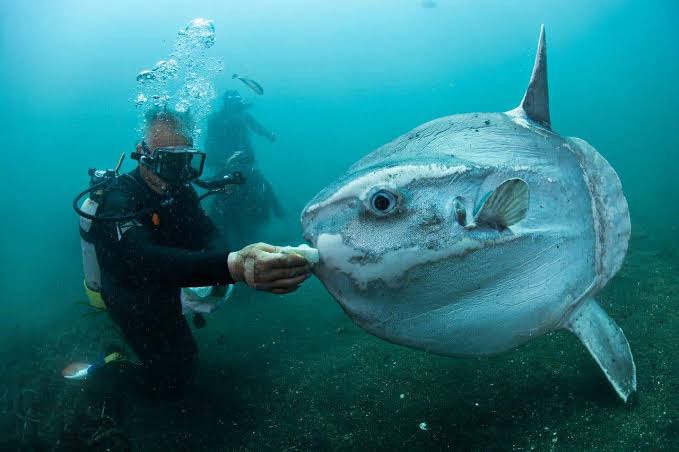
In the lush seas, the sunfish, also known as mola-mola, displays one of the most extraordinary body structures in the animal kingdom. With its elongated, almost oval body, it resembles a gigantic flying saucer from the underwater universe. Notably, the sunfish holds the title of the largest bony fish in the world, reaching impressive heights of up to four meters and weighing as much as 2,300 kg.
When observing this marine giant, what intrigues most is its lack of a traditional tail. Instead, the sunfish possesses a ‘clavus’, a type of fleshy extension that replaces the tail and aids its dorsal and ventral fins in locomotion.
Despite its daunting size, the sunfish glides gracefully through the waters, relying less on propulsion and more on natural buoyancy. Curiously, these giants prefer to stay in deeper waters during the day, but at night they emerge near the surface to warm up. This thermal behavior is crucial for regulating their body temperature after long dives into cold, deep waters.
In the natural world, sunfish are known for their peculiar diet. Although massive, they primarily feed on zooplankton, jellyfish, and other small invertebrates. Their relatively small mouths play a fundamental role in capturing their prey.
Social encounters among sunfish are rare; however, when they congregate, it is often in coral reefs, as discussed in fascinating ocean animals. Here, they frequently engage in ‘cleaning’ rituals, allowing other marine creatures to remove parasites from their thick skin. This phenomenon reinforces the diverse and wonderful interdependence of marine life.
Habitat and Distribution
The sunfish is a master of open waters, dedicated to the silent drama of the deep ocean. With a flattened and anatomically peculiar body, it finds a home in various parts of the world, symbolizing the essence of the oceans. Preferring temperate and tropical waters, this marine species inhabits areas from the Atlantic to the Pacific, covering vast regions of countries like Australia, Japan, and the United States.
Despite its preference for open waters, the sunfish is not a stranger to coral reefs. In these rich and colorful ecosystems, it occasionally seeks shelter and food, especially when looking for refuge from predators. In the reefs, the natural interaction between creature and coral demonstrates the sunfish’s ability to adapt to diverse environments.
The ocean’s surface is a place of resilience for the sunfish. Often, it can be found near the surface, warming itself under the sun and allowing seabirds to free it from bothersome parasites. This interaction with other species reinforces its role in a dynamic marine ecosystem.
Like the tardigrade adapting to the most adverse environments, the sunfish molds itself to the vast oceanic backdrop. By gaining knowledge about these creatures, we can better understand the complexity and depth of the seas and their intrinsic need for protection. The sunfish, with its global distribution, stands out as a testament to the vastness and diversity that the oceans offer. A true traveler of the waters, its presence is a reminder of the fragility and beauty of the marine habitats it traverses. For more on the complex relationships of the oceans, see the lessons from the tardigrade.
Relationship with the Ecosystem
The sunfish, with its eccentric appearance and unique behavior, plays a vital role in the marine ecosystem. Majestically, it glides through the waters, contributing to ecological balance by preying on large quantities of jellyfish. Without this consumption, jellyfish could outnumber other marine organisms, causing imbalances.
Interestingly, the sunfish has a symbiotic relationship with small fish and seabirds. Often, it surfaces, allowing these creatures to free it from parasites. This interaction not only benefits the sunfish, providing relief, but also sustains other species that depend on these parasites as a food source.
Moreover, its presence influences the dynamics of marine food chains. By feeding on lower organisms, it moderates their populations, assisting in maintaining biological diversity. Simultaneously, the sunfish serves as occasional prey for larger predators, such as sea lions, sharks, and orcas, firmly integrating itself into the complex fabric of ocean life.
Even sparse in the depths, this fish contributes to the health of the oceans in subtly interconnected ways. Its vast vertical migration during the day subjects large amounts of nutrients from deep waters to the euphotic zone, promoting primary productivity. In this way, the sunfish acts as an essential mediator in nutrient recycling.
When we consider its contributions, the sunfish emerges not just as a curiosity, but as an indispensable component for healthy seas. The predator-prey relationship is a constant ballet in these vast and vibrant environments, reflecting the fragile balance that sustains planetary biodiversity.
Threats and Conservation
The majestic sunfish, also known as mola-mola, faces significant threats in its already challenging journey through the world’s oceans. Among these threats, overfishing and the relentless pollution of the seas stand out, undeniably caused by human activities. Bycatch in fishing nets, a practice targeting other species, has resulted in alarming mortality among sunfish. Furthermore, conventional plastic waste disposal compromises the environment, creating obstacles for these gigantic fish to navigate and feed properly.
Waters once inhospitable to sunfish are now dangerously filled with plastic debris. These particles confuse with their natural prey, such as jellyfish, leading to potential fatal harm. Studies indicate that digestive tract blockage and toxicity are the primary dangers of ingested plastic, often leading to death.
To tackle such challenges, it is imperative that we increase conservation efforts. Initiatives to reduce plastic in the waters and stricter fishing regulations are crucial for the well-being of these creatures. Public awareness campaigns also play a vital role; educating global populations about the impacts of their daily actions can reduce the human ecological footprint.
The example of endangered species like the rhinoceros highlights the importance of coordinated actions for effective conservation. In a joint effort, marine biologists and fishing communities must work in harmony to ensure that the next generation of sunfish can traverse the oceans in their known majesty. To learn how conservation has impacted other species, see the article on efforts for rhinoceroses.
Curiosities and Interesting Facts
The sunfish, or Mola mola, stands out as one of the most intriguing fish in the oceans. These majestic creatures can weigh over two tons, yet they still gracefully challenge the vast oceans. Interestingly, the sunfish is capable of traveling great distances during its seasonal migrations. In the warm waters of the tropics, they feed at depths that can reach up to 600 meters. However, to warm their bodies, they do not hesitate to float near the surface, absorbing sunlight.
Their unusual, almost circular body is an evolutionary adaptation that ensures efficiency in deep waters. This design allows them to face some of their greatest predators, such as sharks and sea lions, while attempting to escape using their powerful fin movements. Surprisingly, a female can release up to 300 million eggs at once, more than any other known vertebrate, ensuring the continuity of the species.
In popular culture, the sunfish has gained notoriety for its easygoing behavior. In some cultures, they are seen as omens of good luck. Additionally, the inhabitants of Bali consider these fish spiritual during certain celebrations. For frequent visitors to the Monterey Bay Aquarium in California, the sunfish is one of the stars of the show and inspires admiration with its imposing presence.
This peculiar fish is part of an even more diverse and fascinating universe. Just like the platypus, which confuses and enchants everyone with its mystery, the sunfish proves that nature is full of surprises and wonders that never cease to amaze.
Conclusions…
The sunfish, a wonder of the ocean, plays a crucial role in its ecosystems. Appreciating and protecting these creatures is vital for the health of the oceans and biodiversity. What we learn about the sunfish reminds us of the importance of marine conservation.
Did you know?
Is there sunfish in Brazil? Yes, the sunfish can be found in Brazilian waters, mainly in tropical and subtropical coastal regions.
Can you eat sunfish? Although it is possible to eat sunfish, its meat is generally considered unfit for consumption due to its composition and toxins.
What is the predator of the sunfish? The main predators of the sunfish include sharks and orcas, which may feed on it on some occasions.
Why is sunfish meat unfit for consumption? Sunfish meat may contain toxins and has a gelatinous texture, making it unappealing and, in many cases, dangerous to health.
What is the heaviest fish in Brazil? The sunfish is considered one of the heaviest fish in Brazil, with some individuals reaching up to 1,500 kg.
How many kilos does the sunfish weigh? The sunfish can weigh between 250 kg to 1,500 kg, varying greatly depending on the species and age.