Dactylopterus volitans: The Fascinating Flying Fish
The Dactylopterus volitans, known as the Flying Gurnard or False Flying Fish, is a captivating marine creature that piques the curiosity of scientists and adventurers alike. In this article, we will explore its unique characteristics, habitats, and peculiarities that make this fish so intriguing.
Physical Characteristics of Dactylopterus volitans
In the vast marine world, few beings are as impressive as the Dactylopterus volitans, the fabulous flying fish. This remarkable fish not only enchants with its unique appearance but also with its impressive activities that capture the essence of how life adapts and transforms in challenging environments. As we explore its physical characteristics, we uncover secrets that reveal not only its beauty but also its incredible ability to ‘fly’ above the water’s surface.
An Unmistakable Appearance
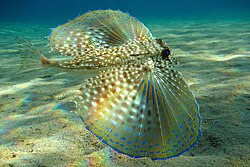
The Dactylopterus volitans is easily identified by its large pectoral fins, which resemble wings. These structures are not mere adaptations; they allow the fish to perform spectacular leaps above the water. As a school stirs, these fins unfold into a mesmerizing spectacle, providing protection against predators. Additionally, its vibrant coloration, ranging from blue to yellow, serves both for camouflage and attracting mates.
Impressive Dimensions
This fish can reach up to 40 centimeters in length, making it one of the largest representatives of its family. The generous dimensions, combined with the aerodynamic shape of its body, facilitate its acrobatic performance in the air. The Dactylopterus volitans is not just a visual prodigy; it demonstrates how evolution has shaped its body to dominate both the aquatic environment and the surface, a fascinating phenomenon reflected in many aspects of nature, as exemplified by the story of incredible flyers like bats.
Thus, the beauty and functionality of the Dactylopterus volitans are not merely superficial but rather a testament to the complexity and wonder of aquatic life. As we delve deeper into its story, we prepare to explore the inhospitable habitats that favor the survival of this magnificent fish.
Habitat and Distribution
Imagine diving into the crystal-clear waters of a tropical reef. It is here, in this underwater paradise, that the fascinating Dactylopterus volitans, known as the flying fish, reveals its beauty and extraordinary skills. This fish, native to warm waters, resides in specific regions that offer a unique combination of temperature and habitat structure.
Preferred Habitat
The Dactylopterus volitans prefers shallow coastal waters, where coral reefs and sandy bottoms intertwine, creating an environment rich in biodiversity. Approaching these reefs, it finds suitable food and hiding spots. Thus, the reefs not only provide shelter but also influence its interactions with other species.
Geographical Distribution
This intriguing flying fish can be found in various tropical and subtropical regions, especially in the Atlantic Ocean, from the Gulf of Mexico to the Caribbean Sea. Thanks to its ability to fly out of the water, the Dactylopterus volitans utilizes ocean currents and warm temperatures to its advantage. When water temperatures drop or currents change, its population may disperse, seeking more favorable waters where survival is assured. Therefore, by observing the Dactylopterus volitans in its natural habitat, we can understand the importance of environmental conditions. And now, as we enter the next chapter, we will explore how this magnificent fish feeds and its intriguing role in the marine ecosystem.
Feeding and Behavior
The beauty and uniqueness of the Dactylopterus volitans go far beyond its ability to fly above the ocean waves. This flying fish, with its remarkable structure, exhibits a lifestyle adapted to a marine ecosystem filled with challenges and opportunities. Its feeding habits, rich in nuances, reveal not only its survival but also its crucial role in the ocean’s food web.
Hunting Techniques and Feeding
The Dactylopterus volitans employs a sophisticated and fascinating hunting strategy. When it comes to feeding, it has a preference for small organisms, such as crustaceans and smaller fish. With its broad pectoral fins, it launches itself at an impressive speed, capturing its prey with precision. It is often observed making quick movements to confuse predators and allow for a stealthy approach. Thus, its hunting techniques, which include taking advantage of currents and hiding among corals, are vital for its success.
Role in the Ecosystem
The Dactylopterus volitans is not just a predator; it plays an essential role in maintaining the balance of marine life. It acts as an intermediary in the food chain, controlling populations of small organisms that, if left unchecked, could disrupt the ecosystem. Consequently, maintaining its populations is crucial for the prosperity of corals, which depend on the health of the environment. Therefore, the feeding and behavior of the Dactylopterus volitans offer a profound insight into the interconnectedness of life in the sea. Thus, while the Dactylopterus volitans captures the essence of the ocean in its behavior, it also prepares us to understand the complexity of its life cycle and reproduction, which will be explored next.
Life Cycle and Reproduction
At the heart of the warm waters of tropical oceans, the Dactylopterus volitans, better known as the flying fish, initiates one of the most intriguing life cycles in the aquatic realm. This remarkable being is not only a visual spectacle but also an incredible example of adaptation and survival, beginning with tiny gametes and culminating in magnificent low flights above the sea surface.
Spawning and Initial Development
The reproduction of the Dactylopterus volitans generally occurs in shallow waters during the spawning season. Males display in exuberant dances to attract females, showcasing their long, colorful fins. After mating, females release thousands of eggs on the water’s surface. These eggs, in essence, are a promise of new beings that, after fertilization, will develop in the warm waters.
After a few days, the eggs hatch, releasing tiny larvae that are carried by ocean currents. During the first weeks of life, these larvae are particularly vulnerable; thus, nature has equipped them with an impressive ability to camouflage, allowing them to evade predators.
Youth and Growth
As the larvae grow, around three months, they begin to exhibit characteristics of adult fish. At this stage, the Dactylopterus volitans already possesses its modified fins, which will later be crucial for its impressive aerial maneuvers. In about a year, they reach sexual maturity, ready to repeat the fascinating life cycle.
Thus, the journey of the Dactylopterus volitans from spawning to maturity is not just a testament to the resilience of life but a continuous dance in harmony with the ocean, awaiting the next spectacle.
Curiosities and Interesting Facts
As the Dactylopterus volitans glides through the waters, it attracts the attention not only of biologists but also of admirers and curious individuals due to its unique behaviors. This magnificent and graceful flying fish is not only a marvel of marine biology but is also surrounded by a rich tapestry of myths and legends that highlight its cultural importance.
Myths and Legends Surrounding the Flying Gurnard
Among the cultures that coexist with the sea, the Flying Gurnard is often mentioned in stories that portray its impressive abilities. In the oral tradition of many fishing communities, it is said that the Dactylopterus volitans can bring good luck to fishermen by appearing in flocks. Many believe that this display of ‘flight’ is a warning that abundant schools are nearby. It is precisely this symbiotic relationship between the fish and the communities surrounding it that makes its presence even more valuable.
Cultural and Scientific Representation
Drawings and sculptures of the Dactylopterus volitans can be found in various coastal cultures. It is often associated with freedom and the ability to overcome barriers, symbolizing the challenges we face. Furthermore, the unique characteristics of the Flying Gurnard have inspired artists and scientists, becoming a subject of fascinating biological investigation, much like the tardigrade, a true survivor of nature. Therefore, as we explore these curiosities and the rich narrative surrounding the Dactylopterus volitans, we are led to reflect on the impact that these creatures have on our lives and culture. With this in mind, the journey through the universe of the Flying Gurnard reveals itself not only as a scientific adventure but also as an invitation to explore the rich stories that surround it.
Conclusions…
The Dactylopterus volitans is more than just an impressive fish; its unique adaptations and behaviors in the marine environment are a demonstration of the diversity of underwater life. From its ‘flying’ abilities to its importance within the ecosystem, it deserves our attention and respect. Exploring its biology and habitat contributes to our understanding of the marine world and reinforces the need to conserve these fascinating species. By learning more about the Flying Gurnard, we can inspire ourselves to protect the oceans and their rich biodiversity.
Did You Know?
What is the Dactylopterus volitans?
The Dactylopterus volitans, also known as the Flying Gurnard or False Flying Fish, is a species of fish that stands out for its wing-like fins.
Where can the Dactylopterus volitans be found?
This fish primarily inhabits tropical and subtropical oceans, especially in the Caribbean and the Western Atlantic.
What is the main characteristic of the Dactylopterus volitans?
Its main characteristic is the ability to glide over the water, using its long pectoral fins as wings.
Does the Dactylopterus volitans have ecological importance?
Yes, it plays a crucial role in the marine ecosystem by helping to control populations of small fish and invertebrates.
Is the Flying Gurnard a dangerous fish?
No, the Dactylopterus volitans is not considered dangerous to humans and generally avoids contact.
How does the Dactylopterus volitans reproduce?
Reproduction occurs through spawning, where thousands of eggs are released into the water and fertilized externally.
What is the average size of the Dactylopterus volitans?
The Flying Gurnard can reach up to 40 cm in length, making it one of the larger flying fish.
What do Dactylopterus volitans eat?
This fish primarily feeds on small crustaceans and other invertebrates it finds in the water.