The Magic of the Tiger Butterfly
The tiger butterfly, with its striped wings reminiscent of a large feline’s fur, captivates all who are fortunate enough to cross its path. In this article, we will explore its characteristics, natural habitat, life cycle, and the symbolism that these special creatures represent in Brazilian culture.
Introduction to the World of Butterflies
Brazil is home to a vast diversity of butterflies, with thousands of known species. Among these wonders of nature, the tiger butterfly stands out, whose beauty and ecological importance are undeniable. This fascinating insect can be found in various regions of the country, including tropical forests, cerrado areas, and even urban gardens. The tiger butterfly is notable not only for its charming appearance but also for the habitat it occupies. It is often seen in flowering areas, where it feeds on the nectar of flowers. This behavior is crucial as it aids in pollination, a vital process for plant reproduction. By visiting flowers, tiger butterflies transport pollen, facilitating the growth of new generations of plants. In addition to its role as a pollinator, the tiger butterfly serves as an indicator of ecosystem health. Its presence in a given environment can indicate a balanced and healthy habitat. The conservation of these environments is vital, as environmental degradation and habitat loss threaten the diversity of butterflies and other organisms. Butterflies, in general, are an essential component of Brazilian biodiversity. They not only delight the eyes of observers but also play important ecological roles. Therefore, protecting the tiger butterfly is essential to preserving Brazil’s natural wealth. To learn more about wildlife diversity, check out this article on Brazilian water birds that also depict the richness of local biodiversity.
Distinctive Characteristics of the Tiger Butterfly
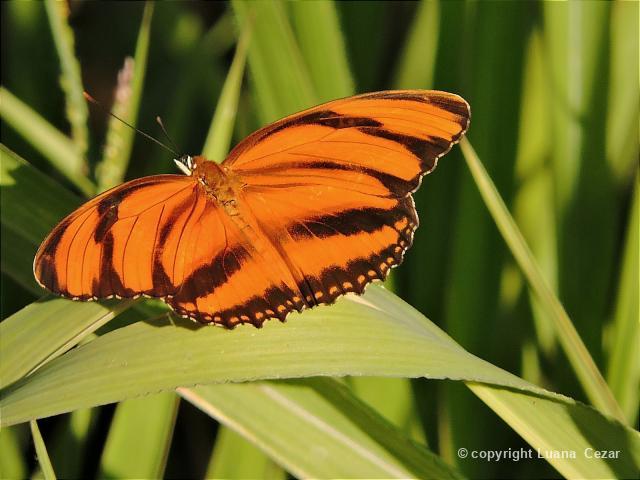
The tiger butterfly, with its majestic wings, is a true masterpiece of nature. Its wings display a vibrant pattern, with a deep orange background filled with black spots. This coloration is not just for beauty; it plays a crucial role in survival. The pattern serves as a warning to predators, indicating that this butterfly may be toxic. This defense mechanism is fundamental for its preservation within its habitat.
Physically, its wings can reach a span of up to 10 centimeters. The long antennae are a striking feature, allowing the butterfly to detect scents and navigate with precision. These adaptations are essential during feeding, when the butterfly uses its long, coiled organ, called a proboscis, to reach nectar in flowers.
The diet of the tiger butterfly is predominantly based on nectar, but they also feed on decomposing substances, such as rotten fruits. This provides a vital source of nutrients. Feeding usually occurs during the hottest hours of the day. During these moments, the exploring butterflies float from flower to flower, in search of the vital energy they need.
Moreover, the tiger butterfly exhibits interesting migratory behavior. They move in search of milder climates and abundant food sources. Thus, the butterflies find new habitats and ensure the next generation. This epic journey illustrates not only survival skills but also the intrinsic beauty of nature. To learn more about the fascinating characteristics of nature, explore this link.
Life Cycle and Habitat
The tiger butterfly, with its vibrant stripes, is a jewel of nature that enchants everyone. Its life cycle is fascinating, composed of four stages: egg, caterpillar, pupa, and adult. It begins when the female lays small eggs on host plants, such as milkweed. These eggs are almost invisible and can be found in groups, camouflaged among the leaves.
After a few days, the eggs hatch, revealing voracious larvae. The caterpillars, with their distinct appearance and bold colors, feed on the leaves of their host plants. During this phase, they grow rapidly, undergoing several molts. This period is crucial as they accumulate energy and nutrients for the next phase of their lives.
Once they reach a significant size, the caterpillar seeks a safe place where it transforms into a pupa. Inside this cocoon, a magical transformation occurs, where the larva completely reorganizes. This stage is vital, as the internal changes are impressive and sometimes mysterious.
Finally, the vibrant adult tiger butterfly emerges. Adult butterflies prefer warm, humid environments with abundant flowers. They can be found in meadows, open forests, and riverbanks. The tiger butterfly is particularly sensitive to its habitat, depending on the availability of its host plants and pollination. To better understand the world of insects, see this article about the jumping spider, which also illustrates the complexity of life in nature.
Symbolism and Culture
The tiger butterfly, with its vibrant colors and distinct patterns, transcends its stunning appearance and is rich in symbolism across various cultures. In many traditions, it represents transformation and renewal. The delicacy of its metamorphosis from cocoon to butterfly symbolizes the capacity for change and growth. In the indigenous culture of North America, it is seen as a messenger between the physical and spiritual worlds, bringing wisdom and protection to those who spot it. In African mythology, the tiger butterfly is often associated with the beauty and fragility of life. Its presence serves as a reminder of the importance of valuing each moment. In some communities, it is believed that a sighting brings good luck, signaling that positive changes are on the way. In Japan, the butterfly is a common symbol of love and happiness. Tiger butterflies, in particular, are seen as bearers of lost souls, linking to a connection with ancestors. In rituals and festivals, their image is used to invoke prosperity and harmony. Throughout history, artists and poets have used the tiger butterfly as a source of inspiration. Its ephemeral beauty has become a symbol of art and creativity. In various cultures, the butterfly is also a symbol of freedom, highlighting the human desire to escape limitations. Such symbolism incites deep reflection on the cycle of life and the ongoing evolution of the human being. For more information on how butterflies inspire art and culture, check out this article.
Conservation and Ecological Importance
The tiger butterfly, with its vibrant colors and hypnotic patterns, plays a vital role in its ecosystem. These winged beauties are essential pollinators that ensure the fertility of many plants. However, their existence is threatened. The challenges faced by this species range from habitat loss to climate change that alters the environment around them.
The destruction of forests and accelerated urbanization have eliminated the places where these butterflies reproduce and feed. As a result, populations are rapidly declining. Moreover, the excessive use of pesticides harms not only the tiger butterfly but also other beneficial insects. This complex interaction reveals the interdependence of an entire food chain.
Tiger butterflies are also indicators of environmental health. Their presence suggests a balanced and vibrant ecosystem. When these butterflies disappear, it is a sign that something is wrong. This is an opportunity to reflect on human actions and their consequences.
Conserving the tiger butterfly is not just an aesthetic issue. It is an ecological necessity. Protecting their habitats and promoting sustainable agricultural practices helps preserve this species. Educating the public about the importance of conservation is fundamental. Communities can come together to create sanctuaries that support local biodiversity.
Therefore, the conservation of the tiger butterfly is an essential step in ensuring the health of our planet. With a deeper understanding of its role and challenges, we can work together for a more sustainable future. To learn more about how conservation affects other living beings, see this article about the elephant, an impressive example of interconnectedness in nature.
Conclusions…
The tiger butterfly is not only an aesthetic wonder of nature but also a symbol rich in meaning. Its unique characteristics and presence in Brazilian culture invite us to reflect on the beauty and fragility of life.
Did You Know?
What does tiger butterfly mean?
The tiger butterfly is a species whose coloration and wing patterns resemble the striped fur of a tiger. Its name refers to these distinctive characteristics.
What does it mean to receive a butterfly visit?
Receiving a butterfly visit is often interpreted as a sign of good luck, renewal, and transformation, symbolizing positive changes in life.
What is the tiger butterfly’s biggest predator?
The main predators of the butterfly include birds, spiders, and some insect species that hunt them for food.
What does the jaguar butterfly mean?
The jaguar butterfly, like the tiger butterfly, has a wing pattern that resembles the fur of felines, symbolizing strength and agility, as well as being associated with positive transformations.
Which butterfly brings money?
It is believed that the appearance of certain butterflies, especially the blue butterfly, is linked to good news and financial luck.
What do butterflies announce?
Butterflies are often seen as messengers of change and transformation, announcing new beginnings and opportunities in life.
What is the color of the lucky butterfly?
Although the color may vary, many traditions associate the lucky butterfly with the color blue, representing prosperity and harmony.
When a butterfly appears at home, what does it mean?
A butterfly appearing at home is generally interpreted as a sign of good luck or a visit from a departed loved one.
What does the Bible say about the butterfly?
In the Bible, the butterfly symbolizes transformation and resurrection, reflecting the idea that everyone can be reborn and reinvent themselves.
What does butterfly mean in spirituality?
In spirituality, butterflies represent transformation, freedom, and the passage of the soul, symbolizing the transition between worlds and states of being.
What message does the butterfly bring?
The butterfly brings the message of transformation, change, and the fleeting beauty of life, encouraging acceptance and adaptation.
What does it mean when a butterfly keeps circling you?
When a butterfly keeps circling you, it can be interpreted as a spiritual message or a sign that changes are on the way in your life.