The Fascinating Life of the Cuckoo Wasp (Lysiognatha brasiliensis): The Spider Parasite
The cuckoo wasp (Lysiognatha brasiliensis) is an intriguing species that challenges common understanding of parasites. It parasitizes spiders, injecting larvae that feed on them from the inside out. This phenomenon is not only fascinating but also essential for the ecosystem.
The Fascinating World of the Cuckoo Wasp
When we observe the delicate balance of nature, creatures emerge that capture our imagination, such as the cuckoo wasp (Lysiognatha brasiliensis). This small insect is an impressive example of adaptation and survival strategy. Its appearance, often overshadowed by simplicity, hides a crucial role in the life cycle of various spiders.
Physical Characteristics
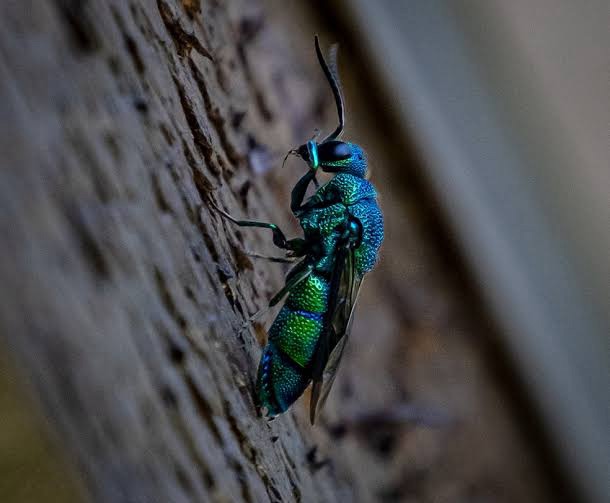
Measuring about 2 to 3 centimeters in length, the cuckoo wasp is recognizable by its vibrant colors. Its body is slender and sleek, with transparent wings that reflect subtle iridescence under sunlight. Additionally, its long, thin antennae are essential tools for detecting prey. These characteristics are not only aesthetic but extremely functional. Firstly, the colors may aid in camouflage, allowing for discreet hunting nights. Secondly, the agility provided by the wings allows the cuckoo wasp to move quickly among the webs of its victims without being noticed.
Habitat and Adaptation
These wasps inhabit tropical forests and areas of dense vegetation, where humidity and constant temperature favor their survival. The ability to disguise themselves among leaves and flowers is a vital adaptation for approaching unsuspecting spiders. Furthermore, the cuckoo wasp possesses a developed ovipositor, allowing it to insert its eggs inside the spiders. This complex strategy makes it one of the most intriguing and, at the same time, feared creatures in the insect kingdom. Thus, the life cycle of the cuckoo wasp illustrates the interdependence and tension of natural life. Understanding this fascinating insect brings us closer to a world where every being, no matter how small, plays a role in the vast theater of life, prompting us to reflect on the intricate parasitic interactions that follow.
The Parasitic Interaction
In the shadows of a tropical forest, an intriguing spectacle unfolds. The cuckoo wasp (Lysiognatha brasiliensis) emerges as an engineer of parasitism, performing a macabre dance with its preferred victims: the spiders. This impressive process, combining cunning and strategy, reveals the complexity of life in a vibrant and multifaceted ecosystem.
The Fatal Encounter
The life cycle of the cuckoo wasp begins with an encounter that may seem harmless. The female, with her delicately armed antennae, locates a healthy spider. After a complex courtship ritual, she uses her ovipositor to inject eggs directly into the spider’s abdomen. This moment is crucial, as it determines the spider’s future, now destined to be an incubator for this voracious parasite.
The Development of the Parasite
The eggs of the cuckoo wasp hatch, giving rise to larvae that feed on the hemolymph of the host spider. Gradually, the larvae infiltrate the spider’s tissues, using their digestive enzymes to control the victim’s body. The parasite not only feeds but also sends chemical signals that alter the host’s behavior. As a result, the spider, now under the larva’s control, weaves a web specially designed to protect and nourish its invader. While the larva grows, the spider continues its routine, unaware of the dark fate that awaits it. The life cycle of the cuckoo wasp is not merely a struggle for survival; it is a fascinating demonstration of how parasitism can rewrite the rules of interaction between species. Thus, the story of the cuckoo wasp intertwines in the vast tapestry of nature, contributing to the complex dynamics of a constantly changing ecosystem. As we conclude this dive into the life of the cuckoo wasp, it is essential to recognize how this parasitic interaction is not limited to a simple biological cycle. Soon, we will see how it influences spider populations and the balance of the ecosystem.
Impact on the Ecosystem
The life of the cuckoo wasp (Lysiognatha brasiliensis) is a subtle dance between predator and prey, a true masterpiece of nature. This fascinating insect plays a crucial role in the ecosystem, primarily concerning spider populations. Spiders, although often admired for their skill in capturing prey, are prime targets for the cuckoo wasp. This complex relationship not only defines the wasp’s own life but also shapes the balance of an entire ecological community.
Disrupting Spider Populations
The importance of the cuckoo wasp is revealed in how it controls spider populations. By parasitizing spiders, these wasps ensure that only the strongest and most adaptable individuals survive. This process, known as Natural Selection, acts as a filter, promoting the health of the ecosystem and the balance necessary for diverse species to coexist. Furthermore, by controlling spider populations, the cuckoo wasp also protects smaller prey that could become scarce if spiders thrived unchecked.
Impact on Other Organisms
In addition to its interactions with spiders, the presence of the cuckoo wasp influences the dynamics of other populations, such as insects and plants. When spiders are less numerous, this provides an opportunity for other insects to grow and develop, potentially altering the predator-prey relationship throughout the food web. Thus, the cuckoo wasp, a small insect, has a significant impact on the functioning and health of the ecosystem. Ultimately, this case highlights the interconnectedness of life, where a single species can influence many others, as discussed when addressing the Jumping Spider.
Challenges of Research
As the leaves dance in the wind and the sun filters through the dense vegetation, one of nature’s greatest mysteries unfolds in the shadows: the life of the cuckoo wasp, Lysiognatha brasiliensis. This intriguing insect, with its dark and not merely exotic behavior, challenges biologists in their quest to understand the complex mechanisms governing its existence. Researching this fascinating and feared spider parasite reveals a world where predator and prey intertwine in a deadly dance.
The Challenges of Observation
One of the main challenges faced by scientists studying the cuckoo wasp is its camouflage. Its physical characteristics, often similar to the environment, make direct observation in its natural habitat difficult. Additionally, the nocturnal life cycle of Lysiognatha brasiliensis complicates data collection even further. Recent studies have revealed that these insects have a unique interaction with their prey, but many aspects of this behavior remain unknown.
Knowledge Gaps
As scientists delve deeper into the study of the cuckoo wasp, they note that there are vast gaps in recognizing the geographical distribution and behavioral patterns of this species. While some research has mapped its presence in various regions, such as the Amazon, many questions remain unanswered. The intriguing fact that the cuckoo wasp parasitizes specific spiders raises questions about coevolution and which ecological factors influence this dynamic. How can we better understand these interrelationships? As we analyze the life of Lysiognatha brasiliensis, we realize that each discovery raises new questions, leading to a journey that constantly expands. Thus, as we seek answers to understand this unique parasite, the mystery of the cuckoo wasp continues to intrigue and inspire us.
The Future of the Cuckoo Wasp
As we delve into the future of the cuckoo wasp, it is impossible to ignore the importance of this small yet intriguing species. The cuckoo wasps (Lysiognatha brasiliensis), as magnificent hunters and parasites, play a critical role in forest ecosystems. Therefore, their preservation is not just a matter of scientific interest but an urgent necessity for maintaining biodiversity.
The Ecological Importance of the Cuckoo Wasp
The complex interactions between cuckoo wasps and spiders reveal a microcosm of predator and prey. Therefore, preserving this species is fundamental, as it ensures the regulation of spider populations, which, in large numbers, can disrupt the ecosystem. Furthermore, as part of the food chain, they influence other species, showing that their extinction could have repercussions far beyond their immediate habitat.
Challenges and Opportunities for Conservation
However, the challenges are significant. The destruction of natural habitats due to human activities and climate change alters ecosystems, directly affecting cuckoo wasps. In this context, conservation initiatives are essential. Creating protected areas and promoting environmental education can help mitigate these impacts and ensure the survival of fascinating species like the cuckoo wasp. Thus, awareness of their importance must be spread, especially considering that biodiversity is key to a healthy planet.
Therefore, as we explore the genetics of coloration in the animal kingdom, we must remember that every element of nature, including the cuckoo wasp, has a purpose to fulfill and must be recognized and preserved.
Conclusions…
In summary, the cuckoo wasp (Lysiognatha brasiliensis) is not just a parasite; it plays a vital role in the ecosystem. Its parasitism technique, by injecting larvae into spiders and harnessing their energies, creates a complex network of natural interactions that illustrates the beauty and brutality of life. Understanding this cycle helps us appreciate biodiversity and the need to preserve these incredible organisms. As we delve deeper into this world, we see how each species is essential for environmental conservation.
Did you know?
What is the cuckoo wasp?
The cuckoo wasp (Lysiognatha brasiliensis) is a species of wasp that parasitizes spiders, injecting larvae that feed on them from within.
How does the cuckoo wasp infect spiders?
It injects its larvae into spiders, which after a while, begin to feed on the spider from within.
What are the effects of parasitism on the spider?
Parasitism causes the spider’s death after a period, allowing the wasp’s larvae to develop.
Is the cuckoo wasp dangerous to humans?
No, the cuckoo wasp does not pose a danger to humans, as its interaction is limited to spiders.
What role does the cuckoo wasp play in the ecosystem?
It helps regulate spider populations, contributing to the balance of the ecosystem.
Where is the cuckoo wasp found?
The cuckoo wasp is primarily found in Brazil, in various regions with spider presence.
How does the cuckoo wasp reproduce?
It reproduces by laying eggs in infected spiders, where the larvae develop.
Is the cuckoo wasp’s parasitism common?
Although interesting, the cuckoo wasp’s parasitism is a specific phenomenon that does not occur with all wasp species.