
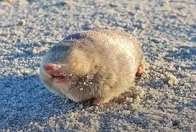
Rediscovery of Winton’s Golden Mole
After 87 years without being seen, Winton’s golden mole has been rediscovered in South Africa. This fascinating species stands out for its unique adaptations and for living in deep tunnels.
The Unexpected Rediscovery
After decades of silence, a small subterranean creature has once again awakened scientific curiosity: Winton’s golden mole. This rediscovery is not just a victory for science but a powerful reminder of the fragility of biodiversity. Rooted in the sands of western Queensland, Australia, this species has been practically invisible to the scientific community since its last appearance. However, a dedicated group of researchers decided not to give up, embarking on a journey to find evidence that would validate the existence of this fascinating mammal.
Efforts and Determination
Combining molecular biology techniques with a deep understanding of local ecology, scientists were able to map habitats that could support Winton’s golden mole. Through collaboration between universities and conservation organizations, innovative methods were used to monitor and trap the species. After months of searching, perseverance paid off when the first Winton’s golden mole was spotted in an underground tunnel. This discovery not only validated years of work but also reignited interest in the importance of endemic species.
Importance of the Rediscovery
The rediscovery of Winton’s golden mole highlights the relevance of ecosystem conservation. As beings that play vital roles in their communities, moles help aerate the soil, promoting habitat health. Furthermore, this finding offers unique opportunities for research in ecology and evolution. Ongoing efforts are crucial to ensure that the mole and other threatened species can thrive. After all, as nature itself reminds us, vulnerability coexists with resilience.
Following this fascinating rediscovery, we will analyze the unique characteristics of Winton’s golden mole, which illuminate its adaptations and surprising survival skills.
Unique Characteristics of Winton’s Golden Mole
In the depths of the soil, where sunlight never penetrates, resides a fascinating and deeply adapted creature: Winton’s golden mole. With its atrophied eyes deeply buried in its skin, this species is the quintessence of specialization, designed for an unparalleled subterranean lifestyle.
Morphological Adaptations
Winton’s golden mole features soft, golden fur that not only camouflages it in its environment but also reduces friction as it moves through tunnels. Its broad front paws, equipped with powerful claws, act as shovels, perfect for digging and creating complex tunnel systems. While other mammals rely on vision, this creature has traded light for the ability to detect vibrations. It uses ground vibrations, as well as its keen sense of smell, to navigate its perpetual darkness.
Behavior and Survival
In addition to its physical characteristics, the behavior of Winton’s golden mole is equally intriguing. This animal is solitary but does not completely isolate itself. Instead, it interacts with others of its species through scent markings left in its tunnels, facilitating communication in a lightless world, similar to how spiders communicate. Its diet primarily consists of insects and their larvae, which it can find in abundance. This dietary adaptability ensures that even in times of scarcity, the mole can find sustenance in the depths. These characteristics, both morphological and behavioral, are therefore essential for its survival in a habitat that is simultaneously inhospitable and intriguing.
As we will explore next, the fascinating subterranean subsystem of this species not only serves as a home but also as a stage for shocking and complex behavior that can only be understood within the context of its unique habitat.
Habitat and Behavior
As we dive into the underground world of Winton’s golden mole, we are transported to a secret and fascinating habitat. This small mammal lives in a world of tunnels, where sunlight is a distant dream, and life is governed by soil moisture and constant temperature. Golden moles are specialists in an environment that many would never dare to explore.
A Specialized Habitat
This subterranean environment, rich in nutrients, allows the mole to efficiently feed on small invertebrates, such as worms and larvae. In fact, its adaptations include a keen sense of smell and a slender body, allowing it to navigate nimbly through the narrow tunnels it creates. Additionally, its robust claws are essential tools for digging the earth, a task it performs with incredible dexterity.
In contrast, the presence of the mole on the surface is rare and fleeting. Although its atrophied eyes indicate a life without light, its foraging skills are impressive. These mammals occasionally emerge, perhaps attracted by rains that bring the soil to life. However, the lack of camouflage makes them vulnerable to predators, and thus they quickly return to their subterranean realm.
Tunnel Behavior
Life in the extensive tunnels is marked by intriguing social behavior. Moles often share their habitats, establishing small colonies. This coexistence contributes to a healthy subterranean ecosystem, with each member playing a crucial role in maintaining soil structure. In summary, the close connection between Winton’s golden mole and its habitat is a testament to the adaptation and resilience of subterranean life.
As we progress, we begin to understand how Winton’s golden mole not only interacts with its environment but also with the biodiversity around it, a theme we will explore next.
The Impact on Biodiversity
At the core of the ecosystem where Winton’s golden mole (Cryptochloris wintoni) resides, the intricate relationship between species and soil is revealed. This fascinating creature, which spends most of its life beneath the soil surface, plays a crucial role in maintaining environmental health. With its adaptations for the underground, the mole not only digs tunnels but also contributes to soil aeration, promoting a vital nutrient cycle.
Ecological Interactions
By living in symbiosis with various organisms, Winton’s golden mole becomes a key player in the food web. For example, by consuming insects and larvae, it regulates the populations of these creatures while simultaneously providing food for larger predators, such as birds of prey. Therefore, its presence is vital for the balance of the local ecosystem, directly impacting the region’s biodiversity. Furthermore, the impact of its digging activity should not be underestimated. The galleries that the mole creates serve as temporary habitats for various species, from small mammals to beneficial insects. In these subterranean pathways, biodiversity flourishes, offering a sanctuary for life in a world invisible to our eyes.
Conservation and Importance
Moreover, preserving the areas where Winton’s golden mole inhabits becomes essential not only for its survival but also for the health of the ecosystem as a whole. Biodiversity, composed of a variety of species, is interconnected, and the extinction of a single species can trigger a domino effect, harming other forms of life. Thus, protecting Winton’s golden mole ensures a more sustainable future for all creatures sharing its habitat, reinforcing the collective responsibility to care for our planet. Therefore, analyzing Winton’s golden mole reveals the delicate interdependence that sustains life on our planet. As we explore the challenges this species faces, it becomes imperative to consider how we can preserve not only the mole but the entire rich tapestry of life it helps sustain.
Challenges and Conservation
Glimpses of the tiny Winton’s golden mole (Cryptochloris wintoni) are becoming rare and threatened in a world where nature faces a constant battle. This small mammal, which once thrived in subterranean ecosystems, now struggles for its own survival, exposed to a growing number of challenges that threaten its existence.
The Challenges of Survival
The obstacles that Winton’s golden mole faces are diverse and significant. Habitat degradation, primarily caused by agricultural expansion and pesticide use, is a dominant threat. Additionally, climate change alters its natural habitats, making it difficult to find food and shelter. In fact, studies show that soil alteration due to human intervention compromises the rich insect communities that this small being consumed. Thus, the mole is not only adapting to a new landscape but also to resource scarcity.
Necessary Conservation Measures
To ensure the survival of Winton’s golden mole, effective and well-structured conservation measures are necessary. Restoring degraded habitats through agroecological practices is an essential step. Environmental education programs, which instruct local communities on the importance of preserving native species, are equally crucial. In other words, conservation cannot be an isolated task but must involve society as a whole. Therefore, by protecting Winton’s golden mole, we are, in fact, defending a rich tapestry of subterranean life that sustains the entire ecosystem.
As we continue our journey, it is vital to consider how the story of Sir David’s echidna can illuminate the importance of conservation. We will explore this intriguing trajectory in the next chapter, revealing the reasons behind its disappearance and the lessons we can learn from it.
Conclusions…
The rediscovery of Winton’s golden mole is a testament to the rich biodiversity of South Africa and the surprises that nature still holds. This species not only enriches our understanding of subterranean life but also highlights the importance of conserving natural habitats. As we continue to explore and protect these ecosystems, new discoveries may arise, inspiring future generations to value and respect our planet.
Did you know?
- What is Winton’s golden mole? It is a rare species rediscovered in South Africa, known for its subterranean lifestyle.
- Why is Winton’s golden mole so special? It is adapted to live in deep tunnels and possesses unique characteristics that differentiate it from other species.
- Where does the mole live? It inhabits underground tunnels in South Africa and rarely emerges to the surface.
- How many years have passed since the last time the mole was seen? The mole was rediscovered after 87 years of absence.
- What is the importance of this rediscovery? It highlights biological diversity and the need to conserve natural habitats.
- How can this discovery impact the future of conservation? It stimulates research and efforts to preserve unique ecosystems and their species.
- Is the mole threatened with extinction? The survival of the species depends on the preservation of its natural habitat, which is under threat.
- What can we learn from Winton’s golden mole? The importance of adaptation and resilience of species in their natural environments.