
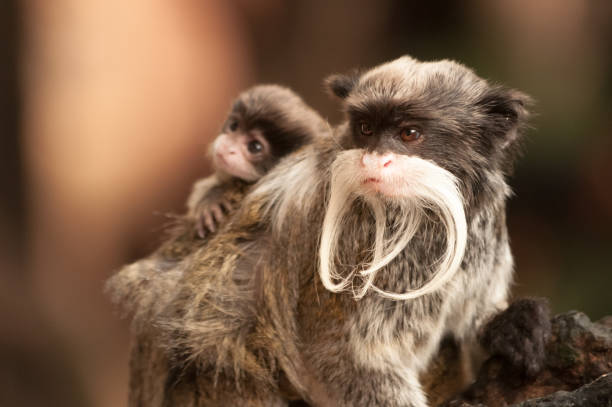
Emperor Tamarin: The Fascinating Story of the Mustached Tamarin
The emperor tamarin, known for its distinctive appearance and curious behavior, is a primate that deserves our attention. In this article, we will explore its history, habitat, and the threats it faces.
The Origin of the Emperor Tamarin
Imagine stepping into the dense Brazilian rainforest, where the vibrant sounds of wildlife create a unique symphony. There, among the leaves and branches, we find one of the most fascinating species in the Animal Kingdom: the emperor tamarin. This small primate, with its distinctive white mustache, carries a rich history that reflects both Brazil’s biodiversity and local culture.
The Naming of the Emperor Tamarin
The emperor tamarin, scientifically known as Saguinus imperator, was named in honor of its majestic appearance. The term ’emperor’ captures the essence of this small primate, which, despite its diminutive size, exhibits a commanding presence in the forest. In turn, the nomenclature reflects the respect and admiration that local communities have for this animal.
Besides its striking appearance, the emperor tamarin plays a crucial role in the ecosystem. By feeding on fruits and insects, it contributes to seed dispersal, promoting the growth of new plants and ensuring the continuity of life in the forest.
Cultural and Symbolic Relationship
The relationship between the emperor tamarin and local culture is equally fascinating. Many indigenous communities see this primate as a symbol of wisdom and agility. The presence of this animal in myths and stories reflects its importance to the traditions and cultural identity in the Amazon region. Some legends tell that tamarins possess knowledge of the trees and can guide you through the dense forest. Thus, it has become a vector of learning and connection with nature.
As we explore the origin of the emperor tamarin, we realize that its story is not just about a primate, but about everything it represents for the forests and the cultures that inhabit them. This journey is an invitation to understand more about the complexity of the natural world and its intricate bond with humanity.
As the fascinating tale of the emperor tamarin unfolds, we find ourselves ready to discover its distinct physical characteristics that make it a true wonder of nature.
Distinctive Physical Characteristics
In the shadows of tropical forests, a curious primate reveals itself as a true emperor among its peers: the emperor tamarin. This intriguing creature, with its distinctive appearance, is a fascinating example of the biodiversity that inhabits our forests. Its physical aspect is a perfect combination of adaptability and beauty, reflecting its unique characteristics that enchant scientists and nature lovers alike.
Fur and Coloration
The emperor tamarin is easily recognized by its lush fur and impressive coloration. Its characteristic white stripes on the face and the thick fur covering its body are true eye-catchers. The different shades that compose its fur range from gray to black, creating a contrast that highlights its facial expressions, especially the eyes that seem to shine with curiosity. Additionally, the fur serves as a protective layer against moisture and temperature variations in its natural habitat.
Size and Dimensions
With a size ranging from 24 to 30 centimeters in length, the emperor tamarin is a relatively small primate. However, its robust appearance is remarkable. Males are generally slightly larger than females, which is a common pattern among many primate species. This size difference, although subtle, plays an important role in their social and behavioral interactions.
The behavioral aspects of the emperor tamarin are also distinct. They are known for their varied vocalizations, which play a fundamental role in communication within the group. Watching them as they leap from branch to branch, using their long tails for balance, is a lesson in agility and coordination. Thus, as we explore the physical characteristics of the emperor tamarin, we notice how each aspect of its nature contributes to its survival in such a diverse ecosystem.
With its characteristics that make it truly unique, the emperor tamarin is not just a fascinating primate but also a vital indicator of the health of tropical forests. As we delve deeper into its habitat, we will understand even more about its interaction with the environment around it.
Habitat and Behavior
Imagine yourself in a dense forest, where rays of sunlight filter through the treetops, creating a spectacle of light and shadow. Here, in the heart of the Atlantic Forest, lives one of Brazil’s most fascinating primates: the emperor tamarin. This small monkey, with its famous white mustache that gives it an aristocratic air, depends on this environment to survive, thriving in a habitat that is both shelter and source of food.
A Green Refuge
The emperor tamarin is primarily found in tropical and subtropical forests, especially in the regions of Minas Gerais and Espírito Santo. In these environments, it moves agilely among the branches and vines, exploring every nuance of its habitat. The tall trees provide not only shelter but also access to a variety of fruits, flowers, and insects that make up its diet. Thus, the tamarin’s interaction with its forest is vital; it helps in seed dispersal, maintaining the health of the ecosystem.
Social Interactions
Moreover, the emperor tamarin does not live in isolation. It is a social animal, forming groups of up to six individuals, where each member plays a role. This group dynamic is essential for survival, as it provides protection and facilitates the search for food. Throughout the day, these primates use vocalizations and gestures to communicate, strengthening the bonds between them while exploring the riches of their forest. Indeed, this interaction with the environment and other forest inhabitants is a testament not only to the resilience of the emperor tamarin but also to the delicate balance of nature.
As we explore more about the emperor tamarin, it is crucial to consider the threats that this elegant primate faces in its habitat. Forest degradation brings constant challenges that require immediate and effective action.
Threats to Survival
Imagine a small primate, the emperor tamarin, adorned with a distinctive white mustache and a curious gaze, facing a rapidly changing world. Unfortunately, this magnificent being from the Amazon is threatened by one of the greatest challenges of wildlife: the destruction of its natural habitat. With the expansion of agriculture, urbanization, and logging, the rainforest where the tamarin lives is being reduced to ever smaller fragments.
Habitat Destruction
The rapid degradation of tropical forests is not just a matter of tree loss, but rather the disruption of entire ecosystems. With trees being cut down, the emperor tamarin is forced to abandon areas it traditionally occupied. This displacement, in turn, increases competition for food and shelter, putting pressure on the already vulnerable population. Additionally, climate change exacerbates this situation, altering weather patterns and compromising access to essential food sources.
Protection Initiatives
Fortunately, various protection initiatives are being implemented to safeguard the last remnants of this fascinating primate. Conservation projects aim not only to protect remaining habitats but also to promote the recovery of degraded areas. Local education is also crucial; raising awareness among communities about the importance of the emperor tamarin and biodiversity is fundamental to ensuring long-term survival. Therefore, as new challenges arise along the way, hope still shines through conservation efforts that seek to ensure a safer future for this splendid primate.
Conservation and the Future of the Emperor Tamarin
The emperor tamarin, with its captivating appearance and clever behavior, has become a symbol of Brazilian biodiversity. However, its existence is threatened. Habitat loss, forest fragmentation, and hunting are factors that put this species at risk. Understanding the challenges that the emperor tamarin faces is crucial for the preservation not only of the species but also of the ecosystem in which it lives.
Ongoing Conservation Efforts
Currently, various initiatives have been implemented to protect the emperor tamarin. Specialized organizations are promoting awareness programs, highlighting the importance of preserving the tropical forests that are home to this primate. Additionally, scientific research on the biology and ecology of the emperor tamarin is advancing, allowing for a better understanding of its habits and interactions with the environment. For example, monitoring populations in their natural habitat has proven effective in identifying priority conservation areas.
However, these efforts need to be expanded. It is imperative that more regions are protected and that environmental education is expanded in local communities. Encouraging sustainable tourism can also generate resources and awareness, contributing to the preservation of the emperor tamarin.
The Path Ahead
To ensure the long-term conservation of the emperor tamarin, collaboration between governments, NGOs, and society at large is vital. Environmental protection policies must be reinforced, as well as actions to mitigate the impacts of urbanization and deforestation. Each of us must be a defender of nature, for only together can we create a future where the emperor tamarin and so much Brazilian biodiversity can thrive. For this, a collective and persistent effort is crucial, protecting our natural heritage.
Conclusions…
The emperor tamarin is a species that not only enriches biodiversity but also represents a crucial link in its ecosystems. Awareness and preservation are fundamental to ensuring the survival of this primate. Thus, every effort counts, whether through education or habitat protection. Together, we can help maintain the richness of wildlife.
Did You Know?
What is the emperor tamarin?
The emperor tamarin is a species of primate from the genus Saguinus, known for its unique characteristics and social behavior.
Where is the emperor tamarin found?
This primate is primarily found in the tropical forests of South America, especially in Brazil.
What is the diet of the emperor tamarin?
The emperor tamarin is omnivorous, feeding on fruits, insects, and small animals.
Why is the emperor tamarin at risk of extinction?
The destruction of natural habitats and hunting are the main threats to the survival of the emperor tamarin.
How can we help preserve the emperor tamarin?
Contributing to conservation projects, encouraging habitat protection, and educating others about the importance of this primate are some ways to help.
What is the importance of tamarins to ecosystems?
Tamarins play important roles in seed dispersal and maintaining biodiversity in their habitats.
What are the physical characteristics of the emperor tamarin?
The emperor tamarin has distinctive fur, with a characteristic mustache and coloration that varies between brown and gray.
What can we learn from the emperor tamarin?
The emperor tamarin teaches us about the importance of conservation and the balance of food chains in ecosystems.