Pink Handfish: The Marvel of Southeast Australia
Originating from the shallow waters of Southeast Australia, the pink handfish is one of the ocean’s most fascinating creatures. With its unmistakable appearance and intriguing behaviors, this fish offers a glimpse into marine biodiversity, revealing how evolution has shaped its unique characteristics over time.
The Habitat of the Pink Handfish
The shallow waters of Southeast Australia are a true paradise for the pink handfish. This fascinating fish lives near coral reefs, which provide safe shelter and an abundance of food. The reefs are formed by coral structures that serve as homes for an incredible diversity of marine creatures.
Among the corals, fish find an ideal home where they can hide from predators and hunt their prey. This symphony of colors and shapes is where the pink handfish stands out, gliding smoothly between the coral structures like an artist in their gallery.
The interaction between various species is vital for the balance of this ecosystem. Corals protect smaller fish, which in turn help clean parasites. This collaboration is crucial for the overall health of the reef. The gentle currents of the shallow waters bring essential nutrients, creating a diverse food source. The pink handfish takes advantage of this abundance by feeding on crustaceans and small fish.
Despite its beauty, the reef environment faces threats. Climate change, pollution, and overfishing are damaging this delicate ecosystem. Caring for these waters is essential to ensure the survival of the pink handfish and many other creatures that depend on this underwater wonder.
Exceptional Anatomy
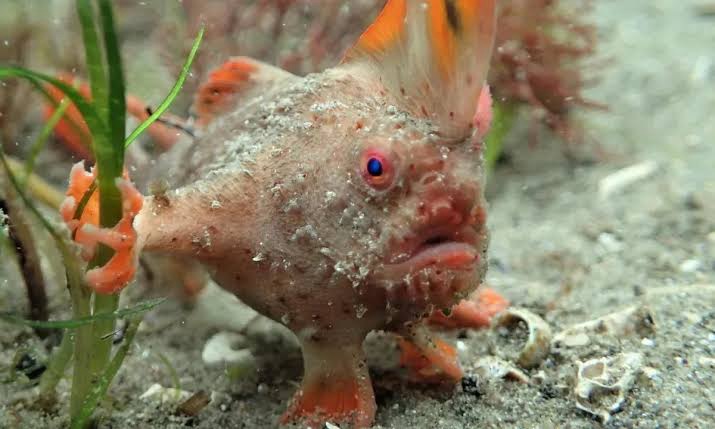
The pink handfish, one of the wonders of Southeast Australia, is an organism that captures the imagination of many. With its robust body and adapted fins, it possesses features that make it truly unique. The hand-shaped fins are not just an aesthetic peculiarity; they are essential for locomotion and hunting of this remarkable fish. These fins allow for precise and controlled movement. Thus, the pink handfish can traverse the ocean floor as if it were walking. This ability is vital in its habitat, filled with reefs and coral areas, where maneuverability is crucial to avoid predators and catch prey.
The fins, adapted to resemble hands, not only provide support but also act as effective tools for foraging. By gliding smoothly over the sand or among the corals, the fish can use these structures to lift and examine the substrate in search of small crustaceans and mollusks. It is a fascinating spectacle to see it in action, using its delicate fins to sift through the sand.
Moreover, the pink coloration of the pink handfish serves as clever camouflage in its environment. This coloration makes it less visible to predators and prey. Thus, it hides while approaching a target, using its fins to capture quickly and accurately. The wonderful pink handfish not only enchants with its appearance but also with the complexity of its adaptations, making it a true master in its habitat. To learn more about marine life diversity, check out this article on squid.
Behavior and Feeding
The T. rex leech, an intriguing predator, exhibits feeding behaviors that reveal its adaptation to the environment. Its predominant diet includes the blood of large herbivores that roam dense forests and wet areas. This species has evolved to firmly attach itself to its prey, using a combination of physical and behavioral factors to ensure the success of its feeding.
Leeches possess powerful suckers that allow them to cling to the skin of their prey. Once attached, the T. rex uses its anticoagulant secretion to prevent the blood from clotting. This anticoagulant is a true feat of nature, allowing the animal to feed for long periods.
The T. rex leech is observed to adopt subtle strategies when approaching its victims. Camouflage is a powerful weapon, facilitating its approach without being noticed. It can hide among vegetation or in shadows, waiting for the right moment to strike. This demonstrates a calculated and patient behavior, essential for its survival.
Furthermore, the T. rex is not just a solitary feeder. Recent studies suggest that these animals may gather in large groups during feeding seasons, indicating an intriguing social dynamic. Such behavior can maximize their chances of success, making them even more fascinating within the animal kingdom. For more information on adaptations in predators, you can access this article on rhinoceroses, which shows how other large animals feed in their habitats. The T. rex leech, therefore, is a spectacle of nature in its purest form.
Reproduction and Life Cycle
The fascinating pink handfish, known for its vibrant colors and intriguing behavior, has an admirable life cycle that unfolds in the rich waters of Southeast Australia. During the breeding season, males become particularly active, performing elaborate dances to attract females. This ritual is a demonstration of skill and vitality, essential for mate selection. The females, attracted by the vibrant courtship, choose a male to mate.
After the union, the females deposit their eggs on underwater surfaces, where the current helps to spread them. The male then fertilizes the eggs, ensuring a higher probability of survival. However, there is no extensive parental care. The eggs often remain at the mercy of currents and predators, which is a common characteristic in many fish.
After an incubation period that varies with water temperature, the eggs hatch and release the juveniles. These small fish are incredibly vulnerable and depend on natural hiding places to protect themselves from predators. During the first months, their diet is based on small organisms, such as plankton.
As they grow, the juveniles begin to explore their environment more, increasing their dietary diversity. Over time, they develop the characteristics that will make them adults, including the vibrant pink hue that distinguishes them. The maturation process is gradual, and the fish thrive in a safe and abundant environment. For more information on marine life and its diversity, explore more in articles about nature.
Conservation and Threats
The alligator turtle, a majestic creature of the rivers, faces significant challenges in its habitat. The destruction of its environment, primarily caused by urbanization and pollution, represents a growing threat. The rivers, which were once its natural homes, are becoming less habitable. Deforestation along riverbanks compromises water quality, increasing siltation. This results in a compromised aquatic ecosystem, where the alligator turtle struggles to survive.
Another major risk comes from overhunting. The demand for meat and products from the alligator turtle has led to a drastic decline in its populations. Indiscriminate hunting not only reduces the number of individuals but also affects the species’ regeneration. Furthermore, accidental capture in fishing nets is a problem that many do not consider. Many alligator turtles get trapped, leading many to die before being released.
To combat these threats, ongoing efforts are being made to preserve their habitat. Ecosystem restoration projects aim to revitalize rivers and adjacent areas. Local and international organizations are fighting for legislation that protects the alligator turtle. Public education is crucial, raising awareness about the importance of conserving this unique species.
The preservation of the alligator turtle is an effort that involves not only biologists but also the community. Engaging people is vital. Together, we must ensure that this remarkable creature continues to live in the rivers it has always called home. For a broader perspective on conservation, you can explore this article on species conservation.
Conclusions…
The pink handfish, with its bizarre appearance and unique behavior, teaches us about the rich marine biodiversity of Southeast Australia. Conserving its habitat is crucial to ensure that this natural wonder continues to enchant future generations. Its study offers valuable lessons about the interdependence of aquatic life and the importance of environmental preservation.
Did you know?
Where is the pink handfish found?
The pink handfish is found exclusively in the shallow waters of Southeast Australia, where it inhabits coral reefs and sandy seabeds.
What is the diet of the pink handfish?
This fish primarily feeds on small invertebrates and crustaceans it finds on the ocean floor, using its hand-shaped fins to hunt.
How does the pink handfish reproduce?
The pink handfish reproduces through external fertilization, where the eggs are fertilized after being released by the female into the water.
What is the importance of the pink handfish to the ecosystem?
The pink handfish plays an important role in the marine ecosystem, helping to control the population of invertebrates and contributing to the health of coral reefs.
What are the threats to the pink handfish?
The main threats to the pink handfish include habitat degradation, pollution, and overfishing, which threaten its survival and marine biodiversity.