Flying Lizard: The Master of Gliding
The flying lizard, a marvel of nature, is a species that captivates with its extraordinary ability to glide among the trees. In this article, we will explore its unique characteristics, habitat, and the gliding process that makes it a master of the forests.
The Wonder of the Flying Lizard
In the vast dictionary of nature, the flying lizard stands out as one of its incredible wonders. Scientifically classified as Draco volans, this reptile is known for its remarkable ability to glide through the tropical forests of Southeast Asia. It is a member of the Agamidae family, and it is fascinating to observe how its physical adaptations allow it to navigate gracefully through the air.
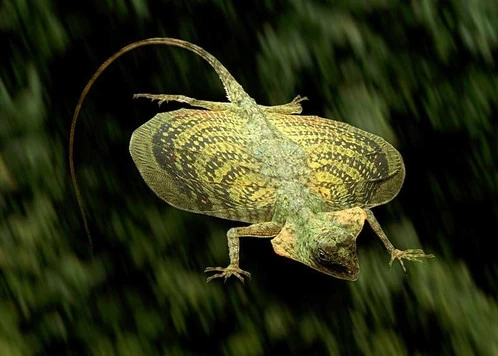
What distinguishes the flying lizard from other species are its unique physical characteristics. Firstly, it possesses a special structure called a ‘wing of skin.’ This membrane, extended from elongated ribs, provides a surface that can be used for gliding. In addition to this membrane, its body is generally slender, and its coloration varies between vibrant greens and shades of brown, aiding in camouflage among leaves and branches.
Moreover, flying lizards exhibit intriguing behavior. They can move their heads and orient themselves to direct their flight. When ready to glide, the lizards leap from considerable heights, using their forelimbs and the skin membrane to control their descent. Their large, expressive eyes are a notable addition to their morphology. This design helps them detect predators and prey while gliding gracefully through the air. Thus, the flying lizard is not only a master glider but also a magician in a world where the art of survival demands creativity and beauty. For a deeper look into animal adaptations, visit this article on adaptations in animals.
Habitat and Distribution
The flying lizard is a magnificent inhabitant of the tropical forests of Asia, especially in regions like Indochina and parts of Indonesia. This reptile, which can expand and glide through the air, stands out in the tree canopies. The dense forests provide a vast network of trunks and branches, creating an ideal environment for its movement. These lizards prefer areas with an abundance of trees, where their gliding abilities become a crucial advantage. The light filtered through the canopy and the shadows created by the leaves help camouflage the flying lizard from potential predators. These tropical environments have rich biodiversity, ensuring that these lizards have constant access to insects and small invertebrates, their primary food source. Furthermore, the flying lizard is an incredible example of adaptation. In drier habitats, such as forest edges or savanna areas, it can still thrive. Its gliding ability aids in foraging for food and escaping predators. The fusion of its colors with the environment is essential. In areas where the soil is lighter, they may display shades that mimic the landscape. Tropical forests are their preference, but some populations adapt to less dense ecosystems. However, habitat degradation has threatened their survival. The preservation of these ecosystems is vital. To better understand how biodiversity influences species adaptations in their habitats, check out this link.
The Engineering of Gliding
To understand the fascinating act of gliding, it is crucial to examine the anatomy of the flying lizard. This animal has a slender body, with adapted limbs that facilitate its impressive flying ability. The expandable ribs, which extend along the body, allow the lizard to expand its skin, forming an improvised wing during the leap. The combination of these characteristics creates a broad surface, essential for increasing lift as it launches between the tree canopies.
The gliding mechanism begins with a quick run up the tree. Upon reaching an adequate height, it propels itself with its hind legs, using the muscular force that comes from the pelvic rods. This burst of energy creates a significant initial acceleration. Shortly after, the forelimbs extend to stabilize the body, while the skin on the sides opens to maximize the surface area. This peculiar configuration allows the flying lizard to maneuver in the air with precision.
During flight, the lizard can adjust its descent angle. It does this by adjusting the position of its legs and the tension in its skin. This facilitates extraordinary control, allowing it to reach new landing points safely. Observers often note how it seems to float, a dance in the air that is not accidental but rather the result of millions of years of evolution. For a brilliant example of animal adaptation, see the article on bats, which also make gliding their specialty.
Behavior and Interactions
The flying lizard, with its gliding ability, is an intriguing spectacle in nature. Its gliding skill not only helps it escape predators but also aids in foraging for food. As it flies through the tropical forests, this reptile surprises eager observers, showcasing a delicate dance among leaves and branches. In this aerial world, the social interactions of the flying lizard are fascinating. They often gather in areas where there is an abundance of insects, their primary food source. During these congregations, males display vibrant colors to attract females. These visual displays are a crucial part of their social behavior.
The dynamics between predators and prey are complex. In its journey through the air, flying lizards must always be alert to birds of prey. These predators are always lurking, ready for a swift attack. However, the flying lizard has a keen instinct that helps it detect even the subtlest movements in the sky. In response, it climbs onto a high branch and, with a swift movement, launches itself into the air to escape danger.
In addition to predators, these creatures interact with other species of lizards. During the breeding season, males may engage in territorial disputes. Often, these battles are more about displays than physical confrontations. Such social behavior not only reinforces hierarchies but also maintains the genetic diversity of the species. For more on lizard diversity, see other fascinating nature articles.
Conservation and Future
The flying lizard, with its magnificent gliding ability, faces significant challenges in the current scenario. The destruction of natural habitats is one of the most pressing threats. Like many other animals, this lizard depends on tropical forests and densely vegetated areas to survive. With the advance of urbanization and deforestation, its feeding and breeding areas are being drastically reduced.
Another concerning factor is habitat fragmentation. As forests are cut into smaller pieces, the flying lizard may find it difficult to move between these fragments. This not only limits its access to natural resources but also increases the risk from predators and humans. The impact of uncontrolled tourism must also be considered. The areas where these lizards are frequently seen may be affected by overcrowding, pollution, and environmental degradation.
To protect this unique species, it is essential to implement conservation efforts. Reforestation projects help restore habitats and create ecological corridors. Community education is crucial. When locals are aware of the importance of the flying lizard, they are more likely to support protective measures.
Moreover, legal protection of areas where these lizards live can offer security. Ongoing research is essential to understand more about their behavior and ecological needs. Collective commitment is vital to ensure that the flying lizard continues to enchant us with its evolutions in the sky and thrives in its natural habitats. To learn more about threats to biodiversity, check out the article on elephants, which also face similar challenges.
Conclusions…
The flying lizard is an extraordinary example of evolutionary adaptation, combining beauty and functionality. Its talent for gliding among the trees ensures its survival and fascinates those who have the privilege of observing it. The preservation of its habitat is essential to ensure that these magnificent creatures continue to inspire future generations.
Did You Know?
What is the flying lizard?
The flying lizard is a species of lizard that has membranes between its ribs, allowing it to glide among the trees.
How does the flying lizard glide?
It uses its skin expansions to create a broad surface that, when jumping from a height, allows it to slide with control among the trees.
Where is the flying lizard found?
These lizards can be found in the tropical forests of Southeast Asia, where dense vegetation offers an ideal habitat.
What are the predators of the flying lizard?
The main predators include birds of prey and snakes, which are always alert to any movement in the trees.
What is threatening the flying lizard?
The loss of habitat due to deforestation and urbanization is the primary threat to this fascinating species.