The Fascinating Tiger Spider
Among the many wonders of nature, the tiger spider stands out for its striped pattern and exceptional hunting skills. This article will explore its characteristics, habitat, and behaviors, revealing how this spider has become a master in the art of capturing insects.
Unique Characteristics of the Tiger Spider
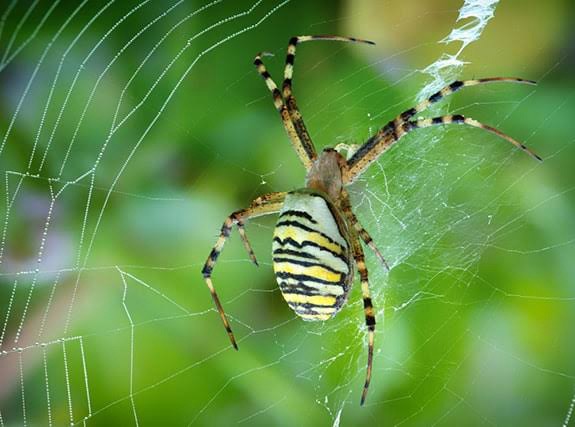
The tiger spider, with its slender body, is a visual spectacle. Its vibrant coloration resembles an impressionist painting, with combinations of yellow, black, and orange, forming striped patterns that evoke the image of a cunning predator. These patterns are not merely decorative; they play a crucial role in its hunting strategies. The bright yellow stands out against the green vegetation, while the black and orange stripes provide effective camouflage in flowering environments.
The body shape of the tiger spider is also a work of evolutionary art. Some have long, thin legs, allowing for agile and quick movement, essential for capturing prey. Others, with a more robust body, are ambush specialists. They position themselves in strategic locations, camouflaged under leaves or flowers, waiting for the perfect moment to strike.
The eyes, arranged in a characteristic line, are an example of functional perfection. This arrangement offers a wide field of vision and the ability to detect movement with agility. Upon spotting its prey, the tiger spider uses its remarkable speed to launch a quick and precise attack.
In some species, colors and patterns may even vary with the season, making the camouflage of its appearance even more impressive. By altering its appearance, the spider not only protects itself from predators but also enhances its chances of catching careless insects that cross its path. Thus, the beauty of the tiger spider is not merely superficial; it is, in fact, a vital tool for its survival and success in the wild. To learn more about spiders and their intriguing tactics, check out this article on the jumping spider.
Natural Habitat
The tiger spider, with its striking appearance and impressive abilities, inhabits a variety of environments. Open fields, filled with grasses and wildflowers, provide an ideal setting. In these locations, natural lighting is abundant, favoring its ability to detect small movements. Gardens, often cultivated by humans, also serve as a refuge for this arachnid. Here, tiger spiders find shelter and food in a wide range of insects attracted by flowers and vegetation. Urban habitats enriched with plants become spaces where the tiger spider can thrive. In every corner, it adapts, utilizing the diversity of insects that inhabit these environments.
Another standout habitat is dense vegetation, such as thickets and woods. There, moisture and shade create a perfect microclimate. The presence of leaves and branches facilitates its camouflage, allowing the tiger spider to hide in plain sight. These environments favor its hunting tactics, where patience and strategy are crucial. Sitting in a well-positioned web, it waits for its prey, attentive to sounds and movements. Fields and gardens, with their abundance of prey and suitable structure, enhance its chances of success. The tiger spider, therefore, is a true specialist in taking advantage of what nature offers, skillfully adapting to each habitat it inhabits.
Hunting Techniques and Feeding
The tiger spider, a true marvel of nature, possesses a variety of hunting techniques that make it an efficient predator. Its modus operandi varies depending on the situation and type of prey. Some tiger spiders prefer to weave elaborate webs, which are true invisible traps for their targets. These webs, with their fine silk, are effective in capturing small insects that, when flying or moving, become ensnared in the delicate threads.
The construction of these webs is a spectacle in itself. The tiger spider creates what is known as a ‘hunting web,’ designed with a pattern akin to a work of art. The sheen of the silk, exposed to sunlight, becomes almost magical, attracting unsuspecting prey. Once captured, the insect is quickly immobilized. The venom of the tiger spider acts swiftly, paralyzing the prey before it can react.
Other tiger spiders opt for ambush tactics, using camouflage as their ally. They carefully hide among leaves or flowers, patiently waiting for a favorable moment. When prey approaches, the tiger spider leaps with an impressive jump, grabbing the insect with its robust front legs. This technique is effective for capturing larger prey that would not be easily caught in webs.
This combination of strategies makes the tiger spider a versatile predator, ingeniously responding to the opportunities the environment presents. For more information about this fascinating spider, you can check out this article on spiders.
Interactions with Other Animals
The tiger spider, a fascinating creature of tropical environments, plays significant roles in the intricate web of life. As a predator, it excels in capturing insects. The use of its webs, delicate and effective traps, reveals the ingenuity of this species. With its hunting skills, the tiger spider regulates insect populations. This is crucial for maintaining ecological balance. However, the tiger spider is not always the unbeatable hunter. Predators such as birds and reptiles also see it as an opportunity. This predator-prey cycle is a vivid example of nature’s dynamics.
The interactions of the tiger spider with other animals are not limited to its prey or predators. Its presence directly affects other species. By controlling insect populations, it influences the availability of food for insectivorous birds. These birds, which consume insects, benefit from the presence of the tiger spider. On the other hand, the tiger spider, being prey, must remain constantly vigilant. Insects, which also serve as its predators, create a pressure that shapes its behavior and habitat.
Tiger spiders are more than mere predators; they are an essential part of the ecosystem. Their behavior determines the distribution of various insect species. More broadly, the dynamics between the tiger spider and its peers reflect the complexity of ecological interactions. To understand more about the fascinating relationships in the animal kingdom, you can explore arachnid interactions.
Importance in Nature
The tiger spider plays a crucial role in the ecosystem. This arachnid is an agile and efficient predator, specialized in capturing insects that can cause damage to crops and gardens. By regulating insect populations, the tiger spider helps maintain the food dynamics in its habitat. Without these predators, insect populations could grow uncontrollably, leading to ecological imbalance.
In addition to controlling pests, the tiger spider serves as prey for various birds and small mammals. This interdependence is part of a complex natural system, where each species has its function. The balance between predators and prey is vital for the health of the ecosystem. By supporting biodiversity, the tiger spider indirectly contributes to pollination by helping to maintain various insect species in the environment.
The tiger spider also influences soil health. By consuming insects that feed on decomposing organic matter, it helps maintain the integrity of healthy soil. Well-balanced soil has a greater capacity to support vegetation, which in turn promotes a richer biodiversity environment.
The disappearance of predators like the tiger spider can cause a cascading effect on other organisms. This phenomenon can result in a decrease in diversity, impacting all forms of life that depend on this system. Thus, the ecological importance of the tiger spider is immeasurable and essential for the balance of nature. To learn more about insect control, one can explore the interconnection between species.
Conclusions…
In summary, the tiger spider is an impressive creature with remarkable hunting abilities. Its unique aesthetic not only makes it beautiful but also helps it thrive in its ecosystem. Understanding this predator and appreciating the complexity and diversity of nature.
Did You Know?
What are the physical characteristics of the tiger spider? The tiger spider features a striped pattern on its body, a characteristic that distinguishes it. It has long legs and vibrant coloration, allowing for camouflage in its habitat.
Where is the tiger spider commonly found? This species is often seen in open areas, such as fields and gardens, where it can easily ambush its prey.
How does the tiger spider hunt its prey? Using its well-crafted webs or ambushing insects from its camouflage, the tiger spider is an efficient hunter, employing varied strategies.
Is the tiger spider dangerous to humans? Although the tiger spider has venom, it is generally harmless to humans. However, like any spider, it may bite if provoked.
What are the natural predators of the tiger spider? Among its main predators are birds, other insects, and even mammals, making it prey in its habitat.