The Fascinating Life of the American Bullfrog
The American Bullfrog, an imposing invasive species from the United States, captivates and concerns. This article explores its origin, striking characteristics, ecological impact, and what we can do to mitigate its effects on the environment.
The Journey of the American Bullfrog
The American Bullfrog, or Bullfrog, is a fascinating amphibian native to North America, where it is abundant in regions such as the United States and Canada. They inhabit wet areas, such as swamps, ponds, and rivers. With its origin in the vast and diverse landscape of these regions, the Bullfrog has developed in an ideal environment, favoring its reproduction and growth. Its distinctive calls echo during summer nights, helping attract mates and mark territory.
However, the story of the American Bullfrog is not limited to its natural habitat. During the 20th century, this species caught the attention of ecologists and biologists. Frogs were then introduced to various parts of the world, including Europe and Asia, in search of pest control and as food animals. This adaptation led the Bullfrog to environments where it had never lived before.
These introductions, although well-intentioned, brought unexpected complications. The American Bullfrog has proven to be an invasive species in many of these new habitats, outcompeting local populations and altering entire ecosystems. Its voracity and robustness have made it a superior predator, affecting ecological balance. This phenomenon is a fascinating and concerning example of how a species can spread beyond its natural borders, but it also serves as a reminder of the complexities of species introduction. For more on species interactions, visit here.
Masters of Camouflage and Competent Hunters
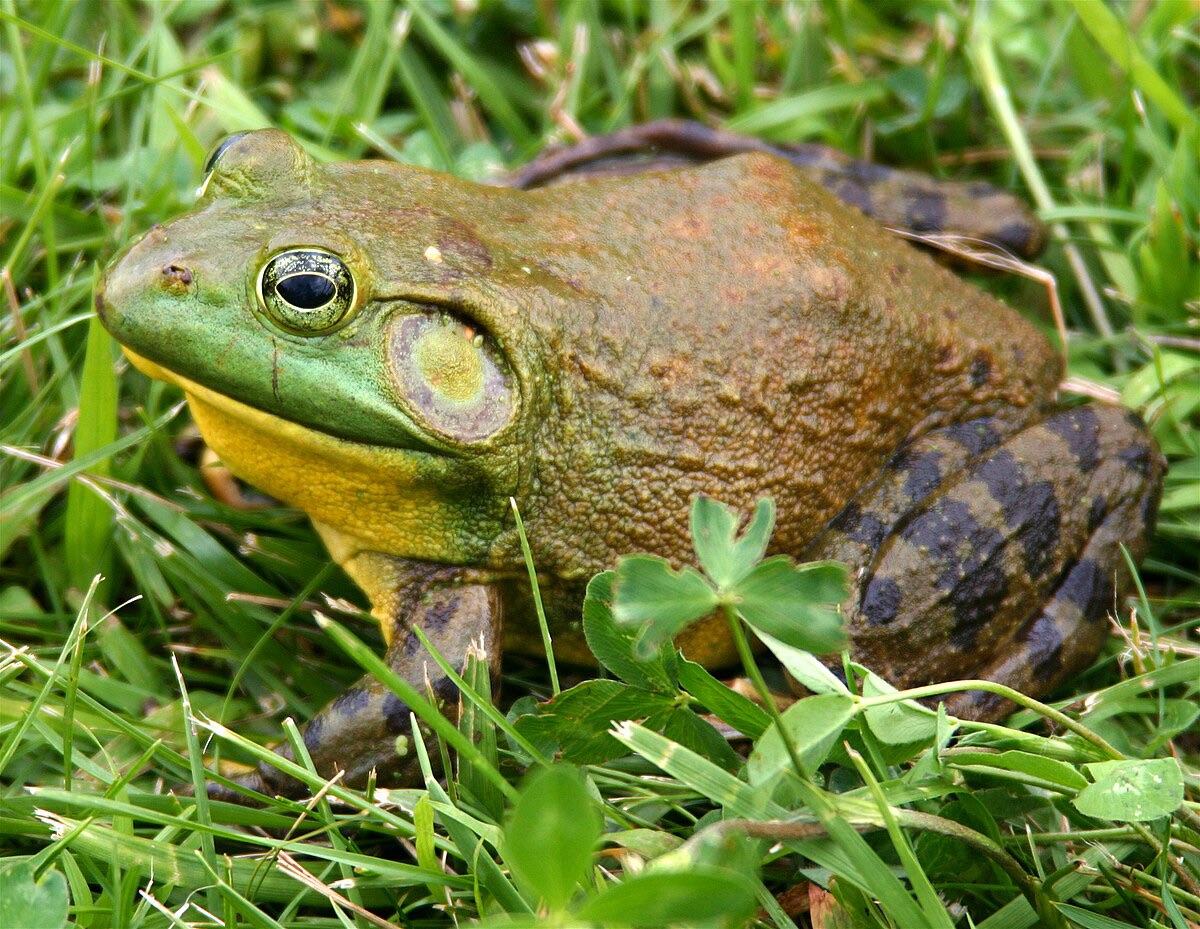
The American Bullfrog is a true marvel of nature, exceptionally adapted to its habitat. Its robust body and impressive physical characteristics are key elements for survival. The coloration varies from green to brown, featuring spots that provide effective camouflage among leaves and aquatic vegetation. This disguise allows the frog to blend into the environment and stay hidden from predators, while also facilitating the approach to its prey.
When hunting, the American Bullfrog employs a mix of patience and explosive strategies. It remains motionless, absorbing sounds and movements around it. When prey approaches, whether an unsuspecting insect or a small amphibian, this frog makes a quick and precise leap, using its sticky and rapid tongue. This ability ensures an immediate snack, as the Bullfrog does not hesitate to devour a variety of prey, adapting to what is available in its environment.
Another interesting aspect of this frog’s behavior is its call. Males often sing to attract females. The calls are bold and resonant, helping to establish territory. They can also surprise predators, demonstrating that they are not just an easy target.
This camouflage factor and its hunting ability make the American Bullfrog one of the most robust species in its habitat. For a comparison in camouflage in the animal world, check out this article on the jumping spider, which also has impressive disguise strategies.
Environmental and Ecological Impacts
The American Bullfrog, a robust and impressive species, has been introduced into various ecosystems outside its native habitat. Its impact on these regions is profound and often harmful. This voracious amphibian aggressively competes with native species for essential resources such as food and habitat. The inclusion of this frog in new environments can lead to declines in native species populations, creating significant ecological imbalances.
One of the main consequences of its introduction is predation on insects and small vertebrates, including local frogs and larvae. This competition is not just for space; it is a struggle for the survival of thousands of species. The increase of the Bullfrog questions the very structure of the food web where it is introduced.
Moreover, American Bullfrogs are known for their resilience, thriving in environments altered by human action. They adapt quickly and can alarmingly colonize urban and rural areas. In this context, the loss of biological diversity becomes a serious concern.
These frogs can even carry diseases that impact native wildlife, such as chytridiomycosis, a fungal infection that has decimated frog populations worldwide. This domino effect can be devastating for ecosystems.
The interaction of the American Bullfrog with native species has raised an alert about the responsibility we have when transporting organisms between regions. The connection between species and their environments is delicate and complex. To better understand the dynamics of competition between species, explore the story of how habitats evolve through interaction and adaptation. Follow this link to read more about the fascinating web of life: here.
Conservation and Management
The American Bullfrog, with its large size and voracity, presents significant challenges for the conservation of native ecosystems. To mitigate the impacts of this invasive species, various management strategies are necessary. It is imperative to monitor the populations of these frogs in new areas. Data collection helps understand how they interact with native species. Environmental education programs are essential. They inform the public about the risks of the American Bullfrog and encourage proper management practices, such as the removal of individuals found in vulnerable environments.
The use of physical barriers can be an effective strategy to protect sensitive areas. These barriers, when well-designed, can prevent the migration of frogs to critical habitats. Additionally, introducing natural predators and competitors can help control the population. However, this approach must be carefully planned to avoid new ecological imbalances. Another important practice is the restoration of local habitats. Recovering degraded areas can strengthen populations of native species, ensuring they have the necessary resources to thrive, away from the threats of the Bullfrog.
Chemical control is an alternative, but it must be employed with caution. The application of pesticides can affect not only the American Bullfrog but also other organisms. Therefore, strategies that prioritize integrated methods are essential. Organizations and communities must join efforts and carry out coordinated actions to control the population of this frog. Shared management will increase the effectiveness of these initiatives. In summary, wildlife conservation requires a legacy of responsibility and unity, highlighting the importance of harmonious coexistence with nature. For a reflection on the delicate balance of wildlife, access the fascinating waterbird of Brazil.
The Future of the American Bullfrog
The American Bullfrog, a species that has adapted and spread to places where it does not belong, faces challenges in its new habitat. Its presence in non-native ecosystems raises concerns about the impact on local species. Competition for resources and predation are issues that arise as this frog becomes part of ecological communities that did not recognize it before. Adapting to new environments also means that its natural characteristics may be exacerbated, leading to a weakened ecological balance.
To ensure the protection of native species, it is crucial that the scientific community and the public work together. This involves constant monitoring of frog populations and affected ecosystems. Research is vital to understand the interactions between the American Bullfrog and local species. Understanding how the frog interacts with its new home is the first step to mitigating negative impacts.
Awareness efforts are equally important. Educational campaigns can help the public understand the risks of introducing exotic species and the need to respect natural habitats. Furthermore, habitat restoration programs can be implemented to protect at-risk local species.
Local conservation initiatives should be supported and promoted. The sustainable balance between American Bullfrogs and native ecosystems is an important goal.
Thus, the American Bullfrog is not only a fascinating species but also a symbol of the challenges faced in biodiversity conservation. To understand more about the impact of invasive species, read about the jumping spider and its adaptive intelligence.
Conclusions…
The American Bullfrog exemplifies how a species can impact ecosystems and highlights the importance of environmental awareness. Education and management actions are crucial to mitigate its consequences. Protecting our habitats is a vital step toward ensuring a sustainable future.
Did you know?
What is the origin of the American Bullfrog?
Originating from the United States, the American Bullfrog has been introduced to various parts of the world, becoming an invasive species in many ecosystems.
What are the characteristics of the American Bullfrog?
It has a large size, a voracious appetite, and a powerful croak. Its coloration varies between green, brown, and spots, allowing for camouflage.
How does the American Bullfrog affect the environment?
It competes with native species for food and space, and can cause population declines in various local species, as well as alter ecosystems.
What can be done to control the population of the American Bullfrog?
Public education, monitoring of its populations, and the implementation of management programs are essential to control this invasive species.
Is the American Bullfrog dangerous to humans?
Although it does not pose a significant direct danger, its presence can indicate ecological changes and potentially spread diseases.