Coati: Meet This Charming Guardian of Nature
The coati is a four-legged mammal known for its curious behavior and ecological importance in Brazilian forests, contributing to the natural balance.
Distinctive Features of the Coati: Appearance and Behavior
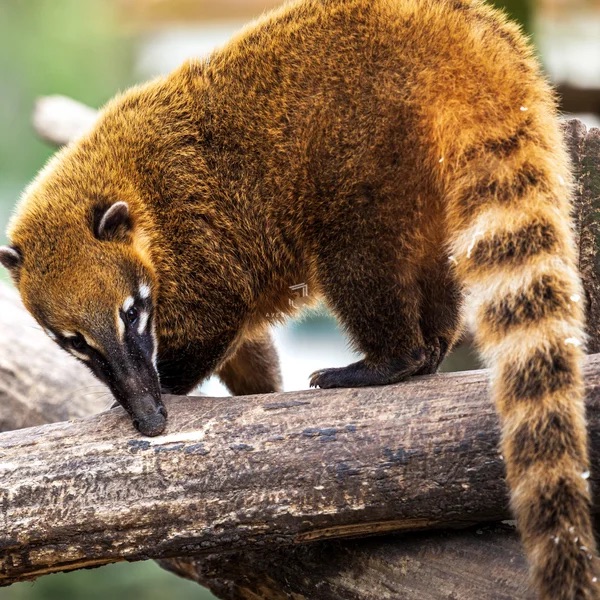
As we delve into the captivating aspects of wildlife, it’s impossible not to be charmed by the coati, a creature with unique traits and unparalleled sociability. With a dense and slightly coarse coat, the coati stands out with colors ranging from brown to black, harmoniously accented by a ringed tail that adds undeniable charm.
With a long, flexible snout essential for foraging, the coati explores its habitat with innate curiosity, making it one of the most astute explorers in the animal kingdom. Its size, reaching up to 24 inches in body length with a notable tail addition, allows it to roam mountains with agility. When it comes to movement, the coati has a unique ability to climb trees, thanks to its agile limbs and robust tail that serves as a balance during arboreal adventures.
Moreover, the social behavior of coatis is fascinating, as they are predominantly diurnal animals living in groups of up to 30 individuals. This trait not only aids in protection against predators but also enhances their foraging skills, allowing them to explore multiple food sources simultaneously. By detailing the exceptional characteristics and behaviors of the coati, we set the stage to explore its habitat and distribution, topics that will be covered in the next chapter.
Habitat and Distribution: Where to Find the Coati
As we venture into the dense tapestry of South American rainforests, we encounter a creature exceptionally adaptable and intrinsically linked to local biodiversity: the coati. With attentive ears and a ringed tail, this mammal not only survives but thrives in an impressive variety of environments. From humid forests to mountainous areas and wooded savannas, the coati demonstrates a remarkable ability to adapt to different ecosystems.
In the Amazon, dense and humid forests provide the coati with abundant food and trees for nesting. In Brazil’s Cerrado, with its sparse vegetation and rich soil, they benefit from vast areas for foraging. The Atlantic Forest, with its specific climatic and vegetation conditions, offers another ideal habitat for this species.
Beyond forests, coatis have also been observed in suburban areas, showcasing a notable capacity for urban adaptation. This flexibility not only highlights the coati’s resilience to environmental changes but also its importance in maintaining the health of ecosystems it inhabits. By dispersing seeds and controlling populations of insects and small vertebrates, they significantly contribute to local biodiversity.
Therefore, the coati’s habitat perfectly illustrates how each region plays a crucial role in its survival and, by extension, in preserving regional biodiversity. As we move to the next chapter on the Coati’s Diet and Ecological Role, this connection between the animal and its environment becomes even more evident.
Diet and Ecological Role of the Coati
As we explore the fascinating habits of our forest inhabitants, we encounter the coati, a creature whose diet exemplifies the complexity and interdependence of ecosystems. Naturally omnivorous, coatis have a diverse menu that includes fruits, insects, small vertebrates, and even occasional floral products. This variety ensures they play vital roles in their habitats, influencing both predation and seed dispersal.
Interestingly, the coati’s ability to adapt to the availability of food resources in different seasons makes them important biological regulators. By controlling populations of insects and small animals, they help maintain ecological balance, preventing overpopulation that could lead to significant imbalances. Additionally, by consuming fruits and defecating seeds in distant locations, they greatly contribute to the dispersal of various plant species, facilitating forest regeneration and biodiversity.
Therefore, as we move forward to discuss the challenges and threats to the survival of this remarkable forest guardian, it is crucial to recognize and value the profound impact the coati has not only on its environment but also on the health and sustainability of our ecosystems.
Challenges and Threats to the Coati’s Survival
Preservation and Coexistence: How to Protect the Coati
After exploring the fascinating biology and social behavior of the coati, we now address vital strategies for the conservation of this intriguing mammal. Protecting the coati and its habitat is imperative for the biodiversity of the regions it inhabits, as its presence indicates a healthy forest ecosystem.
At the heart of this mission is environmental education and awareness. Understanding the importance of the coati in nature inspires greater appreciation for these creatures and fuels conservation efforts. Therefore, environmental education projects in local communities can reduce conflicts and promote harmonious coexistence.
Additionally, legal protection of areas where coatis reside is crucial. Supporting national parks and nature reserves not only protects the physical habitat of coatis but also preserves the area’s biological diversity. Initiatives like maintaining green corridors allow coatis and other species to migrate and reproduce, essential for the sustainability of their populations.
Finally, community participation in monitoring and preservation efforts aids not only the coati but the entire ecosystem. By visiting places that promote the conservation of species like the coati, you directly contribute to these efforts. Discover more about this topic in our article on ‘Biguatinga: Meet the Fascinating Bird of Brazilian Waters.’
In conclusion, the coati is more than just an animal; it is a symbol of sustainability and ecological resilience. I invite you, dear reader, to engage in this cause. Did you enjoy this post? Like, comment, and share so we can continue creating!
Conclusions…
Through knowledge about the coati, understanding its routine, habits, and ecological importance reinforces the need to preserve its natural habitat. Besides its role in environmental balance, the coati also inspires admiration for its adaptability and intelligence. With its active presence in forests, this mammal helps maintain the diversity and health of ecosystems. Thus, protecting the coati directly contributes to the conservation of Brazilian biodiversity and the harmonious functioning of nature. Encouraging respect and appreciation for this species is essential for future generations to enjoy a rich and balanced environment. Finally, we invite you to share this knowledge to strengthen environmental awareness around the coati.
Did You Know?
- What is a coati? The coati is a mammal from the Procyonidae family, known for its four legs and ringed tail, common in South American forests.
- What is the coati’s natural habitat? Coatis primarily live in tropical and subtropical forests but can also be found in open areas and riparian forests.
- Why is the coati important to nature? It contributes to environmental balance by controlling populations of insects and small animals and dispersing seeds.
- How do coatis feed? Coatis are omnivores, feeding on insects, fruits, eggs, and small vertebrates, adapting their diet according to the environment.
- What physical characteristics make the coati unique? Its long, ringed tail, long snout, and agility are distinctive traits that aid in its environmental adaptation.
- Does the coati exhibit social behavior? Yes, coatis often live in family groups, facilitating protection and food search.
- How does the coati help in seed dispersal? By eating fruits and moving through the environment, the coati spreads seeds on the ground, promoting plant regeneration.
- What threats does the coati face in nature? Habitat destruction, roadkill, and hunting are the main threats that can compromise its survival.