Bubble Fish, the Gelatinous Wonder of the Ocean Depths
The bubble fish, one of the most intriguing creatures of the oceans, captivates with its gelatinous form and peculiar behavior. In this article, we will unveil the mysteries of this fish, exploring its unique characteristics, habitat, diet, and the ecological importance it holds in its marine environment.
The Strange Body of the Bubble Fish
Amidst the dark vastness of the deep ocean, the bubble fish stands out for its remarkable adaptation to crushing pressures. This extraordinary being possesses a gelatinous body and is almost muscle-free, an essential characteristic for survival where others would collapse. Such a structure allows the bubble fish, scientifically known as Psychrolutes marcidus, to remain buoyant in the depths without expending much energy.
The body of the bubble fish is composed of a gelatinous mass whose density is slightly lower than that of water. This peculiarity provides it with natural buoyancy, allowing it to move almost by levitation in search of food. Its fins are small and retracted, minimizing the need for physical exertion in an area where movement is limited.
Unlike many other fish, the bubble fish does not possess a complex swim bladder. This organ, common in shallow-water fish, regulates buoyancy through air. However, the extreme pressure at depths would make it essentially impossible to fill a swim bladder effectively. Thus, the composition of its body offers an adaptive solution for this function.
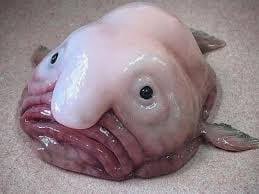
The bubble fish boasts a ‘sad face’ appearance when removed from deep waters. Outside its habitat, the lower atmospheric pressure causes the collapse of its delicate structural form, resulting in the already iconic facial ‘expression.’ In its natural environment, however, this body configuration is perfectly suited to adverse conditions.
Its adaptations echo the survival strategies of other extraordinary organisms, such as the tardigrade, which is resilient to extreme environments. Thus, the bubble fish remains a marvel of evolution, perfectly suited for a world inaccessible to most beings.
The Habitat of the Bubble Fish
In the mysterious depths of the oceans, where sunlight barely reaches, dwells the enigmatic bubble fish. Preferring abyssal zones, it lives between 600 and 1,200 meters below the surface. This challenging environment, darker and colder than the surface, offers a life of tranquil submerged realms.
The bubble fish enjoys living on steep ocean floors, where predator traffic is less frequent. These low-energy areas favor the impression of survival through energy conservation, where the bubble fish floats serenely, with minimal consumption. This unique environment also helps maintain its gelatinous structure, normally unable to withstand the pressures of shallow waters.
As a master of the depths, the bubble fish adapts well to cold temperatures and high pressure, where food is scarce and haste is unnecessary. It has adapted to this exclusivity, transforming into something more than a biological curiosity, but a true wonder of the deep sea. Its unique shape and physical composition are entirely dedicated to life in a silent and rarefied realm.
Here, it patiently awaits the next meal to pass by, allowing it to capture its prey with the naturalness of one who lives in a world where time seems to flow differently. For more information about incredible creatures that inhabit the deep sea, explore our section on the squid, an animal that also defies the conventions of the animal kingdom.
The Gelatinous Diet
In the enigmatic depths where the bubble fish resides, life moves at a slow and measured pace. This fascinating being, often described as a gelatinous mass, has a diet that reflects the tranquility of its environment. The bubble fish is not an agile predator, but a passive strategist. Its diet mainly consists of small crustaceans and other invertebrates that inhabit the ocean floor.
Utilizing its natural buoyancy, the bubble fish hovers over the seabed, capturing its prey almost by chance. This feeding method reflects energy efficiency: it conserves energy while taking advantage of what the sea offers. This is crucial in its habitat, where nutrients can be scarce.
The bubble fish plays a vital role in the marine ecosystem. By consuming crustaceans and organic debris, it helps control smaller populations of organisms. This control is essential for maintaining the delicate balance of the deep ocean ecosystem.
This passive feeding method is similar to the behavior of other slow-moving marine inhabitants, such as the manatee, which patiently floats in search of its meals. Thus, the bubble fish is not just a biological curiosity, but an essential component in the life cycle of its silent and mysterious environment. The diet of the bubble fish, therefore, not only sustains its existence but maintains the harmonious balance of the marine community in which it lives.
The Bubble Fish and the Food Chain
In the silent and mysterious environment of the ocean floor, where light is scarce and pressure is overwhelming, the bubble fish finds its home. This peculiar inhabitant plays a unique role in the complex web of the marine food chain. Adapted for a low-energy life, it is an efficient predator. Feeding on small crustaceans and various organisms that float in ocean currents, the bubble fish helps control their populations.
Ocean currents bring nutrients from the upper layers, attracting prey for its feeding. However, the bubble fish is not free from threats. Larger predators, such as eels and other deep-sea creatures, find in it an occasional meal. This demonstrates its importance as a source of sustenance in the ecosystem.
Besides being prey and predator, it also contributes to nutrient recycling. By feeding, it helps redistribute organic matter, ensuring that essential nutrients return to the marine environment. This material cycle is crucial for the sustainability of oceanic life forms. In a broader context, the role of the bubble fish resembles that of other unique animals, such as the tardigrade, which also survives in extreme conditions.
Integrated into this intricate network, the bubble fish exemplifies the interdependence characteristic of abyssal species. Its existence, though discreet, provides balance and continuity for the biodiversity of the deep waters. The interaction between predator and prey emanates the hidden beauty and complexities of relationships at the ocean’s depths. Each species plays an invaluable role, affirming the importance of understanding and preserving these delicate marine ecosystems.
The Importance of Conservation
In the dark depths where the bubble fish resides, the challenges to its survival are multiplying rapidly. This peculiar fish, known for its distinctive gelatinous appearance, is facing increasing threats due to human activities. Bottom trawling, in particular, poses a significant danger. By sweeping the ocean floor in search of other species, these nets eventually capture the bubble fish as well, making it an inadvertent victim of this intrusive fishing method.
This practice not only directly impacts the bubble fish but also causes irreversible damage to the deep-sea marine ecosystem. The preservation of abyssal habitats, therefore, is vital not only for resident species but for the overall health of the ocean, which plays a crucial role in the balance of our planet. The habitat of the bubble fish remains largely unknown, making it even more vulnerable to the rampant exploitation of the oceans.
There is a growing urgency to protect these areas. Conservation initiatives need to be implemented to limit destructive practices and promote research into the ocean’s depths. The study of species like the bubble fish can provide valuable insights into resilience and biodiversity in one of the Earth’s most extreme environments.
As nature conservation has already demonstrated its value in cases like that of the orca, we must strive to ensure that the bubble fish and its habitat remain untouched. This effort is crucial not only for the survival of this unique species but also to ensure a balanced future for marine life in general.
Conclusions…
The bubble fish is a fascinating creature that not only enchants with its appearance but also plays a vital role in the marine ecosystem. Protecting its habitat is essential to ensure the survival of this unique species and the balance of the ocean floor.
Did You Know?
What is the bubble fish?
The bubble fish is a species of marine fish known for its gelatinous body and resilience in greater depths.
Where does the bubble fish live?
This fish inhabits the deep oceans, primarily in warm and tropical waters, amidst corals and other forms of marine life.
What is the diet of the bubble fish?
The bubble fish feeds on small crustaceans and plankton, using its mouth adapted to filter food from the water.
What is the ecological importance of the bubble fish?
It plays an important role in the marine food chain and contributes to the health of oceanic ecosystems.
How to protect the habitat of the bubble fish?
Preserving coral reefs, minimizing pollution, and supporting conservation initiatives are essential to protect the bubble fish.