Albacore: Exploring the Fascinating Life of the Flying Tuna
The albacore, known as the flying tuna, impresses with its speed and endurance in the oceans. More than just a fish, it is a part of global culture and cuisine.
What is Albacore? Discover the Flying Tuna
Diving into the deep blue oceans, we encounter a myriad of fascinating creatures, among which the albacore stands out, combining grace and power in every movement. Scientifically known as Thunnus alalunga, the albacore, or longfin tuna, is a distinct member of the tuna family, surprising with its unique locomotion and speed abilities.
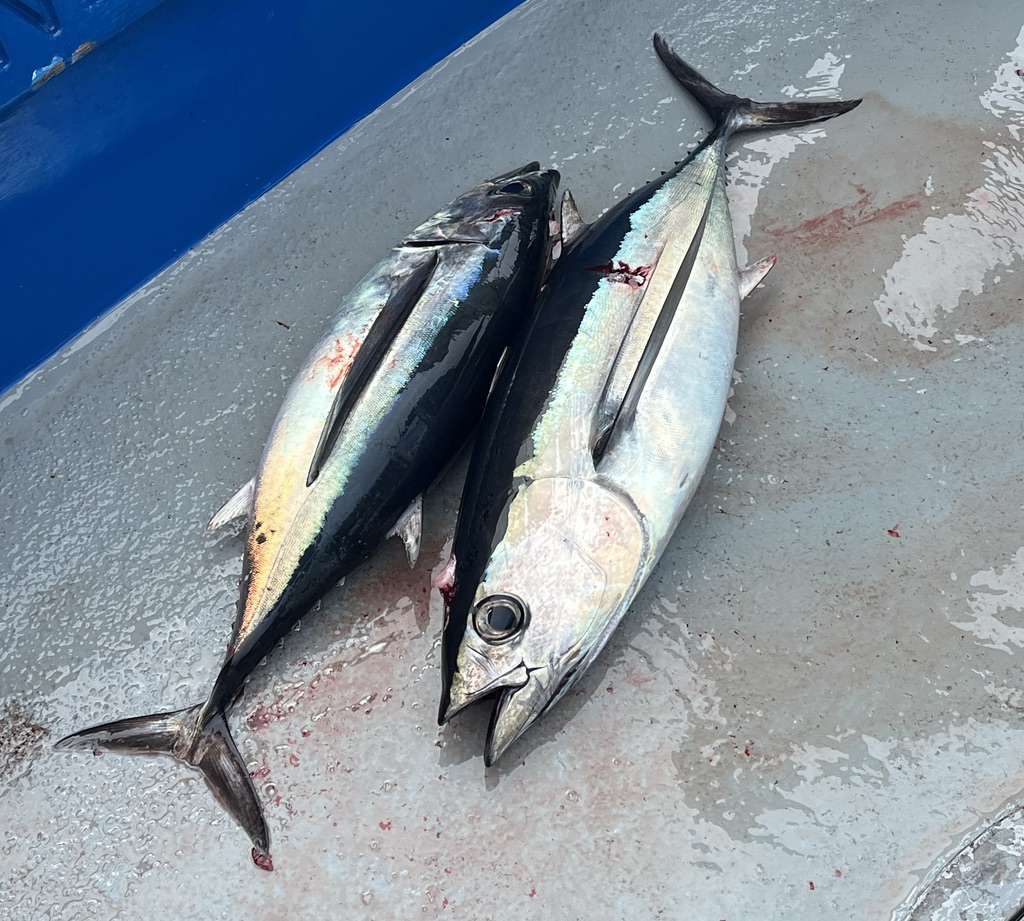
Characterized by a robust, streamlined body that maximizes its hydrodynamics, the albacore can reach up to two meters in length and weigh over 60 kilograms. Its long pectoral fins, which can be as long as a third of its body, are not only a distinctive feature but also aid in its incredible swimming ability. What truly stands out is the incredible speed this fish can reach, up to 75 kilometers per hour, allowing it to escape predators and capture prey with surprising efficiency.
Now, why is it called the ‘flying tuna’? This nickname comes from its ability to leap out of the water while accelerating to escape threats or during feeding. These spectacular jumps are not only a testament to its strength and agility but also a magnificent spectacle that enchants all who are lucky enough to witness it. Thus, while the albacore doesn’t fly like birds, its leaps through the air justify this curious and impressive nickname.
The locomotion techniques of the albacore are undoubtedly evolutionary adaptations that position it as one of the most efficient predators in its environment. To understand more about how environments influence such adaptations, visit the post on the influence of the environment on plants, which discusses similar biological concepts. The next chapter explores the global distribution of the albacore, revealing not only where but also how it lives and moves through the vast oceans of the world.
Habitat and Global Distribution of Albacore
In our dive through the world’s seas and oceans, we now turn our attention to the habitat and distribution of the albacore, these spectacular tunas whose journey spans vast aquatic territories. Albacore is primarily found in temperate and tropical waters, traversing the Atlantic, Pacific, and Indian Oceans in complex migratory patterns essential for their survival and reproduction.
The migration of the albacore is driven by a combination of factors such as water temperature, salinity, and ocean currents. These fish prefer waters with temperatures between 18 and 24 degrees Celsius, which explains their notable presence in areas like the Mediterranean and the North Sea during warmer months. In contrast, during colder months, albacores move in search of warmer waters, a phenomenon observable on the east coast of the United States and the subtropical Pacific region.
Moreover, ocean currents, such as the Gulf Stream and the Kuroshio Current, offer migratory routes that albacores use to travel across the oceans. This constant movement not only facilitates the search for rich feeding areas and safe spawning zones but also minimizes the risk of predators. The migrations of the albacore show an extraordinary adaptation to their environment, ensuring their survival through generations.
To understand more about how these factors influence other marine migratory behaviors, I recommend reading about the ‘aerial roots of telepathic plants’ that address these intricate biological mysteries. This fascinating interconnection of marine life with its environment is what we will continue to explore in the next chapter, where we will delve into the cultural and literary influence of the albacore, highlighting its presence in Ernest Hemingway’s work and its reverberation in arts and popular culture.
Albacore in Culture and Literature: The Connection with Ernest Hemingway
Transitioning from the previous chapter that discussed the biology and migration of the albacore, this text dives into the notable role this fish has played in culture and literature, offering a unique perspective on the intersection between the natural and the man-made. Ernest Hemingway, the acclaimed American author, celebrated the albacore in his masterpiece, ‘The Old Man and the Sea,’ where the tenacious struggle between the fisherman and a giant marlin briefly touches on the capture of albacores as part of the daily feats of fishermen. This citation is not merely a literary detail but a window into the lives of those who depend on the sea for their survival, echoing the excitement and respect for oceanic creatures.
Furthermore, the albacore has inspired countless works of art, from paintings that capture its fluid and graceful movement to sculptures that celebrate its dynamic and adaptive form. In coastal cultures around the world, maritime festivals and celebrations often glorify the albacore, not just as a food resource but as a source of inspiration and a symbol of resilient communities interconnected with their natural environments.
In an era where sustainability becomes increasingly crucial, understanding the cultural impact of the albacore can also teach us about conservation and respect for the marine environment. This cultural context broadens our appreciation for what is often seen merely as a commodity.
As we conclude this look at the species, the following chapter will explore the ecological and economic implications of the albacore in our oceans and on our tables, highlighting how this influential fish benefits not only cultures around the world but also the ecosystems it is part of.
The Ecological and Economic Importance of Albacore
As we investigate the complex web of marine life, we encounter a remarkable protagonist, the albacore. This fish, also known as the flying tuna, plays a crucial role in the balance of ocean ecosystems. As an agile predator, the albacore consumes a variety of prey, from small fish to crustaceans, thus regulating the populations of these species and maintaining the health of the marine habitat.
Moreover, the environmental benefits of the albacore are not limited to its predatory activity. Its existence significantly contributes to the biodiversity of the oceans, even influencing the presence of seabirds that feed on its hunting leftovers. Economically, the albacore is a vital source of food and income for many coastal communities. The sustainable fishing of this fish has a direct impact on global gastronomy, where it stands out in sophisticated cuisines, promoting a value chain that benefits everyone from fishermen to final consumers.
Additionally, the fishing industry relies significantly on albacore populations. Fishing techniques have evolved to meet the growing demand for this fish, although this has led to challenges of overfishing. This aspect connects directly to the next chapter, which will address ‘Conservation and Sustainability: Caring for the Albacore,’ focusing on the imperative need for sustainable fishing practices to preserve these essential species for marine balance and global food security.
Conservation and Sustainability: Caring for the Albacore
As we emerge from the deep and vibrant seas that create a habitat for a wealth of marine life, we face a growing dilemma. The albacore, or ‘flying tuna,’ faces considerable threats that require our immediate attention. Spanning seas and global cuisines, this iconic fish finds itself at the heart of an overfishing crisis, undermining both its populations and the ecosystems that depend on them.
Unsustainable fishing practices not only reduce albacore numbers but also harm other marine species and degrade sensitive ocean habitats. However, concerted efforts are being made to reverse this course, incorporating responsible fishing methods and quota management systems that balance industry needs with the health of our oceans. About 70% of albacore fisheries now commit to more sustainable practices, but the fight is far from over. It is imperative that we continue to, through awareness and action, support initiatives that keep albacore populations robust and the seas thriving.
Success in this arena is not only vital for the albacore; it is a barometer for the global health of our oceans. Every individual can make a difference. By choosing products from sustainable sources, reducing excessive consumption, and supporting marine preservation policies, each of us contributes to a healthier and more balanced future. I encourage every reader to explore and engage with these issues. By better understanding the complex aquatic ecosystems and the measures necessary for their preservation, we can create a lasting positive impact for the albacore and all the beings that share its aquatic home.
Thus, we prepare to explore more about the intriguing dynamics between predators and prey in the oceans, a topic that deserves our continued reflection.
Conclusions…
The albacore is much more than just an oceanic fish; it represents a fascinating species, adapted to navigate great distances and play an essential role in marine balance. Its speed and strength make it a coveted target for fishermen, as well as a symbol of resilience, immortalized in literary works like those of Ernest Hemingway. Understanding the biology and habits of the albacore is crucial to promoting conservation and sustainable management, ensuring that future generations can continue to enjoy this incredible creature.
Moreover, the albacore represents a rich cultural and gastronomic source, sparking interest among diverse audiences around the world. Therefore, delving into its knowledge brings benefits ranging from entertainment to environmental preservation.
Did You Know?
- What is albacore? Albacore is a type of tuna known for its ability to swim at high speeds and partially fly out of the water, belonging to the tuna family.
- What are the physical characteristics of albacore? It has an elongated body, silver-blue coloring, long fins, and is recognized for its agility and endurance at sea.
- Where is albacore found? Albacore is found in tropical and temperate waters of oceans around the world, migrating over extensive areas.
- Why is albacore called the flying tuna? Because it can leap and glide for a few seconds above the water’s surface, giving the impression of ‘flying.’
- What is the importance of albacore to the oceans? Besides being part of the food chain, albacore helps maintain the balance of marine ecosystems by controlling populations of other species.
- Is albacore mentioned in any literary work? Yes, albacore was mentioned in Ernest Hemingway’s book, highlighting its renown and cultural symbolism.
- What are the main challenges for albacore survival? Overfishing and marine habitat degradation are the main challenges for albacore conservation.
- How can I contribute to albacore conservation? Supporting sustainable fishing practices, preserving marine habitats, and spreading information about the species’ importance are fundamental actions.