The Disappearance of Brookesia Desperata: A Warning about Extinction
Brookesia desperata, a tiny chameleon from Madagascar, is on the brink of extinction. This alarming situation highlights the urgency of biodiversity preservation.
The Story of Brookesia Desperata
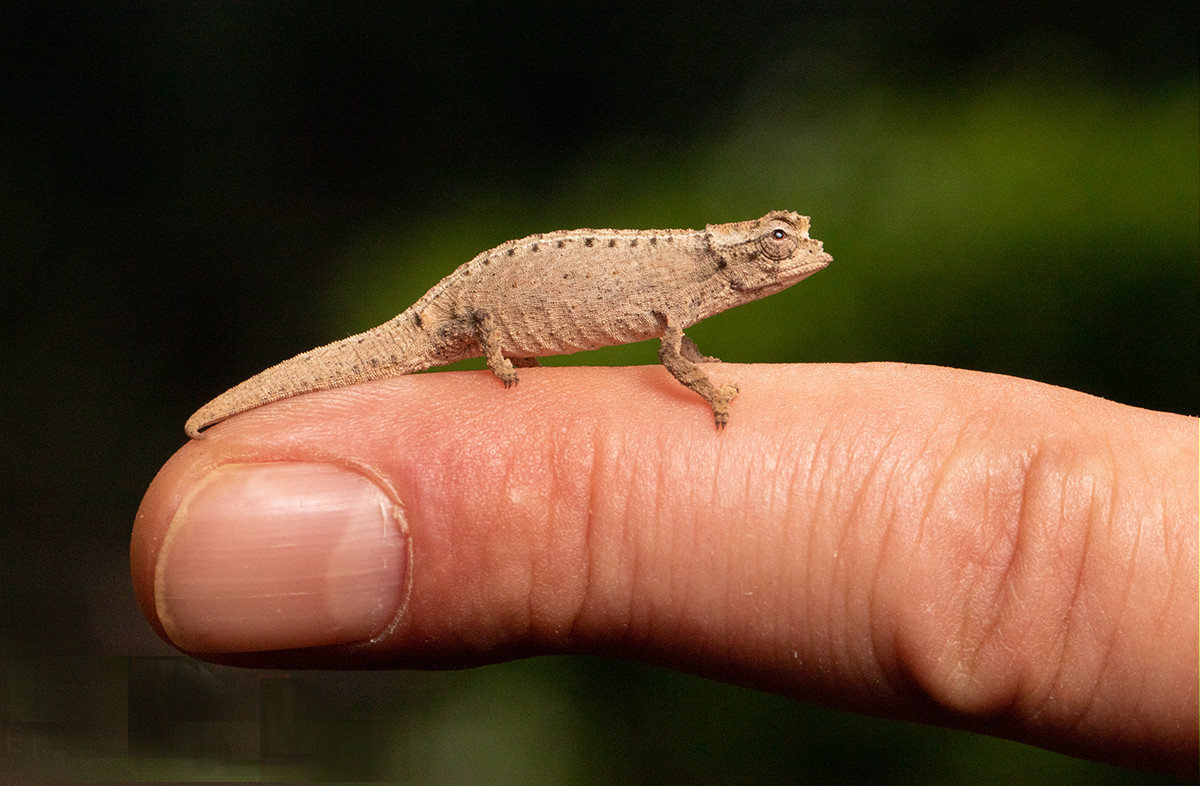
Imagine, for a moment, a diminutive chameleon hiding in the humid forests of Madagascar. This is Brookesia desperata, a creature that, although small, carries the weight of its species’ evolutionary history. This tiny lizard, measuring less than three centimeters in length, was discovered in 2007 during an expedition searching for the unique biodiversity that the island offers. Surrounded by a habitat of fallen leaves and dense vegetation, Brookesia desperata is a true example of how life adapts to diverse environments.
Natural Habitat
Brookesia desperata, like many chameleon species, specifically inhabits the understory of Madagascar’s tropical forests. These forests are rich in biodiversity and feature a unique microclimate that favors the survival of countless species of flora and fauna. The small chameleons, often camouflaged among leaves and branches, depend on these environments to hide from predators and hunt insects. However, their habitat is not just a home; it is a fortress of resilience that witnesses the forces of evolution.
Distinctive Characteristics
Researchers characterize Brookesia desperata not only by its tiny size but also by its unique adaptations. Its earthy coloration allows it to blend perfectly with the forest floor. This chameleonic ability is a direct response to its environment, ensuring that it remains invisible to larger threats. As we delve deeper into the story of this small lizard, it becomes clear that its characteristics are not mere accidents of nature, but rather the result of millions of years of evolution.
As we explore the history of Brookesia desperata, we are reminded of how nature is inherently capable of teaching and surprising us. However, just as its story begins to be revealed, immense challenges arise on the horizon. The connection between the discovery of this species and the risks it faces will be explored in the next chapter, where we will reveal the threats to its survival.
Threats to Survival
The fate of Brookesia desperata, one of the smallest geckos in the world, haunts naturalists and biologists. This exquisite creature, inhabiting the humid forests of Madagascar, is on the brink of extinction. In the quest to understand this alarming situation, it is essential to explore the threats that are pushing this species toward the abyss.
Habitat Destruction
Habitat destruction is one of the main causes of the decline in Brookesia desperata populations. The forests of Madagascar, where these geckos hide, are facing rapid degradation due to deforestation. The expansion of agriculture, logging, and urban growth has devastated these areas, resulting in the reduction of space that these reptiles need. Furthermore, habitat fragmentation limits the species’ mobility, making it more vulnerable to predators and reducing its reproductive opportunities.
Illegal Capture
Beyond environmental impact, the illegal capture of Brookesia desperata poses a significant threat. This species has been targeted for trade as a pet, leading to irresponsible exploitation. Poachers not only capture these individuals but also destroy their habitat, creating a cycle of destruction. If capture practices continue, the future of Brookesia desperata becomes even more uncertain. As we observe the struggle for survival of this diminutive gecko, it is crucial to remember that preserving the natural environment is vital. In this light, the next chapter will explore the importance of the natural habitat for Brookesia desperata and how its destruction directly impacts the species’ survival.
The Role of Natural Habitat
In the tropical forest of Madagascar, a small creature fights for survival. Brookesia desperata, one of the smallest geckos in the world, symbolizes the fragility of life in its natural habitat. This diminutive reptile, measuring only a few centimeters in length, plays a crucial role in the surrounding ecosystem. In the shadows of green leaves and decomposing foliage, Brookesia relies on a healthy environment to ensure its continuity.
The Importance of Habitat
The home of Brookesia desperata is not just a place where it hides. The habitat provides food, shelter, and protection from predators. As vegetation becomes scarce due to deforestation and urbanization, the survival of this species becomes increasingly threatened. The destruction of its natural habitat not only reduces food sources but also removes the safe place where these geckos can reproduce and grow. Studies show that habitat diversity directly contributes to the health of the Brookesia population. For example, increased forest fragmentation is correlated with a significant decline in their populations. Therefore, as we face environmental devastation, the decline of biodiversity becomes an alarming reality. Indeed, we can observe that geckos face a daily struggle not only for food but for their very existence. Consequently, the loss of this unique habitat could lead to an immediate collapse in the population of this species.
Implications for Conservation
The deterioration of Brookesia desperata’s habitat, therefore, serves as a warning for all species dependent on this ecosystem. The connection between the well-being of a species and the health of its habitat is inseparable. Protecting natural forest areas is vital not only for Brookesia but for the conservation of biodiversity in general. In a world where species are rapidly disappearing, habitat preservation becomes an ethical and practical imperative. Thus, as we delve into the challenges faced by Brookesia desperata, it is essential to consider conservation initiatives that seek to reverse this alarming trend.
Conservation Initiatives
Let us imagine for a moment a small reptile, so tiny that it challenges our understanding of size and resilience: Brookesia desperata. However, its existence is threatened, and fortunately, a global movement is mobilizing in the name of this little-known inhabitant of Madagascar. Conservation initiatives emerge as beacons of hope, gradually illuminating the path for its preservation and the refuge in which it resides.
Organizations on the Frontline
Research institutions and environmental organizations are at the forefront of protecting Brookesia desperata. They conduct ecological studies and public education campaigns, emphasizing not only the importance of the species but also the need to protect its habitat. Many of these efforts are supported by partnerships with local communities, who recognize the value of forests and sustainable ecosystems. Additionally, the creation of natural reserves is a vital strategy. They ensure a safer environment for this endangered species while supporting biodiversity. These protected areas are fundamental for the recovery of threatened populations.
The Importance of Collaboration
However, effective conservation requires collaboration among governments, NGOs, and civil society. Information collected by researchers is crucial for developing policies that protect both Brookesia desperata and the ecosystem in which it lives. Furthermore, sustainable tourism initiatives provide an economic incentive for local communities, strengthening their participation in conservation. The commitment to preserving biodiversity is a significant step, not only for Brookesia desperata but for the future of the planet itself. As we advance in the discussion about the future of Brookesia desperata, we reflect on how today’s actions can shape the survival of this incredible being.
The Future of Brookesia Desperata
Imagine a world where the smallest of creatures, Brookesia desperata, could disappear forever. This diminutive chameleon, measuring less than 1 centimeter in length, is not only a marvel of biodiversity but also an emblematic symbol of the fragility of life on our planet. With Madagascar’s forests in constant degradation, the struggle for the survival of this species becomes a portrait of a larger battle against extinction.
Hopes for Salvation
For Brookesia desperata, hope lies in the preservation of its natural habitat. Efforts to protect the tropical forest where it resides are crucial. Awareness among the local population and visitors is growing, showing that conservation is not just a responsibility but a valuable opportunity for learning and connection. Some community initiatives have proven effective. By promoting ecotourism, the community can find sustainable employment while protecting local flora and fauna.
Challenges Ahead
On the other hand, the path to preserving Brookesia desperata is fraught with challenges. Habitat destruction, primarily caused by agriculture and urbanization, poses a constant threat. Additionally, climate change is altering ecosystems, making conservation efforts even more complex. In this sense, society can play a vital role by supporting conservation policies and promoting sustainable use practices. Thus, as we look to the future of Brookesia desperata, we are reminded that the survival of a species may depend on collective action. Only through global commitment can we ensure that these wonders of nature continue to exist and inspire future generations.
Conclusions…
Brookesia desperata symbolizes the extinction crisis that countless species face due to human action. Preserving its habitat is vital to ensure the survival of this chameleon and many other equally threatened species. Awareness and immediate action are necessary to prevent this small wonder of nature from disappearing forever.
Did You Know?
What is the natural habitat of Brookesia desperata?
Brookesia desperata lives in the forests of Madagascar, an ecosystem that is being threatened by human exploitation.
What happened to the population of Brookesia desperata?
Capture for commercialization and habitat loss due to deforestation have resulted in a drastic population decline.
What are the main predators of Brookesia desperata?
This chameleon can be preyed upon by birds, larger reptiles, and some mammals that feed on small insects, such as crickets and spiders.
What conservation measures are in place to protect Brookesia desperata?
Habitat preservation actions are necessary, as well as laws that protect the species and its maintenance in captivity for educational purposes.
What can we do to help preserve the species?
Supporting conservation projects, reducing the consumption of products that contribute to habitat destruction, and raising awareness are important actions.
Is Brookesia desperata a unique species?
Yes, it is an endemic species of Madagascar and possesses unique characteristics that differentiate it from other chameleons.
Why is habitat loss such a serious problem?
Habitat loss reduces biodiversity, compromises ecosystems, and puts many species at risk of extinction.
What organisms help Brookesia desperata survive in its habitat?
It relies on small invertebrates, such as crickets and spiders, for food and thus maintains its role in the local ecosystem.