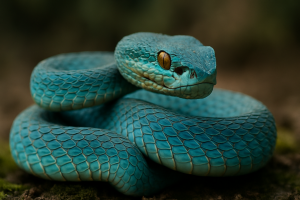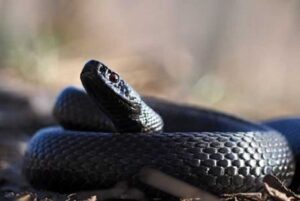
The blue viper is a species of snake that draws attention not only for its distinctive appearance but especially for the danger it poses due to its highly potent venom. This reptile, while fascinating, can cause severe harm upon contact, making detailed knowledge of its characteristics, venom, symptoms caused by its bites, and appropriate prevention and treatment measures essential. In this article, you will find a comprehensive analysis of the blue viper, exploring everything from its morphology to the risks involved in its habitat, thus providing rich and essential content for those who wish to better understand this dangerous snake.
Introduction to the Blue Viper
First and foremost, it is important to know the physical characteristics of the blue viper, a snake that stands out due to its bluish-colored body, which is relatively uncommon among venomous reptiles. This species originates mainly from the tropical regions of South America, spreading across forested areas and dense jungles. According to studies, the blue viper has a medium to large size, along with scales that reflect bluish tones, facilitating its camouflage in the natural environment. Moreover, its appearance not only attracts attention but also serves as a warning for humans and animals that may encounter it. Currently, the geographical distribution of the blue viper encompasses several Brazilian states, especially in the North and Central-West regions, where environmental conditions favor its survival.
The Venom of the Blue Viper: Composition and Effects
The venom of the blue viper is extremely potent, characterized by its ability to necrotize tissues, meaning the progressive destruction of cells in the affected area. Thus, the venom contains a complex mixture of proteolytic enzymes and toxins that act directly on the degradation of muscular and vascular tissue. According to toxicological research, this venom promotes intense hemorrhaging and localized swelling, and can cause multiple organ failure if the victim does not receive prompt medical attention. As the venom spreads throughout the body, it causes severe systemic symptoms, highlighting the need for immediate care. Furthermore, to provide better context, species such as the Parrot Snake and the Rattlesnake also possess venoms with various effects, although of a different nature, showcasing the diversity and danger of Brazilian snakes.
Symptoms and Treatments in Case of a Bite
Upon being bitten by the blue viper, the victim may present intense short-term symptoms, such as excruciating pain at the bite site, progressive swelling, redness, and the appearance of blisters. Additionally, the venom can cause internal bleeding and tissue necrosis, thus requiring urgent medical treatment. According to specialists, the first immediate measure should be to immobilize the affected limb to slow the circulation of the venom, followed by seeking specialized hospital care. Rapid administration of antivenom serum, the only treatment capable of neutralizing the toxins present in the blue viper’s venom, is crucial. In severe cases, surgeries to remove necrotic tissue are often necessary. Therefore, it is imperative that victims follow all medical guidelines to avoid permanent sequelae or even life-threatening situations. Similarly, victims of bites from animals such as the Brazilian Wandering Spider or the Brown Recluse Spider also face high-risk situations, underscoring the importance of knowledge and preparation for emergencies involving venomous animals.
Habitat and Behavior of the Blue Viper
According to natural observations, the blue viper prefers humid habitats with abundant vegetation, such as areas near rivers and tropical rainforests. While its behavior is predominantly nocturnal, it is more active at night, which increases the risk of accidental encounters with humans traversing these regions after dark. Although it is an aggressive snake when threatened, the blue viper tends to avoid confrontations, preferring isolation. However, when provoked, its venomous strike, as previously described, is delivered effectively. Therefore, knowing the environment and habits of this species is essential to prevent incidents. As I explained, avoiding areas of high concentration and maintaining heightened awareness while walking on trails are effective measures to reduce the risk of accidents. In comparative terms, the behavior of the Coral Snake shows some similarities, although the habitats may differ, contributing to a broader understanding of dangerous Brazilian snakes.
Prevention and Safety When Dealing with the Blue Viper
Above all, prevention is the best remedy to avoid accidents with the blue viper. Therefore, it is essential to follow some practical guidelines when accessing risk areas: wear closed shoes and protective clothing, avoid walking barefoot or in areas with dense vegetation without proper equipment, and stay alert to the surrounding environment. Additionally, knowledge of procedures in case of an attack can save lives. To ensure safety, it is recommended not to attempt to capture or handle the blue viper, as, despite its beauty, it is highly dangerous. In the event of a bite, remain calm and follow the actions described earlier for emergency care. Above all, awareness campaigns are fundamental to inform the public about how to proceed in areas where this snake is common. In connection, learning about other venomous animals, such as the Rattlesnake or the Brazilian Wandering Spider, also enriches the necessary knowledge to safely deal with the local fauna.
Conclusions
In summary, the blue viper is undoubtedly one of the most dangerous snakes due to its potent venom capable of causing severe damage to the body. Although its appearance may be fascinating, respect and knowledge are fundamental to avoid accidents and ensure safe coexistence with this reptile. After all, knowing how to identify its habits, recognize symptoms in case of a bite, and adopt preventive measures can make the difference between a serious incident and survival with minimal sequelae. Ultimately, continuous learning and the dissemination of reliable information are powerful tools to reduce risks and save lives. Be sure to also inform yourself about other venomous species, such as the Parrot Snake and the Coral Snake, broadening your knowledge about the diversity and danger in Brazilian fauna.
Did You Know?
What is the blue viper?
The blue viper is a species of venomous snake found mainly in the tropical regions of South America, known for its bluish body and potent venom.
What is the main characteristic of the blue viper’s venom?
Its venom is highly necrotizing, causing destruction of tissues at the bite site, as well as internal bleeding and severe systemic effects.
What are the common symptoms after a blue viper bite?
Intense pain, swelling, redness, blisters, internal bleeding, and tissue necrosis are the most frequent symptoms of the bite.
What to do in case of a blue viper bite?
Immobilize the affected limb, remain calm, and seek immediate medical attention for the administration of antivenom serum and appropriate procedures.
Where does the blue viper usually live?
It prefers humid habitats with dense vegetation, such as tropical forests and areas near rivers in the North and Central-West regions of Brazil.
Is the blue viper aggressive?
Normally, it avoids confrontations but can become aggressive when threatened, striking in self-defense.
How to avoid accidents with the blue viper?
Wear appropriate clothing and footwear, avoid areas of dense vegetation without protection, and stay alert to the environment, especially at night.
Is there a specific antivenom for the blue viper’s venom?
Yes, antivenom serum is used to neutralize the venom of this snake and should be administered quickly after a bite.
What is the difference between the blue viper and the rattlesnake?
Both are venomous snakes, but the rattlesnake has a characteristic rattle, and its venom has different effects, usually neurotoxic, while the blue viper has necrotizing venom.
What other venomous animals are common in the same region as the blue viper?
In addition to the blue viper, other species such as the Parrot Snake, Coral Snake, and spiders like the Brazilian Wandering Spider and Brown Recluse Spider are found in the same region, all representing risks of accidents.