In the depths of the oceans, where sunlight rarely penetrates, resides the intriguing black devil fish. This enigmatic being, with its unique bioluminescence and extraordinary adaptations, reveals secrets about marine life in extreme environments. Let’s explore its characteristics, habitat, behavior, and the threats it faces in this vast aquatic universe.
The Physical Characteristics of the Black Devil Fish
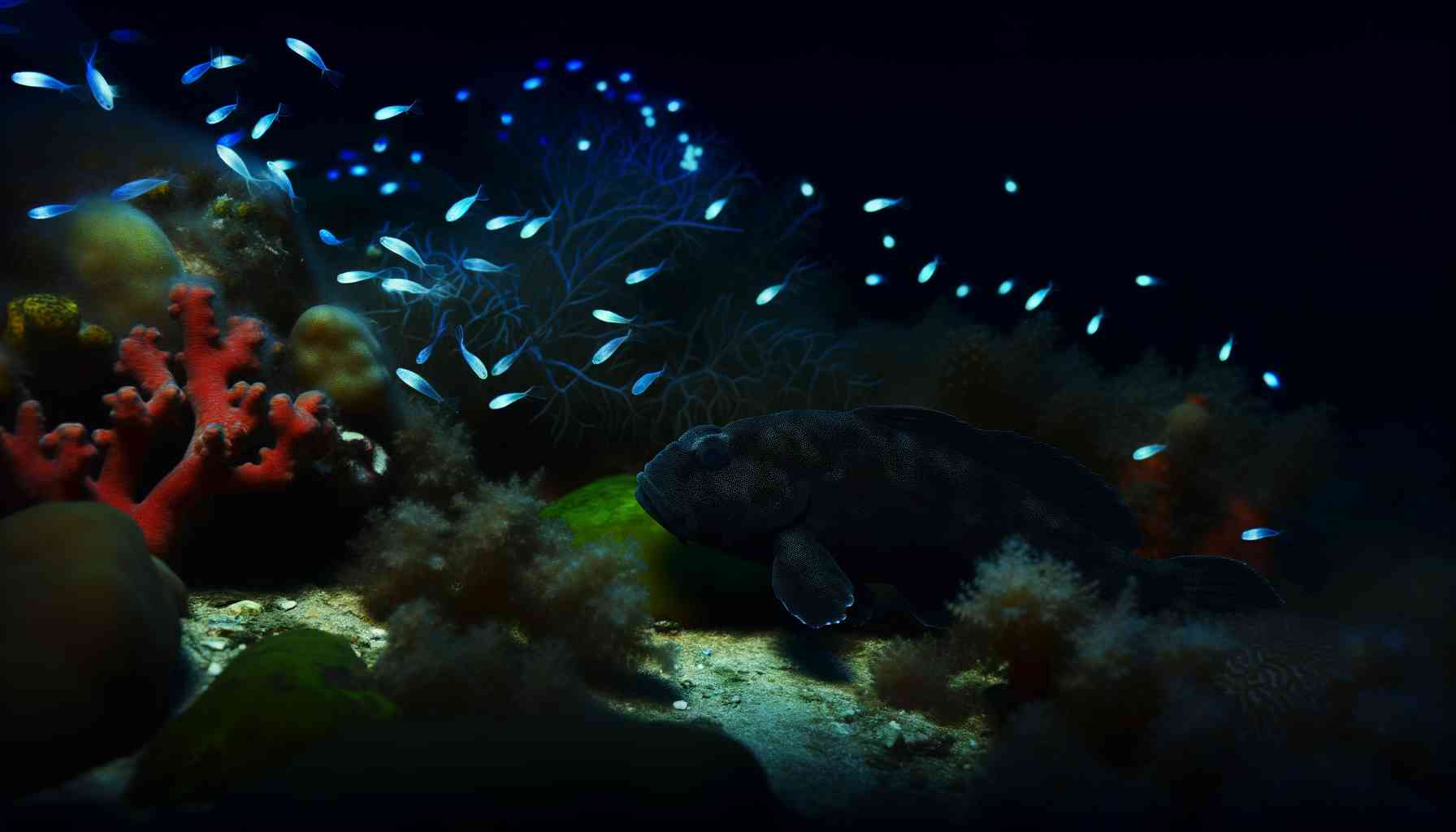
The mysteries of the ocean depths reveal a truly fascinating creature: the black devil fish. This being of darkness has a body that seems like an orchestra of shadow and light. Its most iconic feature is undoubtedly its bioluminescence. Amidst the dark expanse of the deep ocean, the black devil fish embodies its own light. Small bioluminescent organs, known as photophores, cover its body. The light emitted by these organs attracts unsuspecting prey, which, hypnotized, become involuntary followers of the treacherous illumination.
The bioluminescence of the black devil fish is not just a hunting trick; it is a magnificent adaptation to the environment it inhabits. In depths where sunlight does not reach, producing light is an essential skill for communication and survival. The adaptability of this predator is further demonstrated by the presence of a flexible jaw, allowing it to capture prey larger than its slender body should support.
Another crucial aspect of its anatomy is its laterally compressed body covered by dark skin that further camouflages its presence. This stealthy being has developed a digestive system capable of handling the scarcity of food in its habitat. It can consume large amounts of food at once and digest slowly, allowing it to endure long periods of fasting.
For those intrigued by the extreme adaptations of creatures in inhospitable environments, I recommend exploring the bat, another example of nature adapting in unique and ingenious ways. Thus, the black devil fish continues to impress us, revealing how evolution shapes extraordinary beings to thrive where few dare to live.
Habitat and Distribution
In the far reaches of the ocean, where sunlight does not dare to penetrate, resides the mysterious black devil fish. Found predominantly in the depths of the Atlantic and Pacific Oceans, this enigmatic inhabitant of the dark dwells at impressive depths ranging from 2000 to 4000 meters. This abyssal environment is a world of eternal darkness, where pressures are crushing and temperatures, frigid.
Adapting to such an inhospitable habitat requires unique characteristics. The black devil fish has evolved to thrive in these conditions, acquiring dark and opaque skin that provides perfect camouflage in the abyssal darkness. The fascinating phenomenon of bioluminescence plays a crucial role here. Small shining organs, known as photophores, dot its slender body, emitting a soft glow that not only aids in camouflage but also in communication among individuals.
The vastness of the deep ocean profoundly influences the behavior of the black devil fish. Living in a world of scarcity, they have developed a peculiar and cunning hunting strategy, which we will explore in the next chapter. The depth, with its extreme conditions, also governs many aspects of its life, from feeding to the complex dance of mating.
In these depths, the black devil fish shares its habitat with other bizarre creatures, such as the squid, known for its equally mysterious habits. These deep-sea inhabitants challenge our understanding, living lives hidden from human sight, in an environment that continues to intrigue scientists with its secrets. Here, life flourishes against all odds, in a world shaped by darkness, pressure, and intense cold.
Behavior and Feeding
In the dark depths of the ocean, where the sun does not reach, lives the enigmatic black devil fish. This fascinating creature possesses truly remarkable hunting behaviors, adapted to its world of eternal darkness. Without sharp eyes to guide its movements, the black devil fish resorts to another weapon, bioluminescence, a stunning feature that transforms the predator into seductive bait.
Its hunting strategy is the personification of patience. The black devil fish remains motionless, its luminous lure swaying in the dark like a small glowing bait. Unwary marine creatures are drawn to investigate the hypnotizing glow, only to be captured by the predator’s mouth, with its sharp jaws snapping shut quickly and accurately.
Besides hunting, bioluminescence plays a vital role in the reproduction of the black devil fish, a true challenge in an environment that neglects comfort. Males, comparatively tiny, are equipped with keen olfactory sensors, locating females through chemical signals transmitted through the dark waters. Once found, the union is an intimate fusion; the male bites the female and merges with her, thus ensuring his nutrient supply by transforming her body into a mere reproductive appendage.
Despite these complex and intriguing behaviors, much remains unknown about the ongoing existence of the black devil fish in the ocean depths. Such creatures share with other abyssal species a fate intertwined in an era of rapid environmental change, as you will see in the next segment on threats and species conservation. Like the rhinoceros, they face a challenging future, needing integrated efforts for their defense and preservation.
Threats and Conservation
The enigmatic presence of the black devil fish in the depths of the ocean is not immune to the influence of human actions and the whims of climate change. This deep-sea inhabitant, with its spectral glow, faces increasing threats due to human activities. Ocean pollution, especially from microplastics, poses an insidious threat. These debris, often invisible to the naked eye, can penetrate the most remote parts of the ocean, impacting beings that have lived in relative isolation until now.
Moreover, the increasing intensity of fishing activity represents another serious challenge. Although the black devil fish is not the primary target in most fisheries, trawling nets that scour the ocean floor do not discriminate. Often, these creatures are accidentally caught, threatening populations that already bear the impact of the delicate balance of the food chain.
Climate change also alters marine habitats in ways we are only beginning to understand. Rising ocean temperatures and water acidification affect not only the chemistry of the seas but also the delicate relationships that sustain ocean life. For specialized creatures like the black devil fish, these changes can have disastrous consequences.
Conservation initiatives are crucial to mitigate these threats. Protecting significant marine areas through the creation of biological reserves is essential. These areas allow populations to recover without human interference. Additionally, reducing carbon footprints helps combat climate change. Raising awareness about marine life, as discussed in other wonderful inhabitants, is essential to ensure that these creatures continue to exist. Conserving the ocean depths is a Herculean task, but indispensable for preserving unique species like the black devil fish.
The Fascination of the Black Devil Fish in Popular Culture
The black devil fish, with its mysterious characteristics and frightening appearance, has captured popular imagination in various ways. In literature, it often symbolizes the unfathomable mysteries and hidden dangers of the ocean. Horror and adventure stories describe its bizarre features as metaphors for the unknown, evoking a sense of awe and fear in the face of the vast underwater world. In cinema, the black devil fish has become synonymous with fearsome sea creatures, often exaggerated to amplify dramatic tension. Science fiction films and underwater adventures frequently portray it as an icon of danger, highlighting human fascination with the unexplored. The vivid image of its sharp jaws and the seductive bioluminescence of its natural lure are visions that captivate the audience, stimulating an almost visceral curiosity about where these beings live. Documentaries about marine life explore its complex ecology, incorporating narratives that help demystify it. In this perspective, the black devil fish serves as an ambassador for ocean conservation, promoting awareness of human impact on deep ecosystems. This educational focus highlights the importance of preservation and fosters a deeper respect for marine biodiversity. The impact of the black devil fish on popular culture has been profound, encouraging conservation and sparking interest in the natural wonders of the ocean. Just like other natural enigmas, such as the recently discovered fungus in the Amazon, this creature transforms the strangeness of the unknown into an invitation to discovery. Cultural representations help shape public perception about the importance of protecting our blue planet.
Conclusions…
The black devil fish is an emblematic example of adaptation and resilience in nature. Its intriguing characteristics, unique habitats, and the challenges it faces underscore the importance of protecting these marine ecosystems. Each discovery about this impressive being helps us appreciate the rich biodiversity of the depths.