Elephant Fish: A Deep Ocean Dweller
Mysterious and magnificent, the elephant fish, also known as chimaera, inhabits the depths of the Atlantic Ocean. In this informative dive, we will uncover its habits, characteristics, and the essential role it plays in the marine ecosystem.
What is the Elephant Fish?
The elephant fish, with its robust body and prominent head, is a true marvel of marine life. Classified in the family Mormyridae, this fish stands out among other species due to its unique morphology and fascinating behaviors. It belongs to the order Osteoglossiformes, a group that includes species that have a distant relation to fish like the arapaima and pirarucu. The elephant fish is notable for its specialized electro-sensitivity system, which consists of organs that detect electric fields, a skill especially useful in murky and deep waters.
With a length ranging from 30 to 60 centimeters, elephant fish are predominantly found in freshwater environments in Africa, especially in the Congo and Niger rivers. They maintain an omnivorous diet, primarily feeding on small invertebrates and fish, placing the elephant fish in a crucial role in the aquatic ecosystem.
A striking feature of the elephant fish is its communication through electrical signaling. This method of communication is essential, especially in environments where visibility is limited, allowing these fish to recognize each other and reproduce. Additionally, the presence of electroreceptors in their skin is an adaptive evolutionary trait, facilitating their survival.
The elephant fish, as a member of the Mormyridae family, is a great example of how marine biology has evolved in unique ways and how these creatures interact within their ecosystem. For more information on marine diversity, visit this link.
Habitat and Distribution
The elephant fish traverses the mysterious realms of the deep ocean. It is generally found in waters with depths ranging from 200 to 1,500 meters. During this journey, it inhabits regions rich in underwater structures, such as valleys and submerged mountains. These locations are not only stunning but also crucial. The formations provide shelter and protection against larger predators.
The habitat of the elephant fish is diverse. It adapts to different zones, from cold waters to warmer environments. The temperatures of the waters it inhabits vary significantly. In colder waters, the elephant fish becomes slower and less active. In warmer environments, it exhibits more active behavior, foraging for food.
The salinity of the waters also influences its survival. The elephant fish is sensitive to changes in salinity, which can impact its balance and well-being. Both factors, temperature and salinity, shape its feeding and reproductive behavior.
Moreover, the pressure in the depths is another essential characteristic of its habitat. At such depths, the pressure can exceed 150 times atmospheric pressure. This adaptation to such a challenging environment is fundamental for its survival. In summary, the environmental conditions require the elephant fish to develop unique skills.
To further understand the complexity of marine environments, one can explore how different deep-sea creatures adjust to extreme habitats. Each factor is a piece of the puzzle of the delicate ecosystem that this deep dweller must overcome.
Distinct Characteristics
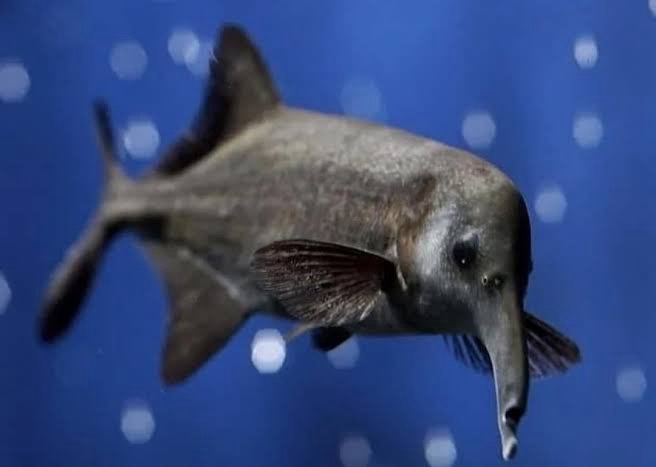
The elephant fish, a wonder of the depths, captivates with its extraordinary adaptations. With its elongated and robust body, this fish displays a coloration that ranges from gray to a lighter, almost silvery tone. Its peculiar appearance is complemented by a head that resembles that of an elephant, with a protruding nose, sensitive and adapted to detect stimuli in the dark. This unique structure facilitates food searching and navigation in low-light environments.
The eyes of the elephant fish are relatively small, adapted to the darkness of the depths. Despite its limited vision, it is a master at finding its way, utilizing a remarkable sense of electro-sensitivity. Furthermore, this fish has electricity plates that allow it to detect changes in the environment and communicate with other individuals, a crucial skill in its inhospitable habitat.
The skin of the elephant fish is covered with mucous that helps protect against parasites and diseases. Every detail of its appearance is an adaptation to the adverse conditions of the seabed. It can also adapt to the temperature of the depths and the intense pressure, which are lethal for many species.
In such a complex and intriguing ecosystem, the characteristics of the elephant fish, such as its adaptive behavior and sharp senses, show how evolution shapes life in extreme environments. With such adaptations, it not only survives but thrives in the darkest depths of the ocean.
Behavior and Diet
The fascinating elephant fish, due to its intriguing nature, exhibits peculiar behavior that delights observers. This fish, which inhabits the depths of the ocean, has well-defined feeding habits. Its diet is predominantly composed of small invertebrates, such as crustaceans and mollusks, which it captures with its skill. Its mouth, positioned peculiarly, facilitates feeding among the rocks and crevices where it hides.
The interaction with other species is equally notable. The elephant fish is not a voracious predator but interacts subtly with the marine ecosystem. It is often seen swimming close to schools of smaller fish, establishing a cohabitation relationship and, on some occasions, competition. What is surprising is that it also serves as prey for larger predators, such as tunas and sharks. Thus, the elephant fish becomes both predator and prey, a reflection of the intricate web of marine life.
Moreover, this fish exhibits fascinating social behaviors. During the breeding season, it can be found forming groups, where males and females meet. This collaborative behavior is essential for reproduction and the survival of the species. The interactions are not only of a reproductive nature; they help strengthen social relationships and organize groups.
These characteristics of the elephant fish reveal its adaptability and the importance of its interactions in the ecosystem. Its behavior and diet play a crucial role in the health of marine environments, as explored in this article about elephants, which also highlights the connection between the behaviors of living beings and the ecosystem.
Ecological Importance
The elephant fish, with its unmistakable appearance and intriguing behavior, plays a vital role in marine ecology. By inhabiting the depths of the ocean, this intriguing animal is a crucial part of the food chain. As both predator and prey, it maintains the delicate balance between various species. Elephant fish feed on small crustaceans and plankton, thus controlling the populations of these tiny creatures. This control is essential, as overpopulation can lead to destabilizations in the ecosystem, disrupting broader food chains.
Moreover, the elephant fish is, itself, a source of food for larger predators. This highlights its importance in the transfer of energy between trophic levels. The disappearance of this fish could create a cascading effect, threatening not only the predators that feed on it but also the marine communities that depend on the health of its habitat.
The presence of the elephant fish also indicates the health of the ecosystem. Its abundance or scarcity can signal changes in the marine environment, such as pollution or alterations in ocean currents. Therefore, these fish are considered essential bioindicators, reflecting the overall conditions of the ocean. The conservation of the elephant fish is, therefore, imperative to ensure that oceanic ecosystems remain vibrant and resilient.
The relationship of the elephant fish with its habitat is a reminder of the complexity of marine life. To better understand how similar interactions occur in nature, explore this article about rhinoceroses, which also highlights themes of conservation and ecology.
Conclusions…
The elephant fish is a fascinating representative of marine life, with its unique characteristics and adaptations. Its preservation is crucial for the health of the oceanic ecosystem, and protecting its habitats is essential to ensure that this species continues to swim in our waters.
Did you know?
What is the elephant fish?
The elephant fish, or chimaera, is a species of fish from the family Rhinochimaeridae found in the deep waters of the Atlantic Ocean.
Where does the elephant fish live?
This fish inhabits the depths of the Atlantic Ocean, where factors like depth and temperature influence its behavior.
What are the characteristics of the elephant fish?
The elephant fish has a distinct appearance, with an elongated head and a body resembling a chimaera, as well as being adapted for life at depth.
What is the behavior of the elephant fish?
Known for its solitary nature, the elephant fish is nocturnal, primarily feeding on small crustaceans and invertebrates on the seabed.
What role does the elephant fish play in the ecosystem?
As a predator, the elephant fish plays an important role in the food chain of marine ecosystems, helping to maintain biological balance.