The biguatinga is a fascinating bird that plays an essential role in the aquatic ecosystems of Brazil and other regions of South America. With its elegant silhouette and unique behavior, this bird stands out in ponds, rivers, and wetlands, where it is often seen drying its wings after skilled dives. Although less known than other waterbirds, such as the cormorant, the biguatinga captivates those lucky enough to observe it in the wild.
In addition to being visually impressive, the biguatinga has great ecological importance, acting as a predator of fish and other aquatic organisms, which helps maintain the natural balance in water bodies. Its presence is also an indicator of environmental health, as the species depends on preserved habitats to survive. The conservation of these areas benefits not only the biguatinga but also the entire biodiversity associated with these environments.
Behind its intriguing behavior and distinct appearance lies a rich history of adaptation and survival. The biguatinga is a diving specialist, with plumage designed to facilitate its underwater hunting. However, this same characteristic means it needs to dry its wings frequently, resulting in a curious spectacle for those who observe it.
Throughout this article, you will discover more about the habitat, behavior, and curiosities of this incredible bird. Get ready to explore the world of the biguatinga, learn about its habits, and understand why it is such an important piece in the puzzle of Brazilian biodiversity.
What is the Biguatinga?
The biguatinga is a fascinating aquatic bird that belongs to the family Anhingidae, widely distributed in aquatic environments of South America, including Brazil. Also known as the ‘snake bird’ due to the shape of its neck, the biguatinga is often spotted in areas of ponds, rivers, and swamps, where it plays a vital role in ecological balance. This bird is characterized by its diving ability and underwater hunting, making it a unique piece in the ecosystems it inhabits.
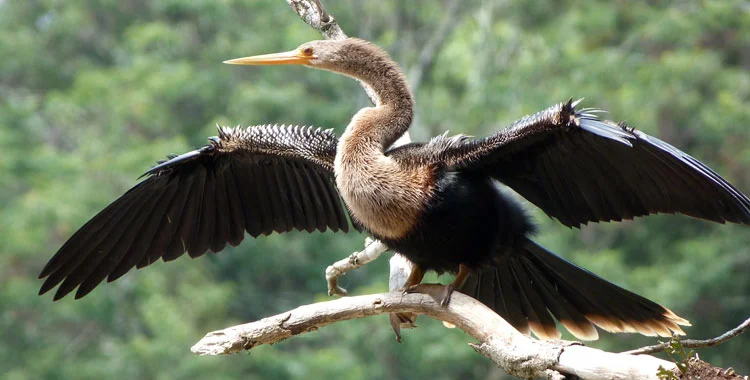
One of the most striking features of the biguatinga is its long, slender neck, which resembles the shape of a snake, especially when it emerges from the water. Measuring about 85 to 90 centimeters in length, it has predominantly dark plumage, with metallic tones ranging from black, gray, to brown. The contrast between its robust body and long wings, which can reach up to 1.2 meters in wingspan, gives the biguatinga a simultaneously graceful and imposing appearance.
Isn’t it a Cormorant?
Although often confused with the cormorant, a similar bird from the same family, the biguatinga has notable differences. The cormorant has a more compact body and its plumage is entirely black, while the biguatinga displays more varied coloration and a slimmer silhouette. Additionally, the biguatinga tends to dry its wings in an open position more frequently, a common behavior among birds of its species to maintain flight efficiency after prolonged dives.
As an excellent hunter, the biguatinga uses its thin, sharp beak like a spear, capturing fish and other small aquatic organisms. This ability, combined with its less waterproof plumage, favors its mobility underwater but requires it to spend long periods out of the water drying its feathers. By understanding the unique characteristics of the biguatinga, we can better appreciate its importance in the ecosystem and why it is a symbol of adaptability and beauty in wetland areas.
Habitat and Distribution
The biguatinga finds its home in water-rich environments, such as rivers, ponds, swamps, and estuaries, being particularly common in freshwater or slightly brackish ecosystems. This aquatic bird depends on wetland areas with abundant vegetation and calm water bodies to hunt and rest. The biguatinga is widely distributed throughout South America, with populations concentrated in countries such as Brazil, Argentina, Paraguay, and Colombia, making it a symbol of biodiversity in these locations.
In Brazil, the biguatinga can be found in regions such as the Pantanal, the Amazon, the Cerrado, and even in coastal areas of the Southeast and Northeast. Its presence is particularly striking in places where water is abundant and fishing is favorable, such as the São Francisco River and the Pantanal Matogrossense, one of the most important refuges for the species. A distribution map would highlight the prevalence of this bird in biodiversity-rich zones, such as the states of Mato Grosso, Pará, Amazonas, and Maranhão, reinforcing its connection to areas of environmental conservation.
Environmental Preservation
The success of the biguatinga in its habitat is closely linked to the health of the ecosystems where it lives. Wetlands with clean water, a good supply of fish, and natural vegetation provide the necessary resources for feeding and reproduction. Unfortunately, human activities such as deforestation, pollution, and swamp drainage threaten the quality of these habitats, compromising the survival of the species. The preservation of aquatic environments is not only crucial for the biguatinga but also for countless other species that share the same space.
As an indicator of environmental quality, the presence of the biguatinga reflects the balance of the ecosystem. When these birds are seen in large numbers, it is a sign that the environment is healthy and in good conservation status. This relationship between the biguatinga and wetland ecosystems highlights the importance of protecting these areas to ensure not only the survival of the species but also the richness of the biodiversity associated with these vital habitats.
Behavior and Diet
The biguatinga is known for its unique behavior and extraordinary fishing skills. To capture its prey, it uses an impressive diving technique. Upon spotting a fish or another aquatic organism, the biguatinga silently submerges in the water, moving with agility thanks to its hydrodynamic body and webbed feet. A remarkable feature is its ability to remain submerged for long periods, allowing it to pursue its prey with precision before successfully emerging. This behavior highlights its adaptation to the aquatic environment and transforms it into an efficient hunter.
The diet of the biguatinga consists mainly of small to medium-sized fish, which represent its preferred food source. In addition to fish, it may include other aquatic organisms in its diet, such as crustaceans and small amphibians, depending on the availability of resources in the habitat. This feeding pattern makes it a vital part of the ecological balance, helping to control populations of aquatic species and maintaining the health of the ecosystem in which it lives.
Resting Moment
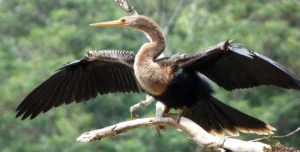
A characteristic scene of the biguatinga is when it rests with its wings open, often on branches near the water. This peculiar behavior of drying its wings is not just a moment of rest but an essential adaptation. Unlike other aquatic birds, its feathers are not completely waterproof, which facilitates diving but requires it to dry its body in the sun after fishing. This habit of spreading its wings in a cross shape is so emblematic that it has become a visual symbol of the species, often observed by visitors to wetlands and naturalists.
The behavior of the biguatinga also reveals social traits. Although it is often seen alone while fishing, it is not an exclusively solitary species. It is common to see them in groups at dusk, especially in resting areas near the water. This balance between independence and sociability, combined with its fishing skills and curious habits, makes the biguatinga a fascinating bird to observe and understand.
Ecological Importance
The biguatinga plays an essential role in the food chain of aquatic ecosystems, acting as a predator of fish and other aquatic organisms. Its presence directly contributes to the population control of species, preventing imbalances that could negatively impact the habitat. By preying on sick or weaker fish, it helps maintain healthy aquatic populations, promoting a more balanced environment. This predatory behavior is fundamental to sustaining biodiversity in the ecosystems where the biguatinga is found.
In addition to being a key piece in the food chain, the biguatinga is considered an important environmental indicator. This means that its presence or absence in certain water bodies can provide valuable information about the health of the ecosystem. Being highly dependent on clean and abundant aquatic resources, the occurrence of biguatingas in an area is a sign that the environment has sufficient quality to sustain life. On the other hand, its absence may indicate problems such as pollution, deforestation, or overfishing, factors that directly affect its survival.
Water Bodies and Their Health
The relationship between the biguatinga and the health of water bodies is a reminder of the interconnectedness of all forms of life. As a species that depends on intact aquatic environments, the conservation of its habitats benefits not only the biguatinga itself but also other species that share the same space, including fish, amphibians, and aquatic plants. Protecting these habitats contributes to the preservation of biodiversity and the maintenance of ecosystem services, such as water purification and flood control.
Finally, the biguatinga also plays an indirect role in environmental awareness. Its striking presence and peculiar behavior attract the attention of birdwatchers, researchers, and nature enthusiasts who, by studying or observing it, become more aware of the importance of conserving aquatic ecosystems. Thus, the biguatinga is not only a vital component of nature but also an ambassador for environmental preservation.
Curiosities about the Biguatinga
The biguatinga is a bird full of peculiarities, especially regarding its adaptation skills to the aquatic environment. One of the most fascinating characteristics is its ability to dive to impressive depths to capture its prey. Unlike many aquatic birds, the biguatinga has feathers that are not completely waterproof, which helps it sink more easily while hunting. However, this adaptation also requires the bird to spend long periods drying its wings in the sun after dives, an iconic behavior that can often be observed in its habitat.
When comparing the biguatinga to the cormorant, another bird from the family Anhingidae, some notable differences emerge. Although both share the habit of drying their wings and similar diving techniques, the biguatinga stands out for its longer neck and more striking plumage, which varies between dark tones and a subtle metallic sheen. This long neck is not only aesthetic but functional: it allows the biguatinga to have greater reach and precision when capturing its prey underwater. The cormorant, on the other hand, is generally more robust and has hunting habits in shallower waters.
Biguatinga and Brazilian Folklore
Interestingly, the biguatinga also appears in some cultural and folkloric references, especially among riverside communities in Brazil. In certain regions, it is believed that the presence of this bird is a sign of healthy ecosystems, making it a symbol of good luck for fishermen. Additionally, its characteristic posture while drying its wings has been associated with images of balance and patience, qualities often admired in nature.
Finally, a little-known curious fact is that the biguatinga, in some South American indigenous cultures, is called ‘snake bird’ due to the sinuous shape of its neck, which resembles the movement of a snake in the water. This nickname reinforces the mystical relationship that many communities have with nature and the unique behaviors of this bird. These stories and adaptations make the biguatinga a fascinating species, full of details that enrich our understanding of aquatic biodiversity.
Conclusion
The biguatinga is undoubtedly one of the jewels of Brazilian biodiversity, combining beauty, unique behavior, and an essential role in aquatic ecosystems. Its elegant profile, marked by its long and sinuous neck, and its peculiar habits, such as drying its wings in the sun, make it a fascinating bird for both nature observers and those seeking to understand the complexity of ecological relationships. By diving deep into the waters and helping to control fish populations, the biguatinga plays a vital role in the balance of aquatic habitats, reinforcing the importance of protecting the areas where it lives.
If you have the opportunity to visit environmental reserves, parks, or preserved riverbanks, be sure to observe this bird in its natural environment. It is in such places that the biguatinga reveals all its grace and ecological functionality. By supporting initiatives for the conservation of aquatic ecosystems, we are directly contributing to the protection of species like the biguatinga, which depend on clean, life-rich waters to thrive. Moreover, it is a way to ensure that future generations can know and admire the richness of Brazilian fauna.
Knowledge is the key to preservation. Sharing knowledge about the biguatinga and other species is a powerful way to raise environmental awareness. Therefore, we invite you to share this article on your social networks, with friends, or family groups. Small gestures like this can inspire more people to value nature and engage in actions that help protect it. The biguatinga is more than just an aquatic bird; it is a symbol of how all forms of life are connected and depend on healthy environments to coexist.
Finally, as we reflect on the importance of the biguatinga, we are reminded of the need to protect our natural heritage. Every bird, plant, or animal plays an essential role in the web of life, and the biguatinga is a visual and inspiring reminder of how blessed Brazil is with its rich biodiversity. Let us work together to preserve this wealth and ensure a sustainable future for all species, including ourselves.