
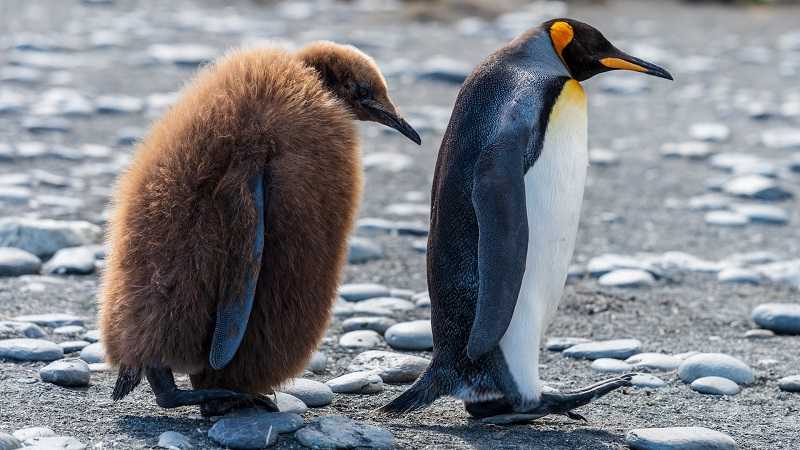
Emperor Penguin: The King of Antarctica
The emperor penguin, the largest of the penguin species, displays an impressive majesty in the icy lands of Antarctica. Its unique adaptations not only help it survive but also make it one of the most fascinating inhabitants of this hostile environment. Join us on a journey to discover more about this incredible bird.
Antarctic Ecosystem and Its Impact
Antarctica is one of the most hostile environments on our planet. Dominated by vast expanses of ice and extreme temperatures, this region faces unique challenges. However, it is home to a surprising diversity of life, with the emperor penguin being one of its most iconic inhabitants. These magnificent birds are adapted to face the rigors of the Antarctic climate. The thick layer of fat beneath their waterproof feathers acts as an effective insulator. This protects them from the relentless cold as they venture into the frozen tundra in search of food.
The Antarctic ecosystem is delicate and presents significant challenges. Climate change is melting the ice layers, affecting the availability of krill, one of the essential foods for emperor penguins. This disruption in the food chain results in a battle for survival. Moreover, rising temperatures can alter the breeding and migration patterns of various species. These factors exacerbate the difficulties that emperor penguins already face due to their isolation.
Despite these challenges, the incredible resilience of these birds is evident. During the breeding season, emperor penguins gather in large colonies. They take turns incubating the eggs, exchanging body heat in an impressive display of camaraderie. This social adaptation is essential for their survival in such an inhospitable terrain. To explore more about the unique adaptations of penguins, check out this article on the wonderful Antarctic ecosystem.
Physical and Behavioral Characteristics
The emperor penguin is a marvel of adaptation. Its robust and aerodynamic body is covered by dense, waterproof feathers, ideal for the cold temperatures of Antarctica. These feathers not only insulate it from the cold but also protect it from moisture. The thick layer of fat beneath the skin acts as an insulator, providing energy during times of scarcity.
In the majestic colony of penguins, social interactions are equally fascinating. Emperor penguins demonstrate a complex communication system, using sounds and gestures to strengthen social bonds. Amidst the vastness of ice, they gather in cohesive groups, where cooperation is vital for survival.
A remarkable feature is how pairs form. During the mating season, males emit eloquent calls to attract females. Once chosen, the couples form lasting bonds. These bonds are crucial, as reproduction and chick-rearing depend on mutual commitment.
Chick care is another incredible facet of their interactions. Both parents take turns incubating the eggs and feeding the hatchlings. The exchange of care reflects a remarkable level of parenting, showing that these animals are not just individual survivors but also dedicated members of a community.
For more information on how creatures adapt to their environment, see this article on spiders. They, like emperor penguins, demonstrate impressive adaptations in response to their challenging habitat.
Life Cycle and Reproduction
In the frozen expanse of Antarctica, the life cycle of the emperor penguin is a testament to adaptation and courage. The mating season begins with elaborate dances and calls, where males compete for attention. After courtship, the female chooses her partner, initiating a union that can last a lifetime. This ritual is crucial, as the survival of the next generation depends on it. After mating, the female lays a single egg, and the male takes on the role of incubator. He protects the egg against his skin, under a fold of abdominal skin, for about 65 days. During this period, he does not eat, relying on stored fat reserves. While the male cares for the egg, the female sets off in search of food. Bravely, she navigates through icy waters, replenishing herself to return and assist in raising the chick. When the chick finally hatches, both parents play a crucial role in its protection and nourishment. The female feeds the little penguin with a nutritious secretion, while the male continues to provide warmth and shelter. This joint effort is remarkable. Both parents alternate between feeding and caring for the chick, ensuring it grows strong and healthy. The dedication of emperor penguins highlights an exceptional example of parenting among birds. A life in harmony, in a world that challenges the very essence of survival. To learn more about the fascinating lives of birds, click here: Toucan: the bird that enchants with its beauty.
Threats to Survival
The emperor penguin, majestic in its stance, faces alarming threats in its habitat. Climate change is one of the most significant, altering the Antarctic ecosystem. The rise in global temperatures causes the melting of ice platforms, essential for the birds’ reproduction and food. Without stable ice, penguins suffer. They must travel greater distances to find the fish that make up their diet. This not only affects feeding but also chick-rearing, which may not survive without access to safe and resource-rich locations. Habitat loss is equally concerning. Warming ocean waters and changes in feeding patterns affect prey availability. With the decrease in sea ice, the reproduction of krill—a vital food source—is threatened. The impact is felt throughout the food chain. Additionally, increasingly inhospitable environments hinder protection against predators and extreme weather conditions. Extreme weather events, such as more severe storms during the breeding season, can cause devastating damage. Without favorable conditions, reproduction is hindered. Competition for resources also becomes more intense. The mix of anomalous temperatures, food scarcity, and changing habitats intensifies stress in colonies. Each of these factors contributes to an uncertain future for the emperor penguin. Therefore, careful observation of these phenomena is vital.
Conservation and the Future of the Emperor Penguin
The emperor penguin, majestic and regal, faces immense challenges due to climate change. Rising temperatures and the reduction of sea ice affect its habitat. Conservation initiatives have focused on mitigating these impacts. Monitoring programs are being implemented to study the movements and breeding patterns of these penguins. Understanding their migratory routes and nesting sites is essential for their protection. International organizations are coming together to establish marine protected areas, crucial for the survival of these animals.
Moreover, awareness campaigns are underway, educating the public about the importance of emperor penguins in the Antarctic ecosystem. These campaigns encourage individual actions that can make a difference, such as reducing carbon footprints and supporting stringent environmental policies. Initiatives promoting scientific research are also necessary. Knowledge is power when it comes to conservation.
The colonies of emperor penguins play a vital role in the food chain. Protecting their populations helps maintain ecological balance. Encouraging political leaders to take action against climate change can be crucial for the future of these birds. It is a delicate balance that requires constant attention. The unification of global efforts for the conservation of emperor penguins can result in a promising future. When we see these majestic creatures in their natural habitat, we are reminded of our responsibility to protect them for generations to come. Understanding the intangible nature of their existence should inspire us to act in defense of our planet. For a broader approach to endangered wildlife, you can read about the rhinoceros at this link.
Conclusions…
The emperor penguin is one of the most extraordinary examples of adaptation to life in extreme environments. Its resilience, social behavior, and parental care are not only fascinating but also essential for the preservation of the species. Protecting these majestic animals is vital for the health of the Antarctic ecosystem.
Did you know?
What is the habitat of the emperor penguin? The emperor penguin inhabits the icy regions of Antarctica, where it adapts to extreme climatic conditions.
How do emperor penguins reproduce? Emperor penguins are known for their exceptional parental care, with males incubating eggs while females search for food.
What is the diet of the emperor penguin? The diet of the emperor penguin consists mainly of fish, crustaceans, and squid, which they dive to capture in the icy waters.
Why is the emperor penguin an endangered species? Climate change and the reduction of sea ice threaten the habitat of the emperor penguin, making survival difficult.
What are the main characteristics of the emperor penguin? The emperor penguin is known for its imposing size, resilient plumage, and remarkable adaptations to the cold, including a layer of fat and social behavior.