Pufferfish, the Artist of the Depths
The pufferfish, a true masterpiece of the waters, fascinates with its beauty and unique behaviors. This fish, scientifically known as Torquigener albomaculosus, is capable of creating impressive underwater nests. Let’s dive into the life of this aquatic artist and discover its characteristics, toxins, and the importance it holds for marine ecosystems.
The Origin of the Pufferfish
The pufferfish, with its eccentric shapes and vibrant colors, is a marvel of marine evolution. Over the millennia, this fish has developed remarkable adaptations that give it an evolutionary advantage. In its habitat, the pufferfish is a master of disguise, using its ability to inflate its body as a defense mechanism against predators.
The ability to inflate up to three times its normal size is not just a matter of volume. It is a sophisticated mechanism that involves the rapid ingestion of water or air, forming an almost perfect sphere that deters predators. This anatomical phenomenon is closely linked to the flexibility of its bones and muscles, allowing it to expand without causing internal damage.
As we observe the pufferfish, we realize that its biology has evolved to withstand the challenges of the ocean. One of the most fascinating adaptations is the presence of rigid spines that protrude when it inflates, adding an additional layer of defense. This demonstrates an ingenious evolutionary development to survive in a competitive and often hostile environment.
Besides its morphology, the pufferfish has developed ways to coexist in an ecosystem filled with predators and prey. Its behavior and biology are a delicate dance of survival and adaptation. For those curious to explore more about the adaptations of creatures, consider visiting the fascinating world of spiders, especially the jumping spider, an arachnid known for its intelligence and skill.
The pufferfish is certainly not just a collection of physical adaptations, but a testament to the ingenuity of marine life, a being whose natural design promotes it as a truly unique artist of the depths.
The Poison and Its Dangers
The pufferfish, an apparently harmless creature of the depths, carries a lethal secret. Its skin and internal organs harbor tetrodotoxin, a potent toxin that proves deadly to many organisms. This toxin works by blocking sodium channels in nerve cells, interfering with the transmission of impulses between the brain and muscles.
For other marine species, the pufferfish’s venom is a powerful weapon of defense. Predators that dare to taste it often meet their final ruin. In unsuspecting humans, improper consumption triggers a series of physiological reactions. It starts with numbness in the lips, followed by paralysis. Without immediate medical intervention, the situation can culminate in death by asphyxiation.
Human history is filled with dark incidents involving the pufferfish. In Japanese culture, ‘fugu’ is a delicacy, but it requires exceptional skill for preparation. Chefs trained for years acquire the necessary dexterity to remove the poisonous parts without overconfidence. A small mistake, and the meal turns into an invitation to disaster.
In the quest for unique sensations, fugu continues to fascinate, but it must be treated with respect and caution. The allure of the pufferfish lies not only in its flavor but also in the risk it entails. Knowing the dangers and respecting the traditions of its preparation are essential to avoid tragedies.
Other organisms exhibit equally remarkable survival strategies. Like the ladybug, which also employs ingenious methods of defense. In this underwater realm, survival and adaptation go hand in hand. Such knowledge is vital for engaging wisely with the natural world around us.
The Underwater Artist
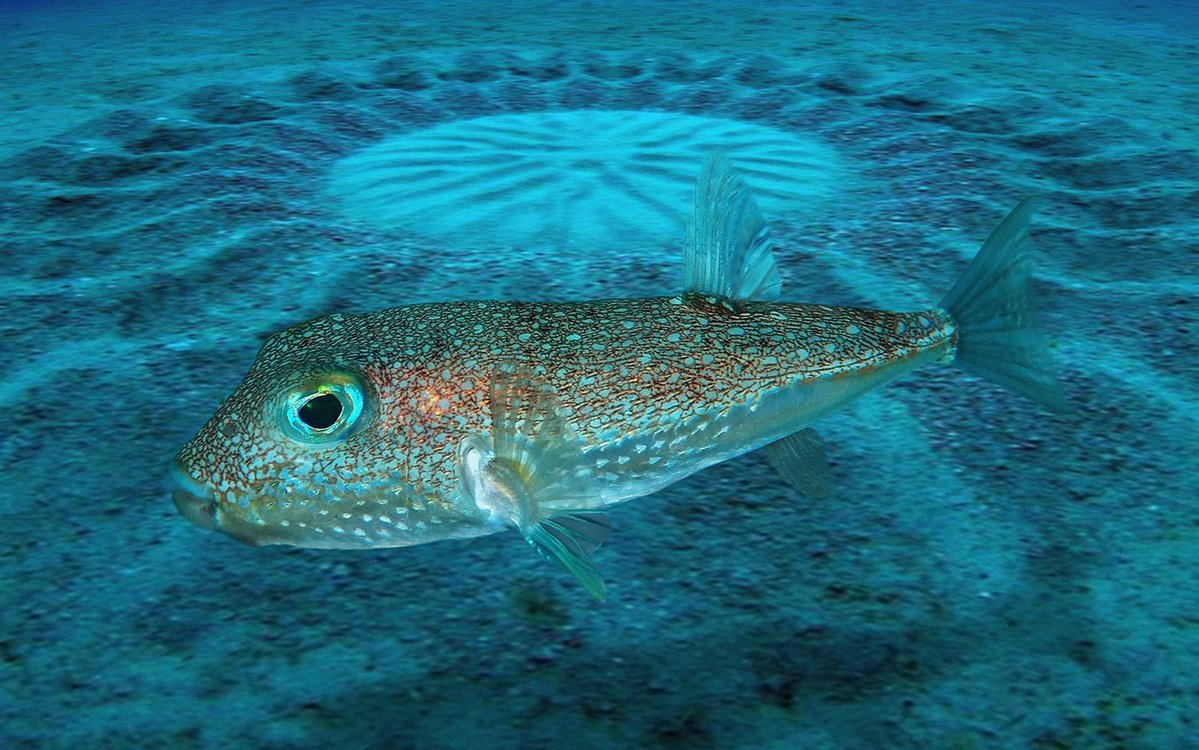
Under the vast blue of the ocean, the pufferfish reveals a behavior that is a true masterpiece. With extraordinary precision, this small fish dedicates itself to creating intricate nests on the sandy sea floor. Using its body, it draws perfect circles, grooves, and ridges, transforming the ocean floor into a stunning natural canvas. These nests are more than just impressive structures: they are vital for its survival.
The artistic practice of the pufferfish is driven by the instinct to reproduce. Males build these elaborate structures to attract females. The more complex and symmetrical the nests, the greater the chance of impressing a mate. Once a female chooses a male, she carefully deposits her eggs in one of these underwater works of art.
The nests not only facilitate reproduction but also provide essential protection. The ripples created by the pufferfish help minimize strong currents and potential threats from predators, creating a safe environment for the developing eggs. The ability to create these astonishing nests demonstrates the intelligence and persistence of this cunning marine artist.
The intricate marks that appear on ocean beds were, for some time, a mystery. Recently, scientists discovered that pufferfish were the authors of these artistic wonders, altering our understanding of the role of small marine creatures in the ecosystem. This discovery highlights the beauty and complexity of animal behavior in the underwater kingdom.
Just like the jumping spider with its remarkable intelligence, the pufferfish in its art reminds us that there are hidden depths in the behaviors of the creatures that inhabit our planet.
Pufferfish in Cuisine
The pufferfish, known as fugu in Japan, is a delicacy surrounded by mystery and danger. Meticulously prepared by highly trained chefs, it is transformed into delicate dishes that promise a unique gastronomic experience. In Japan, the training to become a fugu chef can last for years. This is because the preparation requires surgical precision, as any mistake can release lethal toxins.
In some regions of Korea, pufferfish is consumed in a soup called ‘bok uh tang.’ Here, the process must also be rigorously controlled. Cases of poisoning, although rare, have occurred due to improper handling. These incidents reiterate the importance of specialized cooks and strict regulations.
In the United States and other countries, access to pufferfish is heavily regulated. This is due to the lethal potential of tetrodotoxin, a potent neurotoxin found in its organs. Although some enthusiasts find it tempting to prepare pufferfish at home, the risks are high. Only licensed chefs by the local authority provide the guarantee of a safe dish, keeping the culinary tradition alive while protecting consumers.
Besides Asian preparations, coastal cultures sometimes experiment with variants of pufferfish, incorporating it into local menus. However, the issue of safety is never underestimated.
The preparation of pufferfish is not only a testament to culinary skill but also to a deep respect for the inherent dangers of nature. While the presence of pufferfish in cuisine continues to fascinate, it highlights the need to approach these practices with care and professionalism. In an increasingly sustainability-conscious world, understanding such traditions is essential.
Conservation and the Future of the Pufferfish
In the depths of the oceans, the pufferfish faces challenges that threaten its habitat and survival. Marine pollution, a consequence of human activity, has devastating effects on the rich biodiversity of the seas. Plastic waste, oil spills, and chemicals are contaminating the pufferfish’s breeding grounds, severely impacting its ability to reproduce successfully.
Moreover, climate change is drastically altering ocean conditions. Rising water temperatures affect nutrient availability and alter the patterns of vital ocean currents for the pufferfish. Ocean acidification is also harming the reef structures where many pufferfish species find shelter, making them less habitable.
In the face of these challenges, various conservation initiatives emerge as rays of hope. Sustainable management programs and marine conservation projects are being implemented to protect the natural habitat of the pufferfish. These initiatives include public education on the importance of reducing ocean pollution and developing technologies to clean plastic waste.
Establishing marine reserves is also crucial. They provide protected zones where the pufferfish and other species can thrive without the threat of predatory fishing and pollution. International collaboration plays an essential role in these initiatives, uniting global efforts to monitor and mitigate the effects of climate change on marine ecosystems.
To ensure the future of the pufferfish, a joint commitment between scientists, governments, and local communities is necessary to protect and preserve these delicate aquatic environments. These efforts not only benefit the pufferfish but strengthen the entire marine ecosystem, in a struggle we share with other threatened species, such as the fascinating Biguatinga.
Conclusions…
The pufferfish is a masterpiece of nature, with its beauty and complexity being a testament to marine diversity. As we explore its peculiarities and dangers, it becomes evident that respecting and understanding this fish is crucial to preserving its habitat and preventing accidents.
Did you know?
Why does the pufferfish kill?
The pufferfish is deadly due to a toxin called tetrodotoxin, which is released in its body and can be fatal if ingested by predators or humans.
What is the effect of pufferfish poison?
The pufferfish venom causes muscle paralysis, respiratory difficulties, and, in high doses, can lead to death due to asphyxiation.
Can you eat pufferfish?
Although pufferfish can be consumed in certain parts of the world, it must be prepared by specialized chefs to avoid poisoning.
Is it possible to eat pufferfish?
Yes, but only after careful and safe preparation by trained professionals in the removal of toxic parts.
Where is the pufferfish toxin?
The toxin is concentrated in certain parts of the pufferfish, such as the liver, ovaries, and skin.
How much does pufferfish meat cost?
The prices of pufferfish meat vary, but in specialized restaurants, it can cost between 100 to 300 reais per serving.
What does pufferfish meat taste like?
Pufferfish meat is described as having a delicate flavor, similar to crab meat, with a soft texture.
Is there pufferfish in Brazil?
Yes, the pufferfish is found in various coastal regions of Brazil, especially in tropical waters.
Why does the pufferfish inflate?
The pufferfish inflates as a defense strategy, absorbing water or air, to appear larger and intimidate predators.