The Fascinating World of the Gharial
The gharial, a magnificent species of crocodile, inhabits the waters of the rivers in India, Nepal, and Pakistan. This impressive creature, with its long snout and distinct feeding habits, plays a vital role in its ecosystem. In this article, we will explore its biology, habitat, threats, and conservation efforts.
The Anatomy of the Gharial
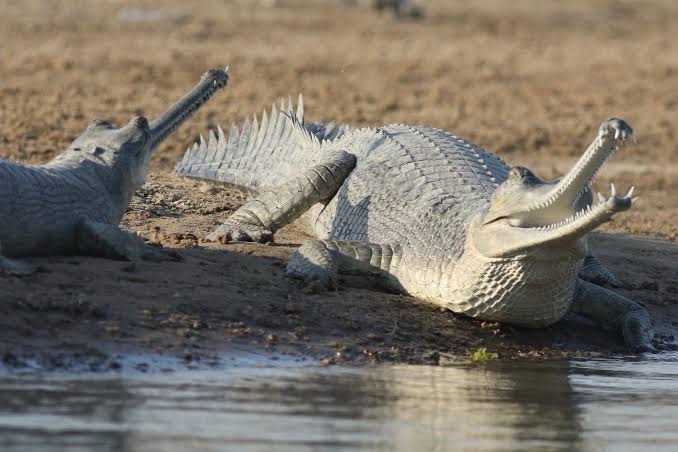
The elegance of the gharial begins with its extraordinarily long and narrow snout, a fascinating adaptation for its aquatic lifestyle. This snout is not just an aesthetic tool; it allows the gharial to hunt efficiently, gliding smoothly through the water while snapping up fish with precision. With over 100 sharp teeth, the gharial is a formidable predator in the winding rivers of South Asia.
The gharial’s scaly skin is no less intriguing. Thick and resilient, it provides armor against predators and harsh environmental conditions. These scales also play a vital role in thermal regulation, allowing the gharial to absorb the sun’s heat when resting on riverbanks, a crucial behavior for a cold-blooded reptile.
Adapted to submerged life, the gharial has robust lungs and a remarkable ability to stay underwater for long periods. The position of its nostrils at the top of its snout facilitates breathing even when the rest of its body remains submerged. This way, they can discreetly observe their prey or predators that threaten them.
The long, flattened tail is the gharial’s propelling engine, designed to glide swiftly and agilely through river currents. Its legs, though small and slender, complete the set of adaptations for aquatic success. They help the gharial maneuver gracefully, both in the water and when resting on the banks.
These anatomical wonders of the gharial exemplify the complex evolutionary adaptations necessary to thrive in the rivers of India and Pakistan, harmonizing its exquisite body design with the demands of a challenging aquatic habitat. Explore more about aquatic adaptations in Biguatinga: The Fascinating Bird of Brazilian Waters.
The Habitat of the Gharial
On the banks of the majestic rivers of the Indian subcontinent, gharials find their sanctuary. These majestic reptiles predominantly inhabit the slow-moving and deep waters of the Ganges, Brahmaputra, and in some regions of the Indus in Pakistan. These rivers not only shelter gharials but also a rich tapestry of aquatic life.
The wide diversity of fish present in these turbulent waters is fundamental to the survival of gharials. Their slender jaws are perfectly adapted to capture their aquatic prey, a focal point that further explores feeding behavior and its impact on the river ecosystem.
The sandy beds and sandbanks provide ideal locations for gharial reproduction. Here, females carefully dig holes to lay their eggs, relying on the sun’s heat to incubate the next generation. These banks are also of extreme importance for species like the Biguatinga, which share and coexist in these environments.
It is essential to maintain the natural flow of these rivers to ensure that gharials have enough water to move freely. Cases of pollution and alterations in the river course, due to human intervention, severely threaten their habitat. Preserving these regions is not only vital for gharials but also for the inherent biodiversity that thrives along their banks.
Behavior and Feeding
The gharial, with its long and narrow snout, is perfectly adapted to glide through the winding currents of the rivers. Silent and agile, it patiently stalks its prey beneath the surface, its nostrils and eyes positioned to track subtle movements. The gharial’s diet is predominantly composed of fish, making it a specialized aquatic predator. Its jaws filled with sharp teeth function as an infallible trap, capturing fish in the blink of an eye.
In its natural environment, the gharial not only competes for food but also plays a critical role in controlling fish populations. This ecological balance benefits countless other aquatic species, keeping habitats healthy and thriving.
Behaviorally, gharials are relatively solitary creatures. Except during the mating season, each occupies its territory, where it can hunt and rest. This solitary nature, however, does not mean a lack of interaction. During the breeding season, their elegant synchrony is observed as males compete for attention, vibrating the water with their pronounced heads.
The gharial’s impact on ecosystems goes beyond simple fish predation. The presence of its eggs, carefully protected in sandbanks, nourishes not only the next generation of gharials but also provides essential nutrients that enrich the soil, benefiting the entire river ecosystem.
The fruits of this harmonious interaction are evident. Contrasting with the discreet presence of the gharial, the extraordinary aquatic diversity flourishes around it. Each segment of this complex ecosystem depends mutually, much like in a delicate natural embroidery. Evidently, the gharial is more than just a predator; it is a cornerstone upon which part of the vitality of its habitat is sustained.
Threats and Challenges
The majestic presence of the gharial along the banks of Southeast Asian rivers is threatened by various interrelated factors. Habitat loss, driven by the uncontrolled advance of human activities, has drastically reduced the areas accessible to these magnificent reptiles. The constant conversion of land for agriculture and urban development destabilizes the riverbanks where gharials inhabit and reproduce.
The rivers, once flowing clear, are now burdened with the toll of pollution. Industrial and agricultural waste poured into the waters destroy delicate aquatic ecosystems. The impact is not only on habitat but also on prey availability, directly harming the gharial’s livelihood. This environmental degradation affects the entire food chain, contributing to the gradual decline of biodiversity.
A third challenge comes in the form of overfishing. Fishing nets are a deadly trap for gharials, often caught accidentally. The reduction of fish populations, due to predatory fishing, leaves gharials in a constant struggle for survival. This cascading effect further weakens the resilience of the river ecosystems where the gharial plays a crucial role as a top predator.
These challenges culminate in a desperate situation, where the gharial faces a triple threat: habitat loss, poisoning of its environment, and food scarcity. Only with intense conservation efforts and international collaboration, as we will discuss next, will it be possible to reverse this declining trajectory. The future of gharials and the health of their habitats depend on our ability to address these challenges with urgency and creativity.
Conservation Efforts
Gharials, known for their long and narrow snouts, are in grave danger of extinction. The primary goal of conservation efforts is to restore their natural habitats. Reforestation is an essential strategy, replanting native trees and plants along the riverbanks where they live. These projects help maintain the environment necessary for their survival, promoting a healthy balance in the ecosystem.
Monitoring the status of gharial populations is critical for their future. Dedicated teams conduct regular patrols, watching over the natural habitats of these reptiles. These vigilant patrols ensure that nesting sites are not disturbed by human intrusions or predators. In addition to immediate protection, the patrols provide valuable data, analyzing changes in populations over time.
Community education is another important pillar. Educational programs aim to raise awareness among local communities about the importance of the gharial to river ecosystems. Teaching harmonious coexistence can transform residents into gharial advocates. These programs often include hands-on activities, such as mass planting of riparian vegetation, allowing the community to see the positive impact of their actions.
These collaborative efforts are not isolated in India, where most gharials live. They connect to global conservation initiatives that also focus on similar endangered species. In many ways, the critical work to protect gharials reflects the effort behind the protection of other incredible animals like the rhinoceros. Both need safe habitats and informed societies to thrive. The continuity of these programs is vital, enhancing how we protect the most vulnerable natural treasures of our planet.
Conclusions…
The gharial, with its unique adaptation and vital ecological role, is threatened by human activity. The preservation of this rare crocodile is essential to maintaining the balance of aquatic ecosystems. Awareness and conservation actions are crucial to ensuring the survival of the gharial and its habitat.
Did You Know?
What is a gharial?
The gharial is a species of crocodile characterized by its long snout and feeding habits that focus on fish, making it a unique creature among its relatives.
Where does the gharial live?
The gharial is primarily found in the rivers of India, Nepal, and Pakistan, preferring clean rivers with strong currents, where there is an abundance of fish.
What are the main threats to the gharial?
The main threats to the gharial include habitat loss due to dam construction, pollution, and overfishing, which harms its feeding.
How is gharial conservation carried out?
Gharial conservation efforts include establishing protected areas, captive breeding programs, and awareness campaigns about the importance of this crocodile.
What is the ecological importance of the gharial?
The gharial plays a vital role in maintaining the ecological balance of rivers, controlling fish populations and helping to energize the aquatic ecosystem.