Cone Snail: A Venomous Mollusk with Potent Venom
The cone snail, a fascinating creature of the oceans, possesses a potent venom that evokes curiosity and fear. This article explores its characteristics, habitat, dangers, and the biology behind its venom, revealing the secrets that make this mollusk so unique.
Wonders and Mysteries of the Cone Snail
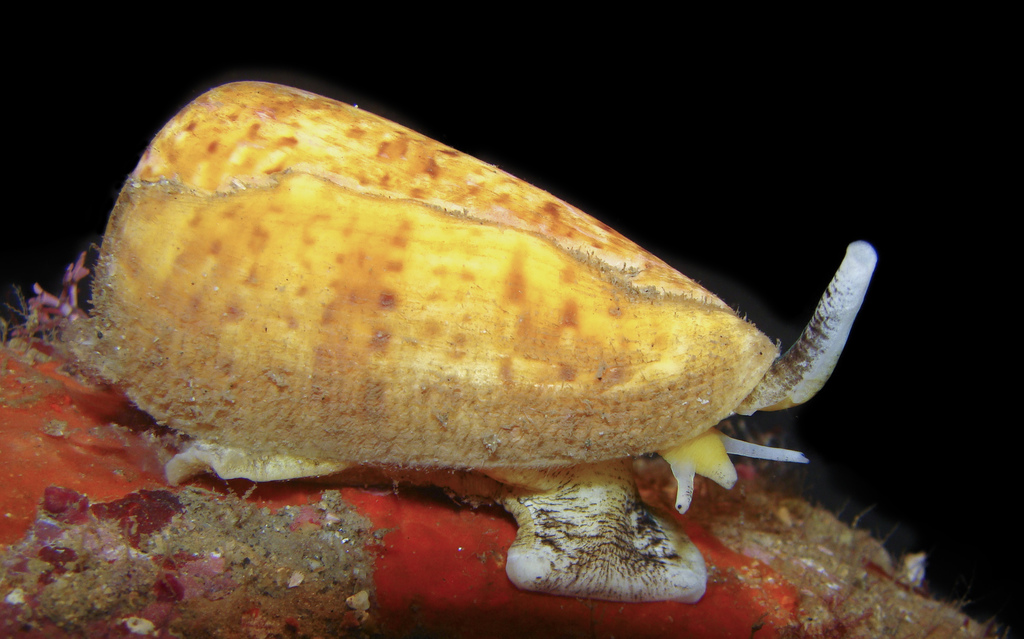
In gentle waves, the cone snail emerges as one of the most intriguing specters of the ocean. Its shell, a true spectacle of nature, shines in a vibrant palette of colors. With hues ranging from gold to deep blue, these mollusks not only enchant the eyes but also serve as camouflage in their marine habitats. In this tapestry of colors, each pattern is not by chance; it is an evolutionary trait that reflects extraordinary adaptation to the marine environment.
Cone snails are masters of disguise, using their colors to blend into the coral background and seaweed. This camouflage pattern protects them from predators and potential threats. But it is not just their appearance that captivates; their behavior is equally fascinating. They are excellent hunters, using their proboscis to inspect their surroundings. With impressive precision, they capture their prey, which ranges from small fish to other mollusks.
Cone snails also exhibit intriguing territorial behavior. During the day, they tend to hide among the rocks, avoiding direct light. As night falls, a new activity emerges. These mollusks actively explore, patrolling their territory in search of food. Their life cycle and feeding habits show a complexity that often goes unnoticed.
This dynamic between colors, behavior, and adaptability of cone snails offers a charming glimpse into marine biodiversity. For more about fascinating creatures, discover hunting tactics in nature, revealing the intricate world of predation in the animal kingdom.
The Lethal Venom
The cone snail is undoubtedly one of the most fascinating and feared creatures of the oceans. Its venom, a complex mixture of neurotoxins, is a true miracle of evolution. Each drop has the ability to paralyze a prey instantly. The toxins act quickly, binding to sodium channels in nerve cells, blocking the transmission of electrical impulses. This results in effective immobilization of fish and invertebrates that become their prey. Some studies have identified over 100 bioactive compounds in the venom of the cone snail, which have attracted the attention of scientists worldwide. Among them, conotoxins are the most notable. These molecules have the potential to serve as a basis for new drugs, providing hope for treatments of neurological diseases in humans. However, the potency of this venom should not be underestimated. A single cone snail can incapacitate a human in minutes. Symptoms include severe pain, muscle paralysis, and, in extreme cases, can lead to death if there is no prompt medical attention. Therefore, respect for this mollusk is essential. The cone snail lives in marine environments rich in biodiversity. As it traverses them, it plays a crucial role in the balance of the ecosystem, highlighting how a lethal venom can also have a positive role in the natural world. To better understand the fascinating interaction of this mollusk with its habitat, explore other marine animals that share these environments and the impact they have on them.
Habitat and Distribution
Cone snails inhabit a wide range of marine environments, preferring to reside in vibrant coral reefs and shallow coastal areas. These reefs, true oases of biodiversity, provide shelter and food. Among the rocks and crevices, these mollusks find an ideal habitat for their survival.
These snails are often found in tropical and subtropical regions. Their geographical distribution is vast, covering oceans such as the Pacific and Indian. In some areas, the diversity of cone snail species is impressive. For example, the waters of Southeast Asia harbor a rich variety of cone snails.
Moreover, they tend to live in sandy or muddy substrates. These locations offer a conducive environment for their predatory activities. Cone snails camouflage themselves among shells and corals, patiently waiting for prey to arrive.
Unfortunately, the destruction of coral reefs and pollution severely affect their habitats. The degradation of coastal zones results in a decline in cone snail populations, threatening their presence in marine ecosystems. Therefore, it is crucial to understand the importance of these habitats for the preservation of the cone snail. The well-being of this mollusk, so admirable in its beauty and its venom, is intrinsically linked to the health of the reefs it inhabits. To explore more about marine environments and their biodiversity, see this article about the squid, which also highlights the importance of oceanic ecosystems.
The Ecological Impact
The cone snail is a vital predator in marine ecosystems. These mollusks, with their elegant shells, play a monitored role in regulating prey populations. They primarily feed on fish and other invertebrates, using potent venom to capture their meals. The predatory interactions of the cone snail stand out in the complexity of marine food webs. By controlling the number of their prey, they not only help maintain balance among species but also influence the overall health of the marine habitat. Each cone snail can have a disproportionate effect on its food selection, shaping the diversity of the ecosystem. Furthermore, the venom of the cone snail is not merely a hunting tool; it possesses properties that stimulate scientific research. These venoms can be used in medical and biotechnological applications, bringing new opportunities to understand marine biodiversity and its interactions. Cone snails nest in diverse habitats. They can be found in coral reefs and sandy bottom areas. With the loss of these habitats due to human activity, concerns arise about the impact on marine biodiversity. The extinction of predatory species like the cone snail can lead to uncontrolled increases in prey populations, altering the natural balance. Therefore, the cone snail is not just a beautiful curiosity of the marine world but a crucial partner in ecological dynamics. To better understand the diversity of marine fauna, it is worth exploring how different species, like the squid, interact in their environments.
Conservation and Care
The cone snail is a marvel of the sea, adorned with a shell that evokes the beauty of marine life. Its presence is a testament to the complexity of coastal ecosystems. However, many of these habitats are threatened by pollution and overexploitation. The conservation of the cone snail is not just a matter of admiring its intriguing beauty but also of preserving the rich biodiversity it represents. Cone snails play a vital role in marine ecosystems. They help regulate mollusk populations and maintain balance in their underwater communities. The destruction of their habitat affects not only the cone snail itself but also all other species that depend on this delicate system. Water warming and ocean acidification are additional challenges that threaten this incredibly adaptable mollusk. As global temperatures rise, many cone snails are forced to move to deeper waters, becoming vulnerable to overfishing. We urgently need to adopt effective conservation strategies. It is essential to educate communities about the value of the cone snail. Promoting environmental awareness is crucial to ensure that future generations have the chance to appreciate this unique beauty. Through the preservation of their habitats, we not only protect cone snails but also ensure a healthy ocean. The health of the oceans is undoubtedly the health of the Earth, and the cone snail is one of the keys to that health. One can read more about the importance of conservation in elephants, the gentle giants of nature, who also face similar conservation challenges.
Conclusions…
The cone snail is a wonder of nature, with a venom that can be lethal but also intriguing. Understanding its characteristics and dangers is fundamental to respecting and protecting these marine creatures and their habitat.
Did You Know?
What are venomous snails?
Venomous snails include the cone snail and the femur snail, both known for their potent venoms that can be fatal.
What is the danger of the cone snail?
The danger of the cone snail lies in its venom, which contains potent toxins that can cause paralysis and even death in humans.
What disease does the cone snail transmit?
The cone snail can transmit infections through contact with its venom, which can affect the central nervous system.
What is the most venomous snail?
The cone snail is one of the most venomous snails, famous for its potent venom and vibrant colors.
What is the difference between a snail and a slug?
The main difference is that slugs generally have more spiraled shells and inhabit terrestrial environments, while snails, like the cone snail, live in marine environments.
How to kill snails?
Killing snails can be done with methods such as traps, table salt, or specific baits, but it is important to consider the environmental impacts.