Goliath Spider, the Giant of the Amazon
The Goliath spider, the largest spider in the world, fascinates and terrifies at the same time. With its impressive size and unique characteristics, this arachnid is not only a wonder of nature but also an example of adaptation and survival in the Amazon ecosystem. Let’s explore everything about this fascinating creature.
Physical Characteristics of the Goliath Spider
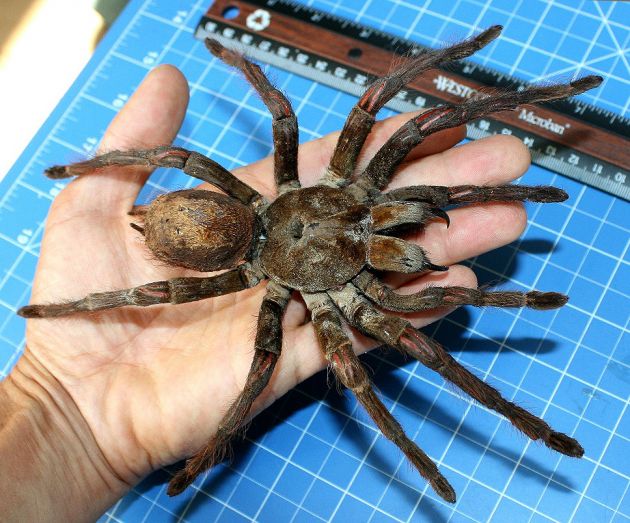
The Goliath spider, one of the largest spiders in the world, is an impressive creature. Its size can exceed 30 centimeters in wingspan, including the long legs that characterize it. These legs are thin but muscular, allowing it to move quickly in its habitat. The coloration of the spider is a spectacle in itself. Most Goliath spiders are adorned with shades of brown, beige, and even a slight touch of green. These colors are not mere coincidences; they play a crucial role in its survival. The earthy tones help the spider camouflage among leaves, trunks, and the rich vegetation of the Amazon rainforest. When it is motionless, it becomes almost invisible, a phenomenal adaptation to avoid predators and surprise its prey. The body structure of the Goliath spider is also noteworthy. Its abdomen is bulky, housing essential organs for digestion and reproduction. The long, thin legs are equipped with sensory hairs, allowing the spider to perceive vibrations and electrical discharges in the environment. This sensory capability is vital in the vibrant Amazon rainforest, where many sounds and movements occur at all times. Transforming into a true master of disguise, the Goliath spider demonstrates that size is not just dazzling; it is a weapon for survival in the eternal struggle for life in its natural habitat. For more curiosities about Amazonian fauna, check out this publication.
Habitat and Distribution
The Goliath spider, one of the largest spiders on the planet, finds its home in the vast forests of the Amazon. This unique ecosystem is characterized by a tropical, warm, and humid climate, where rain is abundant and temperatures remain high throughout the year. The high humidity and intense sunlight create a perfect environment for the lush vegetation of the region. Tall trees, dense foliage, and a rich diversity of plants provide shelter and resources for many species, including the Goliath spider. The dense vegetation is more than just a home; it is a crucial setting for the spider’s survival. The tree canopies are strategic locations, allowing the Goliath spider to build its webs, traps that resemble complex works of art. These webs not only capture prey but also serve as a means of protection against predators. The soil conditions also contribute to the habitat of the Goliath spider. The decomposition of leaves and organic matter enriches the soil, promoting a vibrant ecosystem that supports a variety of insects. These small beings, which inhabit the canopies and forest floor, become the prey of the Goliath spider. Thus, the climate and vegetation of the Amazon not only sustain the spider but also shape its interactions and habits. As we can observe, the Goliath spider is a perfect example of how life adapts extraordinarily to such a rich habitat. For a broader view of the complexities of life in the Amazon, you can read more about the discovery of new species in the region.
Behavior and Feeding
The Goliath spider, one of the largest arachnids on the planet, exhibits fascinating behavior and effective hunting strategies. This spider is predominantly nocturnal, revealing its most active habits when darkness falls over the jungle. Utilizing its imposing size, it can hide among leaves and trunks, patiently waiting for its prey to approach. With most of its diet composed of insects, the Goliath spider is not limited to that. It is capable of capturing small vertebrates, such as frogs and even small birds. Its hunting tactic involves ambushes. When a prey approaches, the spider uses its powerful jaws to capture it quickly. This predatory capability places it in a unique position in its habitat. The voracious appetite for meat also defines complex interactions with other species. Some birds and small mammals, upon sensing its presence, choose to keep their distance. Furthermore, the Goliath spider exhibits an interesting behavior of caring for its young. After reproduction, the female actively protects her eggs with almost paternal care. This reinforces its importance in the Amazon ecosystem. The Goliath spider, besides being an efficient predator, becomes prey to some species. Certain birds, such as hawks, do not hesitate to attack adult Goliath spiders. This food cycle is crucial for maintaining ecological balance. To learn more about interactions in the jungles, you can read about the **biguatinga**, a bird that is part of this rich web of life.
Myths and Curious Facts
The Goliath spider, with its impressive size, is often surrounded by myths. One of the most common myths is that it is deadly to humans. However, the truth is that its bites, although painful, rarely cause serious harm. Another popular myth is that they are aggressive. In reality, these spiders are more likely to hide than to attack. They prefer darkness and a safe shelter over direct confrontations. Among the curious facts, its hunting method stands out. The Goliath spider uses its camouflage ability to surprise prey. They blend into the environment, becoming almost invisible until the moment of attack. Interestingly, an adult can live up to 25 years, a rarity among spiders. Additionally, they can grow up to 30 centimeters, with legs that extend elegantly. Their diet is varied, ranging from insects to small amphibians and even rodents. This demonstrates their adaptability in a diverse ecosystem. Another fascinating fact is the way they care for their young. Females carry the spiderlings on their backs until they are ready to venture out on their own. This motherhood is crucial for the survival of the young. Finally, the Goliath spider can be seen as an indicator of environmental health. Its presence suggests a balanced and vibrant ecosystem. To better understand the intelligence of other arachnids, it is worth exploring the fascinating abilities of the jumping spider, revealing more about the diversity of life in this rich biodiversity.
Ecological Importance
The Goliath spider, a true giant of the animal kingdom, plays a fundamental role in the Amazon ecosystem. Its impressive size and hunting habits make it a crucial predator. As large-scale insect eaters, these spiders help regulate populations of various species. This, in turn, maintains the intricate balance of Amazonian biodiversity. If the Goliath spider is abundant, it can indicate a healthy and functional ecosystem. Besides being effective predators, these spiders also serve as prey. Many birds and small mammals feed on them, establishing a vital food web. The presence of the Goliath spider, therefore, connects various layers of life in the Amazon environment. This status as both prey and predator places the Goliath spider in a critical position within its habitat. Conserving the Goliath spider is essential not only for its uniqueness but also for its influence on ecological balance. Habitat destruction, caused by deforestation and exploitation, threatens its survival. Therefore, it is vital to implement conservation measures that protect not only the spider but the entire Amazon ecosystem. Preserving natural areas is crucial. Environmental education in local communities can promote the importance of the Goliath spider. Thus, understanding its role in the ecosystem helps foster protective attitudes. Safeguarding this species reflects the environmental health of the Amazon as a whole. To discover more about the extraordinary biodiversity of the region, you can access here.
Conclusions…
The Goliath spider is an extraordinary being of the Amazon that challenges the common perception of arachnids. With its impressive size and fascinating behavior, it plays a vital role in its ecosystem. Understanding this creature is essential to appreciate the biodiversity and beauty of our planet.
Did you know?
What is the Goliath spider?
The Goliath spider is the largest spider in the world, found in the Amazon. It is known for its surprising size, reaching up to 30 centimeters in wingspan.
Is the Goliath spider dangerous?
Although the Goliath spider has venom, it is considered weak and does not pose a significant threat to humans, causing only mild irritation in bites.
What is the habitat of the Goliath spider?
This spider primarily inhabits the tropical forests of the Amazon, where it finds shelter in tree holes and under dense foliage.
What are the physical characteristics of the Goliath spider?
The Goliath spider has long legs, a large hairy body, and usually displays a coloration that varies between brown and black, helping it to camouflage.
How does the Goliath spider feed?
It is carnivorous, feeding on insects, small birds, and even small mammals, using its hunting skills to capture its prey.