Scabies Mite: The Invisible Enemy
The scabies mite is a tiny organism that causes unimaginable discomfort in both humans and animals. This article will examine the biology of these mites, the symptoms of scabies, modes of transmission, prevention methods, and available treatments, offering a comprehensive and detailed view of this growing problem.
The Biology of the Scabies Mite
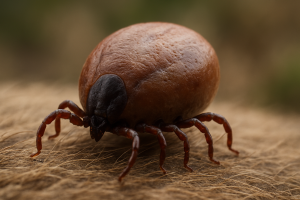
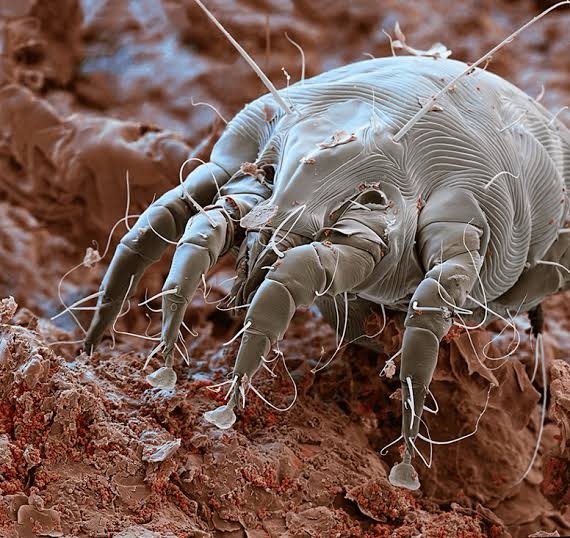
With a diminutive and almost imperceptible appearance, the scabies mite is a true survival engineer. These creatures, measuring only 0.3 to 0.4 millimeters, have an oval body and short hairs that allow them to move skillfully on the host’s skin. Their anatomical structure is remarkably adapted to parasitism. The rounded angles of their bodies facilitate penetration into the epidermis, where they settle and feed. Female mites, which are more robust than males, are responsible for reproduction, with an incredible ability to lay hundreds of eggs in just a few days.
The life cycle of these mites is impressive. After fertilization, the female digs tunnels in the skin, where she deposits her eggs. In just three to six days, the larvae emerge, starting a new cycle. These young mites transform into nymphs before becoming adults. The journey of the scabies mite, in all life stages, is marked by an intricate interaction with its host. The excavation of females in the host’s skin provokes an inflammatory reaction, generating intense itching and discomfort. This is one of the many survival strategies of the mite, which relies on the host’s response to ensure its continuity. Direct contact results in rapid transmission, consolidating its effectiveness as a parasite.
For more information on how different organisms interact with their environments, you can check out Gorillas and their Habitat, which discusses the relationship between species and habitat.
Symptoms and Diagnosis of Scabies
The scabies mite, although invisible to the naked eye, leaves evident and disturbing traces. In humans, the most common symptoms include intense itching, especially at night. This itching is caused by the body’s reaction to the presence of the mite on the skin. Skin rashes often appear as small blisters or crusts, accompanied by redness and inflammation.
For animals, the signs are similar, but manifestations may vary among different species. In dogs, for example, scabies causes hair loss and inflamed areas on the skin, often in places like the snout, ears, and paws. Cats can also present skin lesions, although they are less susceptible than dogs. The intense itching these animals experience leads to self-mutilation, causing secondary infections.
The diagnosis of scabies should not be rushed. Clinical examinations are crucial. A doctor or veterinarian examines the skin lesions, and may perform skin scrapings to identify the mites. This procedure can be uncomfortable, but it is essential for an accurate diagnosis. Additionally, observing the habits and environment of the patient can provide valuable information. An observational approach helps differentiate scabies from other similar skin conditions. Only a correct diagnosis can guide appropriate treatment. It is essential to identify scabies accurately to prevent the spread of this silent plague. To explore more about the need for skin care, you can check out this interesting article on Protecting Other Creatures of Nature.
Transmission and Contagion
The scabies mite, a tiny and cunning enemy, employs sophisticated strategies to spread. This minuscule arachnid, known for its highly contagious potential, invades the skin of its hosts, where it can reproduce and thrive. Transmission occurs primarily through direct contact. When an infected person touches another, the mite finds a new home. Once in its new host, it establishes itself and begins to dig tunnels under the skin, leaving behind itching and irritation. Physical proximity, therefore, is a determining factor in the spread of scabies.
In addition to human contact, scabies can be transmitted through personal items. Clothing, towels, bed linens, and even furniture can serve as vehicles for contagion. The scabies mite survives for brief periods outside the body, but long enough to infect another unsuspecting victim. Because of this, shared environments, such as schools and homes, can quickly become hotspots for contagion.
Other factors contributing to rapid spread include the host’s immune system. Individuals with compromised immunity, such as those with chronic illnesses, are more susceptible to contagion. Living in close-knit groups with high population density also facilitates the proliferation of scabies. Under the right circumstances, a simple touch can trigger an epidemic. Therefore, knowing the routes of transmission is crucial to understanding the nature of this mite. To learn more about interactions in the habitats of other animals, such as spiders, see the fascinating study of Spiders.
Prevention Measures
The scabies mite is an enemy that hides beneath the surface, requiring constant vigilance. To prevent it, personal hygiene is paramount. Washing hands thoroughly and regularly is an effective defense. Special attention should be given to places we frequently touch, such as doorknobs and everyday surfaces. Care for pets is also essential. Regular baths and grooming help keep these little beings away from the parasite.
A broader approach involves disinfecting environments. Bedding, towels, and clothing should be washed frequently, especially if contamination is suspected. Materials like upholstery, where mites can hide, should be cleaned regularly. The use of cleaning solutions that eliminate microorganisms is highly recommended.
Regular inspection of your home for signs of the scabies mite can help in early identification and containment of the spread. Natural products, such as essential oils, often serve as natural repellents. However, attention should not be limited to just the physical environment. Social interactions and sharing objects also require caution. Avoiding close contact with individuals showing symptoms is a prudent measure.
Thus, through this combination of personal and environmental care, we can fight against the invisible mite. For more information about the fauna that lives in harmony with our daily lives, check out the fascinating world of Bigua, which also occupies spaces in our ecosystem.
Treatments and Care
The scabies mite is a cunning creature, causing discomfort and distress. However, the battle against this invisible enemy is possible. There are various treatments, ranging from home remedies to medical interventions. Among home remedies, some people resort to mixtures of essential oils. Lavender, tea tree, and neem oil are popular. These oils have antimicrobial and anti-inflammatory properties. However, it is essential to remember that home solutions may not be as effective as medical treatment. Moreover, their use should be approached with caution.
The most reliable treatment involves prescribed medications. Lotions and creams are often used, applied to the skin to eliminate the mite and its eggs. For more severe cases, the doctor may suggest oral medications. Treatment usually lasts a week or more, depending on the severity of the infection. It is crucial to follow the medical prescription precisely. Ignoring this can lead to relapses or resistance to treatment. After starting any form of treatment, medical follow-up is vital. The doctor should evaluate the effectiveness of the treatment and adjust directions if necessary. Scabies is contagious, and its consequences go beyond the physical. The emotional and psychological impact should also be considered. Talking to a healthcare professional allows for a holistic treatment approach. In summary, managing scabies requires a combination of approaches. Both home and prescribed treatments have their value, but medical supervision is key to recovery. For information on skin health, you can explore more about the diversity of dermatological conditions.
Conclusions…
In summary, infestation by the scabies mite presents a substantial challenge, not only due to its direct effects on health but also because of its contagious nature. Understanding its characteristics and modes of prevention and treatment is essential to protect both humans and animals affected by this condition.
Did You Know?
What is the scabies mite?
The scabies mite is a microscopic parasite that causes scabies, a contagious skin condition affecting both humans and animals.
How is scabies transmitted?
Scabies is transmitted through direct contact with infected skin or through contaminated objects, such as clothing and towels.
What are the symptoms of scabies?
The main symptoms include intense itching, skin rashes, and inflammation, which can lead to secondary infections.
How to prevent scabies?
Prevention involves avoiding contact with infected people or animals and maintaining good hygiene, as well as disinfecting personal items.
What treatments are available?
Treatments include ointments and prescribed medications that eliminate the mites and help relieve symptoms.