Warty Toad: The Guardian of the Forest
The warty toad, an emblematic creature of the forests of Europe and North America, is known for its rough skin and toxic secretions. This article explores its characteristics, habitat, diet, and the role it plays in its ecosystem, highlighting the importance of this often-overlooked species.
The Warty Toad and Its Characteristics
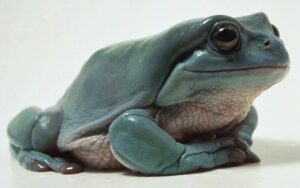
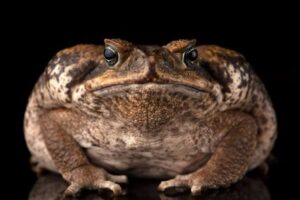
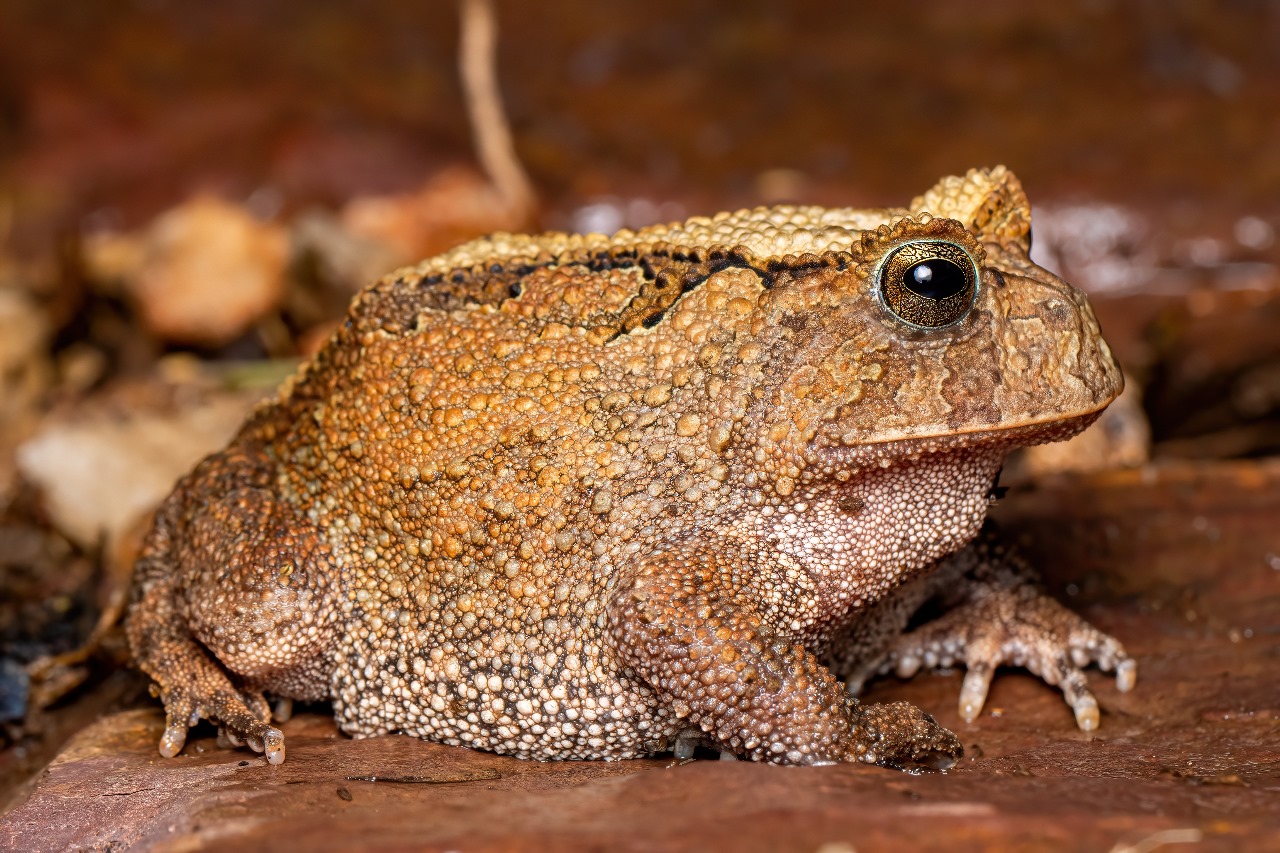
The warty toad, with its robust and impressive body, is truly a marvel of nature. This amphibian often displays a coloration that ranges from brown to olive green, allowing it to camouflage among the foliage and forest floor. Its skin, covered in warts and tubercles, is not just an aesthetic feature; it plays a vital role in its survival. These protrusions help scatter light, making the toad less visible to agile and voracious predators, such as snakes and birds of prey. Furthermore, the rough texture of its skin may indicate its adaptable habitat, which includes moist and forested environments where it can easily blend into the natural surroundings.
In terms of size, the warty toad can reach up to 10 cm in length. This size variation allows the toad to occupy different ecological niches, from insect hunting to exploring small flooded areas. Its head is broad and flattened, equipped with prominent eyes that help it detect movement, a crucial resource for hunting and avoiding predators. No less important, the coloration of the toad varies according to its age and health condition. Younger individuals may have more vibrant patterns, while adults tend to be more muted, reflecting the demands of their habitat. This impressive adaptation is a testament to evolution and the capacity for survival in a world full of challenges. To learn more about the importance of adaptations in nature, check out this fascinating analysis of other adaptable beings.
Habitat and Distribution
The warty toad, known as the guardian of the forests, is closely linked to moist and shaded environments. This amphibian prefers habitats that offer a mosaic of dense forests and swampy areas. Its breeding sites are usually ponds and streams of fresh water, rich in vegetation. During the day, it resides under leaves and decaying logs. At night, the toad takes advantage of the darkness to venture out in search of food. The geographical distribution of the warty toad covers vast areas of Western Europe and North America. Toads are primarily found in temperate forests, where humidity is constant. These environments provide the necessary moisture for their permeable skin. In Europe, they are common in countries such as France, Germany, and the United Kingdom. In North America, they inhabit forests in the United States and Canada, where mild temperatures favor their survival. Another interesting feature of this toad is its resistance to climate change and habitat degradation. Although they prefer natural environments, these toads can adapt to areas that have been slightly altered by human presence. Unfortunately, their existence is threatened by habitat loss, pollution, and climate change. The preservation of forests and wetlands is crucial for the continuity of the species. Thus, the warty toad is an indicator of a healthy ecosystem. Its presence is a sign that the environment is maintaining balance. For a more detailed analysis of the influence of ecological changes, see here.
Feeding and Behavior
The warty toad, with its rough skin and warts, is a cunning predator in the tropical forest ecosystem. Its diet is varied, primarily consisting of insects, spiders, and small invertebrates. At night, when darkness envelops the forest, this amphibian becomes active. It uses its incredible camouflage ability to blend into the environment and capture its prey. With large, attentive eyes, the warty toad carefully observes the movements around it. It is a patient hunter. Instead of attacking impulsively, it waits for the prey to come close enough. When the opportunity arises, its sticky tongue shoots out quickly, capturing the prey before it can escape. This efficient hunting technique is crucial for its survival. The feeding habits of the warty toad have a significant impact on controlling insect populations in its habitat. By feeding on a variety of invertebrates, it helps maintain ecological balance. This hunting behavior not only affects population dynamics but also contributes to the health of the soil and surrounding plants. Throughout its life, the warty toad develops adaptations that increase its efficiency in foraging. In times of scarcity, it can reduce its activity, conserving energy until new feeding opportunities arise. This strategy allows it to survive in environments that can be unpredictable. Toads, therefore, are true guardians of their ecosystems, maintaining harmony among species. For a deeper understanding of animal communication in their habitats, refer to this article on jumping spiders.
Reproduction and Life Cycle
The reproduction of the pink praying mantis is an intriguing spectacle of nature. During mating, the male impresses the female with his elaborate dances. He approaches carefully, avoiding her iconic voracity. The female, while choosing a partner, observes his displays of strength and beauty. After mating, an impressive phenomenon occurs: the practice of sexual cannibalism. Often, the female consumes the male, especially after fertilization. This interaction ensures that the female’s genetic qualities are passed on to the offspring, a strategy devoted to biology. However, not every male becomes prey. Some manage to distance themselves and escape. After mating, the female is responsible for laying the eggs. On average, she deposits between 100 and 400 eggs, which are placed in a capsule called an ootheca. This structure protects the eggs from predators and external conditions and can be found in strategic locations, such as leaves or branches. The ootheca resembles a small log, camouflaging the eggs against predators. After a few weeks, depending on environmental conditions, the hatchlings emerge. These young mantises are immediately on their own and must fend for themselves. Without parental guidance, they face a world full of dangers. Initially, they tend to be cannibalistic, feeding on their smaller siblings. Therefore, in their interactions, there is a struggle for survival. This fight for life and respect for hierarchy play a vital role in the life cycle of this fascinating insect. For more information on insect mating practices and social dynamics, see the article on squids.
The Importance of the Warty Toad in the Ecosystem
The warty toad, with its peculiar appearance and unique survival strategy, plays a fundamental role in its ecosystem. As part of an interconnected web of life, this amphibian is both a predator and prey, contributing to ecological balance. These toads help control insect populations and other arthropods. By feeding on small invertebrates, they regulate species that could, in large numbers, become pests. This control action is vital in environments where the overpopulation of certain species can lead to habitat degradation. Furthermore, the warty toad serves as food for a variety of predators, including birds, mammals, and other reptiles. Thus, they become an essential link in the food chain, transferring energy and nutrients throughout the ecosystem. The conservation of the warty toad is also vital for biodiversity. The degradation of its natural habitat, mainly due to urbanization and pollution, threatens its populations. The preservation of natural environments, such as forests and wetlands, is indispensable. These places not only protect the toads but also ensure that other species benefit from a healthy ecosystem. In summary, the warty toad represents an indicator of environmental health. Its presence indicates a balanced habitat, while its decline signals ecological problems. Caring for them is caring for nature itself. To learn more about the importance of species conservation and the impact it has on biodiversity, visit this link.
Conclusions…
The warty toad, with its characteristic skin and toxic secretions, plays a vital role in the balance of ecosystems. Its preservation is crucial for environmental health, as it acts as an insect controller and an indicator of environmental quality. It is advisable to support actions that protect its populations and habitats.
Did you know?
- What is the habitat of the warty toad?
The warty toad inhabits forests, fields, and wetlands, preferring loose soils and dense vegetation for protection. - What are the characteristics of the warty toad?
It is easily recognized by its rough and warty skin, as well as its coloration that varies between green and brown. - Is the warty toad poisonous?
Yes, its skin secretes toxic substances that serve as defense against predators. - How does the warty toad feed?
This toad primarily feeds on insects, contributing to the control of these populations in its habitat. - What is the ecological importance of the warty toad?
It is an indicator of environmental health and helps regulate insect populations, maintaining ecological balance.