Vampire Squid: The Bioluminescent Creature of the Depths
In the depths of the ocean, where sunlight barely penetrates, lives a surprising creature: the vampire squid. This fascinating mollusk not only stands out for its unique appearance but also for its intriguing biological characteristics. Let’s explore the nuances of this deep-sea inhabitant and its importance in the marine ecosystem.
What is the Vampire Squid?
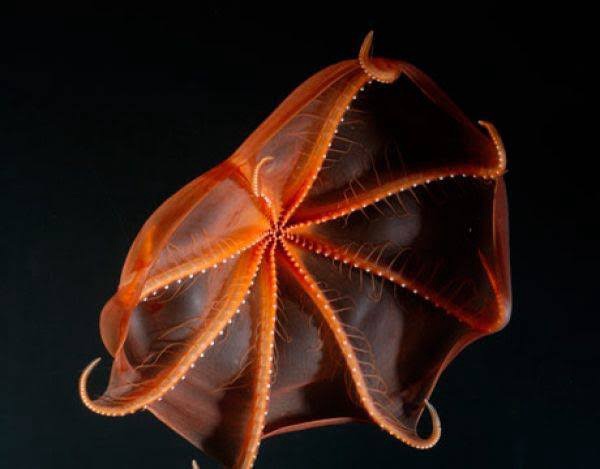
The vampire squid, a wonder of the deep aquatic world, boasts an appearance that borders on the alien. With a dark reddish hue almost imperceptible in the depths, its body is a hypnotizing combination of resilience and evolutionary adaptation. The first thing that stands out in this remarkable cephalopod is its enormous eyes, which provide sharp vision in environments with minimal light. This feature is vital for its survival in the abyssal corners of the ocean.
The name ‘vampire’ is not by chance: its membranes, or ‘webs’, connect its arms as if they were the wings of a bat, creating a threatening silhouette when extended. Despite this sinister appearance, the vampire squid is harmless and, in fact, a master of camouflage. In an environment where predators patrol incessantly, being seen can be the difference between life and death.
Bioluminescence is perhaps the most intriguing characteristic of the vampire squid. It possesses photophores along its body, allowing it to emit a bluish-green glow. This ability helps not only to confuse predators but also to attract unsuspecting prey in its direction. The dance of lights it performs is a silent spectacle in this underwater world.
To thrive at such depths, its metabolism is slow, conserving energy in an environment where resources are scarce. Equipped to withstand the crushing pressure of the deep ocean habitat, the vampire squid is a perfect example of extreme adaptation and a reminder of how little we still know about the depths of the sea.
The Habitat of the Depths
In the abyssal depths of the ocean, where sunlight does not reach, the vampire squid finds its home. This incredible cephalopod thrives in regions known as the mesopelagic zone, which extends between 600 and 1000 meters below the surface. In these depths, the pressure is overwhelming, temperatures are frigid, and darkness is absolute. The vampire squid has adapted to thrive in a hostile environment where few organisms would survive.
The geographical distribution of the vampire squid is global, spanning from the Atlantic to the Pacific and Indian Oceans. This vast distribution area coincides with environments rich in organic matter, where underwater currents transport vital nutrients. In the absence of light, bioluminescence plays a crucial role. This adaptive capacity allows for communication, hunting, and creating illusions to mislead predators.
Deep-sea marine environments are of vital importance to our planet. They constitute the largest and least explored habitat on Earth, hiding a microcosm of biodiversity that remains largely unknown to this day. The organisms inhabiting these abyssal realms are crucial for global nutrient and carbon cycles. Furthermore, exploring such habitats can reveal new forms of life and substances that challenge the current limits of scientific knowledge.
As one of the many incredible adaptations to these depths, the vampire squid exemplifies the resilience of life. Similar to how the jumping spider adapts to its environment, the mysteries of the ocean and its inhabitants continue to fascinate and challenge human understanding.
Behavior and Feeding
The vampire squid is an enigma of the ocean depths, a silent maestro in the dark world it reigns. This cephalopod, equipped with fascinating bioluminescence, is not an aggressive hunter but rather an opportunist. Unlike other marine predators, it does not actively pursue its prey. Instead, it employs a remarkable technique.
The vampire squid primarily feeds on ‘marine snow’, a mixture of organic matter and waste. It uses its long sensory filaments to collect this snow, wrapping it in sail-like structures on its arms. Once captured, the material is transported to its mouth, where it is delicately processed.
Bioluminescence plays a crucial role in the vampire squid’s defense behavior. When threatened, it releases a fierce cloud of bioluminescent mucus, confusing and disorienting, in an attempt to evade faster predators. This brilliant strategy not only offers a chance to escape but also illuminates the symbiotic relationship with bioluminescent bacteria that live in its cells.
Additionally, the vampire squid uses its luminous ability to attract small organisms, which are captured with its arms covered in adhesive structures. This light spectacle, a hypnotic dance, becomes a stunning attraction in the dark abyss of the ocean.
As a true master of shadows, this cephalopod takes advantage of the extraordinary adaptive tools that have designated it as the ‘vampire’ of the deep waters. To learn more about mysterious ocean creatures, you can explore this interesting perspective on squids and their unique characteristics.
Role in the Marine Ecosystem
The vampire squid, with its intriguing name, is a marvel of the deep ocean. A resident of dark zones, it plays a crucial role in the delicate web of the marine food chain. This cephalopod is a key piece in the ecosystem, as it consumes decomposing organic material and small organisms, recycling essential nutrients that sustain many forms of marine life.
In the inhospitable environment where it resides, the vampire squid helps control populations of small organisms, such as copepods and crustaceans. Despite its frightening appearance, it itself is preyed upon by other predators, such as fish and marine mammals, contributing to a dynamic balance in the ocean depths. Its position is strategically located in the middle of the food chain, serving as a connection between microplankton and larger predators.
In addition to its nutritional role, the vampire squid actively participates in the carbon cycle, capturing organic carbon and assisting in its transfer to deeper waters. This function helps combat significant global changes, such as the accumulation of carbon dioxide in the atmosphere, emphasizing the ecological importance of this curious cephalopod.
Preserving the vampire squid means ensuring the health of an ecosystem that extends beyond its immediate habitat. Protecting the oceans is interconnected with the survival of these bioluminescent creatures and their vital functions. Elements that may seem insignificant at first glance, like the vampire squid, are actually essential for the natural balance. Understanding its relevance helps shape more effective conservation initiatives, ensuring that these wonders of the aquatic world continue to play their role. Learn more about squids and other cephalopods by visiting the article on this fascinating group.
Threats and Conservation
The enigmatic vampire squid, a wonder of the oceans, faces a series of threats that compromise its existence. The deep waters, where this fascinating being resides, are increasingly polluted by human waste. From heavy metals to discarded plastics, pollution is altering the physical and chemical conditions of its habitat.
In addition to pollution, climate change also exerts pressure on these luminous creatures. Rising ocean temperatures interfere with marine currents and oxygen availability, critical factors for the survival of the vampire squid. Ocean acidification, a direct consequence of increased carbon dioxide absorption, further threatens the delicate balance of marine ecosystems.
To face these challenges, several conservation initiatives are underway. Conservationists and scientists are working to create protected marine areas, allowing critical habitats to be monitored and shielded from destructive human activities. There are also efforts to reduce marine pollution through cleanup campaigns and the development of technologies that minimize the release of pollutants into the oceans.
Furthermore, scientific research on the vampire squid and its ecosystem is intensifying, providing essential data for formulating effective conservation policies. Many calls for governmental and international actions are underway, aiming to establish stricter regulations on emissions and waste disposal in the ocean.
These initiatives are indispensable to ensure that the vampire squid continues to enchant the depths of the ocean, maintaining its essential role in the fabric of marine life.
Conclusions…
The vampire squid is more than a fascinating creature of the depths; its bioluminescence and its role in the marine ecosystem reveal the complexity and beauty of underwater life. Preserving marine habitats is essential to ensure the survival of species like this, a true treasure of the depths.
Did You Know?
What is the vampire squid?
The vampire squid is a species of mollusk found in the depths of the ocean, known for its unique appearance and impressive bioluminescence.
Where does the vampire squid live?
This creature inhabits the deep waters of the oceans, typically in regions where sunlight is scarce, favoring its solitary way of life.
What is the importance of the vampire squid in the ecosystem?
The vampire squid plays a crucial role in the marine food chain, serving as prey for larger predators and contributing to ecological balance.
How does the vampire squid communicate?
This species uses its bioluminescence for communication and camouflage, helping to avoid predators and attract prey.
What threats does the vampire squid face?
Threats include marine pollution, habitat destruction, and climate change, which impact ocean health and the survival of this species.