
The Charm of the Northern Cardinal
The northern cardinal, with its vibrant plumage and melodic song, captures the attention of everyone who spots it. Throughout this article, we will explore its habits, habitat, diet, and the significant role it plays in popular culture and nature.
Physical and Behavioral Description
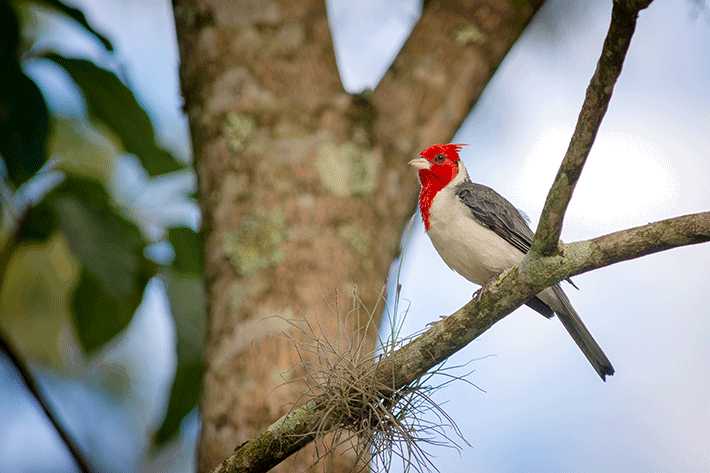
The northern cardinal is a bird with a striking and unmistakable presence. Its plumage is an explosion of vibrant colors, primarily showcasing the intense red of its body. With an impressive black mask covering its eyes, it becomes even more distinctive. The beak, robust and conical, is a reddish-orange, perfectly designed for cracking seeds and fruits. The females, on the other hand, display a softer tone, with a mix of browns and reds, which helps them camouflage in their natural habitat.
Behaviorally, cardinals are quite social and active. Frequently found in pairs or small groups, they exhibit territorial behavior, especially during the breeding season. The song of the northern cardinal is one of the most charming aspects of this species. It emits clear and varied melodies that can be easily recognized. These songs are used both to attract mates and to establish dominance over their territory.
Observing their surroundings, cardinals adapt well to different habitats. They are often seen in gardens, parks, and forests. Their primarily herbivorous diet, which includes seeds, fruits, and insects, demonstrates their versatility. While feeding, they can often be seen hopping between branches, using their agility to navigate in search of food.
In addition to their beauty, the northern cardinal also shares its environment with other fascinating birds, such as the toucan, which enchants with its unique appearance.
Habitat and Geographic Distribution
The northern cardinal, with its vibrant plumage, inhabits a variety of environments in North America. This bird prefers areas with dense vegetation, such as broadleaf forests and shrubs. It is common to find it in woodlands, urban areas, and parks, where the presence of trees and shrubs provides shelter and food. Its adaptability to human presence allows it to inhabit both native forests and urban gardens, always seeking that touch of vegetation that offers safety and nesting sites.
The American geography offers a generous home to the northern cardinal. From eastern Canada, through the northeastern United States, to southern Texas and northern Mexico, the distribution of this bird is vast. In colder regions, such as Canada, the northern cardinal tends to be more abundant in summer, migrating according to climatic changes and food availability. However, in warmer southern areas, such as Florida, the cardinal can be found year-round, enjoying a milder climate.
The presence of northern cardinals is a healthy indicator of well-preserved ecosystems. They benefit from environments with large dense shrubs where they can hide their nests and raise their young. Besides being a charming sight, their geographic distribution reflects the richness and diversity of habitats available in North America. To learn more about the habitat and behavior of fascinating birds, check out this article on interesting birds.
Feeding and Reproduction
The northern cardinal, with its splendid red plumage, is a bird that showcases a diverse diet. Their feeding includes seeds, fruits, and insects. This varied diet is essential to maintain the energy needed for their active lifestyle. During spring, cardinals are often seen foraging for grass and sunflower seeds. They also consume fruits like blackberries and strawberries, which are especially popular during the warm months. Cardinals obtain their food primarily from the ground or low shrubs. Their ability to move agilely between branches greatly facilitates the search for food. They use their strong beak to open seeds and shells, showing an incredible adaptation to their dietary needs.
It is common to see them foraging in flocks, especially during spring when food is abundant. When it comes to reproduction, the season begins in spring. Nests are often built in shrubs or low trees, providing protection for the chicks. The female is responsible for most of the nest construction, using twigs, leaves, and grass. After laying eggs, the parents take turns protecting and feeding them. The chicks are born blind and featherless. Both parents play active roles in nourishing these young birds, regurgitating food for them. After a few weeks, the chicks become independent. However, they are still defended by the parents, who help them learn feeding techniques. To learn more about the feeding habits of birds, check out this article on the Anhinga.
Cultural and Symbolic Significance
The northern cardinal, with its vibrant plumage, holds deep cultural significance in various traditions. In many cultures, it is seen as a symbol of love and spirituality. The melodious song of this bird inspires poets and artists, capturing the essence of natural beauty. Often, it is interpreted as a messenger of souls, bringing hope for connection with departed loved ones. This symbolism is reflected in various literary and artistic works. Authors and painters frequently use the northern cardinal as a symbol of rebirth and resilience. In art, its intense colors evoke feelings of passion and vibrancy. In paintings, it often appears in settings that represent lush nature, as a thread connecting humanity to the natural world. Furthermore, in some Native American traditions, the cardinal is considered a spiritual guardian. It is a being of protection and guidance during times of transition. The presence of this bird is seen as a sign that important changes are on the way. Various cultures celebrate cardinals during festivals and rituals, highlighting their role as bearers of luck and joy. Observing contemporary literature, the northern cardinal continues to capture the attention of writers, inspiring narratives that explore themes of love and connection. Over time, this bird becomes a constant in humanity’s search for meaning and beauty in the natural world. For more on how birds influence art and culture, see Toucan: the bird that enchants with its beauty.
Conservation and Ecological Importance
The northern cardinal, with its lush plumage, plays a vital role in its natural habitat. These birds, primarily found in North American regions, are important pollinators and assist in seed dispersal. Their activities create an ecological balance, helping to maintain the health of the ecosystems they inhabit. The presence of these magnificent birds is a strong indicator of environmental quality.
However, the conservation of the northern cardinal faces significant challenges. Habitat destruction due to urbanization and intensive agriculture is one of the greatest threats the species faces. Cardinals require varied environments that include dense shrubs and open areas. The loss of these spaces compromises their food sources and nesting sites.
Additionally, climate change affects migratory patterns and food availability, posing a new threat to the species. Thus, conservation efforts are essential. It is crucial to protect natural habitats and restore degraded areas. Awareness campaigns about the importance of cardinals and their habitats can help engage local communities in protecting these birds.
Monitoring programs for northern cardinal populations are also essential. This allows specialists to assess population trends and effectively develop conservation strategies. The preservation of the northern cardinal is not just about protecting a beautiful bird; it is about maintaining the integrity of the ecosystems in which we live. For more information on the importance of these birds, visit this article.
Conclusions…
The northern cardinal is more than just a colorful bird; it is a symbol of beauty in nature. Its vibrant presence enriches ecosystems and inspires cultures. By getting to know this magnificent bird better, we appreciate even more the wonders of the natural world.
Did you know?
What is the habitat of the northern cardinal?
The northern cardinal inhabits forests, urban areas, and gardens, especially in regions where it finds dense shrubs and trees.
How does the northern cardinal feed?
This bird primarily feeds on seeds, fruits, and insects. Its varied diet makes it adaptable to different environments.
Is the northern cardinal a migratory bird?
No, the northern cardinal is a permanent resident in its distribution area, not undertaking significant seasonal migrations.
What is the cultural significance of the northern cardinal?
In popular culture, the northern cardinal is often associated with symbols of love, joy, and good luck, becoming a significant figure in many traditions.
How to identify the northern cardinal?
The northern cardinal is easily recognizable by its vibrant plumage and robust beak, displaying intense red color in males and softer shades in females.