Scorpion Fly: The Harmless Predator of Humidity
The Scorpion Fly (Panorpa communis) piques curiosity due to its peculiar tail and innocuous habits. This article explores its biology, ecology, and the role it plays in humid environments, revealing the importance of this insect in our ecosystem.
Physical Characteristics of the Scorpion Fly
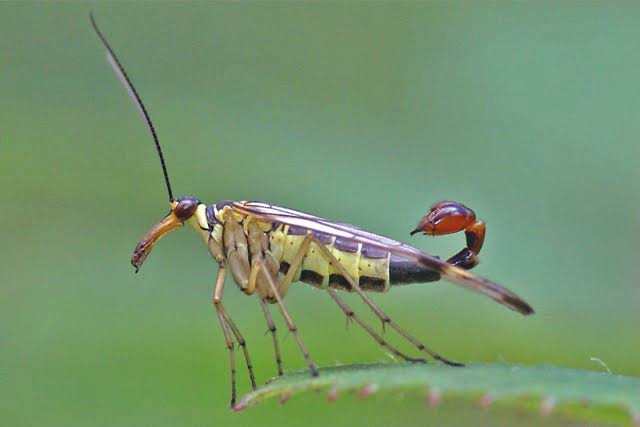
The Scorpion Fly, with its intriguing and unmistakable shapes, evokes a peculiar elegance. Its body, which can reach up to 4 centimeters in length, is adorned with a coloration that varies between amber and dark brown, providing camouflage among the humid vegetation it inhabits. The wings, membranous and transparent, stand out in a fan shape when open, revealing a delicate and almost ethereal pattern that enchants those who have the privilege of observing them in flight.
The Unique Tail
One of the most fascinating aspects of the Scorpion Fly is its long, curved tail, which easily resembles the stinger of a scorpion. Despite its threatening appearance, this evolutionary adaptation has a distinct purpose: reproduction. Males, by contrasting their tails with those of their partners, not only attract female attention but also demonstrate the robustness of their genetics. Thus, this structure is not a weapon but rather a tool of seduction that ensures the continuity of the species.
Adaptations for Survival
In addition to its reproductive characteristics, the Scorpion Fly exhibits adaptations that make it resilient in its habitat. The size and shape of its body allow it to move quickly among leaves and branches, while its coloration provides protection against predators. In this way, the Scorpion Fly reveals itself as a true master of deception, using its appearance not only in courtship but also in its survival. And as we reflect on the world around it, we find echoes in the stories of other incredible creatures that inhabit our land, such as the remarkable jumping spider. As we delve into the peculiarities of the Scorpion Fly, we can glimpse the interconnectedness of all living beings in their respective ecosystems. Now, let’s move forward and discover the Habitat and Behavior, where we will explore the environments in which these fascinating creatures are found.
Habitat and Behavior
As we dive into the underground world of the golden blind mole, we are transported to a secret and fascinating habitat. This small mammal lives in a world of tunnels, where sunlight is a distant dream, and life is governed by soil moisture and constant temperature. The golden blind moles are specialists in an environment that many would never dare to explore.
A Specialized Habitat
This underground environment, rich in nutrients, allows the mole to efficiently feed on small invertebrates, such as worms and larvae. In fact, its adaptations include a keen sense of smell and a narrow body, allowing it to navigate swiftly through the narrow tunnels it creates. Additionally, its robust claws are essential tools for digging the earth, an operation it performs with incredible dexterity.
In contrast, the presence of the mole on the surface is rare and fleeting. Although its atrophied eyes indicate a life without light, its foraging skills are impressive. These mammals occasionally emerge, perhaps attracted by the rains that make the soil teem with life. However, the lack of camouflage makes them vulnerable to predators, and thus they quickly return to their underground realm.
Tunnel Behavior
Life in the extensive tunnels is marked by intriguing social behavior. Moles often share their habitats, establishing small colonies. This coexistence contributes to a healthy underground ecosystem, with each member playing a crucial role in maintaining soil structure. In summary, the close connection between the golden blind mole and its habitat is a testament to the adaptation and resilience of underground life. As we progress, we begin to understand how the golden blind mole not only interacts with its environment but also with the biodiversity around it, a theme we will explore next.
Feeding and Ecology
Now we enter a fascinating world where the Scorpion Fly reigns as a specialist in the art of decomposition. This insect, whose intriguing appearance often goes unnoticed, is an indefatigable predator of dead insects. Its diet is, in fact, a testament to its ecological importance, as it transforms organic matter into valuable nutrients for the soil, thus helping to recycle essential elements for the environment.
The Vital Role of Decomposition
The Scorpion Fly is a crucial link in the food chain. By feeding on carrion, it not only reduces the amount of dead matter but also releases nutrients back into the soil during digestion. The impact of this process reverberates across various species, from plants to small insects. As these nutrients become available, plants, in turn, can grow healthier and more robust. This, consequently, attracts a greater diversity of pollinators and herbivores, creating a rich and interconnected cycle of life.
Interactions with Other Species
In addition to serving as a decomposer, the Scorpion Fly also becomes prey for larger predators, such as birds and other insects. In this way, it positions itself as a bridge between different trophic levels. This interaction maintains the balance of ecosystems, something essential in a world that cries out for greater sustainability. Thus, as we look more closely at the Scorpion Fly, we realize how interconnected all living beings are. Therefore, its silent actions deserve recognition and respect.
As we delve deeper into the life of this creature, we will soon explore its reproductive biology and the challenges it faces in its life cycle.
Life Cycle of the Scorpion Fly
The life of the Scorpion Fly, with its peculiar appearance, begins timidly. After mating, the female deposits her eggs in humid environments, often in soft soil or decomposing material. Each egg is a promise of novelty, a sign that life is about to manifest. In about 14 days, the eggs hatch, revealing hungry larvae that will feed on the organic material around them.
The Development of the Larvae
The larvae emerge with a voracious appetite, devouring decomposing leaves and developing rapidly. This stage is critical, not only due to the need for food but also because of the struggle against predators that inhabit the same microenvironment. On average, the larvae remain in this state for four to five weeks. During this period, they blend into the shadows, using their neutral coloration to stay out of sight.
The Goal of Adulthood
After the larval phase, the transformation into nymphs occurs, culminating in adults. This phase is marked by challenges, including competition for limited resources and the constant threat of predators. Finally, after a maturation period that can last from two to four weeks, they are ready for the reproductive cycle. The process, while incredible, is a grim reminder of how survival is often a struggle. Thus, the dynamics of the Scorpion Fly’s life cycle is a narrative of resilience and adaptation, contributing to the mystique of this harmless predator. As we move forward, we will explore the ecological importance of this fascinating creature.
Ecological Importance
In the dense and vibrant tapestry of life in a humid ecosystem, the Scorpion Fly reveals itself as a small but vital link. This elegant insect, with its peculiar appearance, plays an essential role in maintaining environmental health. As we explore its ecological importance, the interconnectedness between the Scorpion Fly and the world around it becomes evident.
Role in the Food Web
As a predator, the Scorpion Fly feeds on small organisms, such as insects and larvae, helping to control their populations. This activity is crucial, as it prevents certain species from becoming overly abundant, which could cause a collapse in local trophic networks. Furthermore, when dead, these flies provide nutrients to plants and other decomposer organisms, enriching the soil and contributing to the prosperity of local flora.
Impact on Biodiversity
The presence of the Scorpion Fly is an indicator of the health of humid habitats. These ecosystems, where biodiversity is often threatened, benefit from the actions of this insect. However, the extinction of the Scorpion Fly could lead to severe imbalances. The loss of this predator could trigger a population explosion in insects that, in turn, would affect native plants and the entire complex network that sustains life. Ultimately, the Scorpion Fly is not just a harmless predator; it is a crucial component in preserving biodiversity in humid environments. As we consider the fragility of these interactions, it becomes clear that protecting this small being should be a priority.
As we move to the next section, we will explore the intriguing physical characteristics of the lesser pichiciego, which also plays a unique role in the web of life.
Conclusions…
The Scorpion Fly (Panorpa communis) plays a crucial role in maintaining ecological balance in humid environments. Despite its unusual appearance and scorpion-like tail, it is harmless and contributes to the population control of dead insects. By understanding more about these insects, we can appreciate the complexity of wildlife around us and the value that each species brings to our ecosystems.
Did you know?
- Is the Scorpion Fly dangerous? No, the Scorpion Fly (Panorpa communis) is harmless and poses no risk to humans.
- Where does the Scorpion Fly live? It inhabits humid environments, such as forests, gardens, and areas near bodies of water.
- What does the Scorpion Fly eat? This insect primarily feeds on dead insects, aiding in decomposition and nutrient recycling.
- How to identify a Scorpion Fly? It has a curved tail resembling that of a scorpion, but it is not a threat. Its coloration varies between brown and yellow.
- Does the Scorpion Fly have predators? Yes, it can be hunted by birds and other insects that feed on its young or adult form.
- Is the Scorpion Fly useful for the environment? Yes, by feeding on dead insects, it helps maintain ecological balance and promotes decomposition.
- What is the life cycle of the Scorpion Fly? It goes through stages of egg, larva, pupa, and adult, usually in humid environments.
- Can it be found in different regions? Yes, the Scorpion Fly is found in various parts of the world, especially in temperate areas.