Owl: Mysteries and Fascinations of the Nocturnal Bird with Mesmerizing Eyes
The owl intrigues us with its unique vision and silent behavior, sparking fascination and mystery. Understanding its characteristics enriches our knowledge of wildlife.
Fascinating Anatomy: The Owl’s Body in Detail
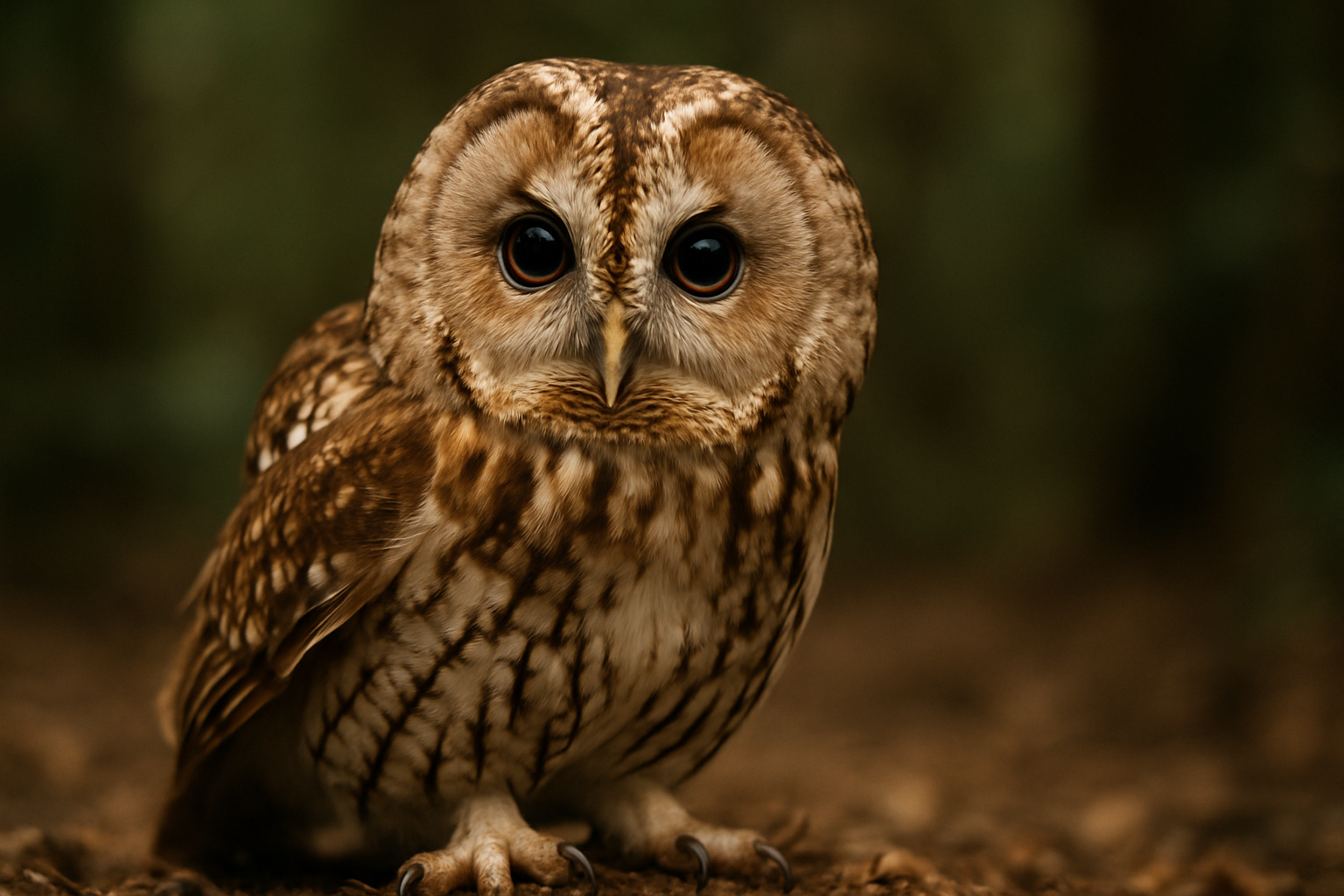
Moving from the impact of evolutionary adaptations, we now dive into the extraordinary details of the owl’s anatomy, essential elements that shape its survival strategies. First, the owl’s large, forward-facing eyes are true biological beacons in the darkness of night. Adapted to maximize light capture, these eyes don’t move in their sockets; instead, the owl can rotate its head up to 270 degrees, allowing for a panoramic view of its hunting grounds.
The curved, robust beak, specialized for capturing and dismembering prey, is another vital tool. Alongside this, its sharp, curved talons are deadly traps, perfect for grasping and holding targets with almost surgical precision. The soft plumage not only camouflages these predators in the forest shadows but also facilitates silent, lethal flight, crucial for ensuring success in hunting before the prey senses its approach.
These features give the owl remarkable abilities. The combination of piercing eyes, lethal talons, and silent flight makes it one of the most efficient nocturnal predators in the animal kingdom. Moreover, the ability to rotate its head across a wide spectrum, coupled with sharp vision, enhances its skill in locating prey in low-light conditions, establishing it as an implacable and precise hunter. However, it is the convergence of these anatomical features with its living environment that truly highlights the owl in the nocturnal ecosystem, as well discussed in our other article about owls and their unique hunting abilities.
With this deeper understanding of owl biology, we’re ready to explore, in the next chapter, their mysterious nocturnal habits and the behavior that allows them to master the night with such expertise.
Nocturnal Habits and Silent Behavior
Leaving behind the majestic display of its plumage seen in the previous chapter, we now dive into the nocturnal essence of the owl, a bird whose presence is magnified under the cloak of night. Amidst the darkness, owls emerge as masters of silence, their survival skillfully woven through evolution to maximize effectiveness in the shadows.
These birds, supreme examples of adaptation, utilize vision exceptionally tuned for low light levels. However, it is in their hearing that their most admirable means of locating and capturing prey reside. The facial discs, feathered structures around their eyes, function as acoustic parabolas, directing sounds precisely to their ears. Thus, even on moonless nights, an owl can detect and attack a rodent with remarkable precision.
The plumage of owls is not just beautiful; it’s functional. Special features on the edges of the feathers allow for nearly silent flight, a crucial advantage for approaching prey without alerting them. In summary, this form of flying not only accentuates their hunting ability but also protects them from potential predators.
The nocturnal behavior of these birds is harmoniously synchronized with their metabolic cycles. During the day, a period of rest and digestion, they become less active, conserving energy for their nighttime excursions. This daily routine is perfectly adapted to a lifestyle that requires meticulous energy and focus during the hours when the world around sleeps. Access the detailed article about the burrowing owl and discover more details about these fascinating creatures.
As dawn approaches, owls exhibit a fascinating balance between hunting, survival, and silence, setting the stage to explore in the next chapter their vital ecological role within ecosystems.
The Vital Ecological Role of Owls in Nature
Unveiling the night with their piercing eyes, owls assume a crucial role in the natural control of pests, effectively and silently protecting our ecosystems. These birds, often shrouded in a veil of mystery and admiration, are vital for ecological balance, as they are natural predators of a wide variety of rodents and insects harmful to agricultural crops and ecosystem health.
As night sentinels, owls contribute to healthier agriculture and less reliance on chemical pesticides. By feeding on pests that would otherwise consume large amounts of crops, these birds not only protect agricultural yield but also reduce the need for harmful chemical interventions in the environment, as detailed in the article about the burrowing owl.
Furthermore, the presence of owls stimulates local biodiversity. Their ability to control the population of invasive or overly abundant species helps maintain the balance among the various forms of life present in the ecosystem. This results not only in the protection of crops but also in the promotion of a healthy and diverse habitat, essential for the survival of multiple species.
In summary, owls play an irreplaceable role in our natural environments. Their ability to naturally regulate pest populations shows how interconnected the web of life is and how essential each species is for the planet’s sustainability. As we advance in this text, we will explore how these incredible birds have been perceived and represented in various cultures around the world, highlighting the extensive symbolism and deep cultural connection humanity shares with these mysterious nocturnal beings.
Owls in Culture and Popular Imagination
In silent appreciation, the owl has been present in more than just the shadowy branches of ancient forests; it has infiltrated the fabric of human imagination, adding cultural value and meaning over the centuries. Endowed with both mystical and real presence, these nocturnal birds have been symbols of wisdom and mystery since ancient times.
Since Ancient Greece, the owl is associated with wisdom, a connection derived from the goddess Athena. Legend says that an owl perched on Athena’s shoulder, enlightening her with broad vision and deep knowledge. Thus, these birds became emblems of intellectual discernment, a belief that has endured through millennia and manifested in countless artistic representations, such as in classical European sculptures and paintings.
Curiously, while the owl symbolizes wisdom in most of the West, it takes on ominous contours in other parts of the world. In various cultures, seeing or hearing an owl can be considered a harbinger of bad luck or even death. This exemplifies the polarity of its representation, reflecting the diversity of cultural interpretations these nocturnal birds have received.
The connection of owls with the spiritual world and secret knowledge also extends to indigenous spiritual practices and folklore, where they often appear as guardians of esoteric wisdom. They are portrayed as connectors between worldly and mystical knowledge, creating a bridge between heaven and earth. This duality of meanings further roots the owl’s unique position in the cultural tapestry of humanity.
As we move to the next chapter, we will reflect on the conservation efforts for owls and discover curiosities that captivate and inspire us. The continuation of our journey through the world of these fascinating birds will lead us to understand the various ways we can contribute to their protection and appreciation in an ecologically conscious context.
Conservation and Enchanting Curiosities About Owls
Coming from discussions about nocturnal biodiversity, we can now focus on a mysterious icon of twilight: the owl. These silent birds with piercing eyes are not just emblematic figures in culture and folklore; they play a fundamental role in the ecosystems they inhabit. But how well are we ensuring their survival?
Fascinating Curiosities
Owls are, without a doubt, masters of disguise. Their ability to blend into the environment is vital for hunting and protection against predators. In fact, their heads can rotate up to 270 degrees, a surprising ability that expands their field of vision. Additionally, they are natural predators in pest control, essentially contributing to the health of our natural habitats. Curiously, the ecological function of the owl goes beyond its habitat. Discover more about birds of prey that play a similar role in different regions.
Call to Action
Despite their ecological relevance, many owl species face increasing risks due to habitat loss, poisoning from rodenticides, and collisions with vehicles and human structures. Simple actions like installing nesting boxes and protecting breeding areas can make a big difference. Together, we can work to preserve these fascinating nocturnal creatures. Our dedication is not limited to observing but to protecting the integrity of all living beings, as each species, including owls, plays a crucial role in the tapestry of life on Earth. To conclude, let’s carry this awareness into the conservation of aquatic habitats, a theme that will be addressed in the next chapter.
Conclusions…
Throughout this article, we’ve explored various aspects that make the owl one of the most fascinating birds in the animal kingdom. From its striking physical characteristics, like large forward-facing eyes, a curved beak, and sharp talons, to its nocturnal habits and hunting strategies, it became clear how this bird is a fundamental piece in the balance of ecosystems. Additionally, we addressed the cultural and symbolic importance that the owl represents for various societies, revealing its age-old mystery and charm.
Our commitment is to bring a different perspective on fauna and flora, revealing curious and often unbelievable details. Nature is not just beautiful – it is ingenious, mysterious, and above all, full of secrets waiting to be discovered. Here, we aim not only to inform but also to inspire. Did you enjoy this post? Like, comment, and share so we can continue creating!
Did you know?
- What are the main physical characteristics of owls? Owls have large forward-facing eyes, a curved and strong beak, sharp talons, and soft plumage that aids in silent hunting.
- Why are owls predominantly nocturnal birds? Owls are adapted to hunt at night, with keen vision in the dark and silent flight, giving them an advantage in capturing prey.
- How do owls help balance ecosystems? They control the population of small mammals and insects, preventing overpopulation and damage to the natural environment.
- What is the symbolic meaning of owls in different cultures? In many cultures, owls symbolize wisdom, mystery, and protection, but they can also be associated with omens depending on the cultural context.
- How does owl plumage contribute to effective hunting? The soft and specially structured plumage reduces flight noise, allowing the owl to silently approach prey.
- What are the sensory adaptations of owls besides vision? Besides excellent vision, they have acute hearing with facial discs that amplify sounds, making it easier to locate prey in the dark.
- In what types of habitats are owls found? Owls occupy various habitats, from dense forests and rural areas to urban environments, adapting well to the available surroundings.
- How do owls care for their young? They build nests in protected locations, and the parents are responsible for feeding and protecting the young until they are ready to fly.