Andean Cock-of-the-rock: The Vibrant Bird of South America
The tropical forests of South America are home to a fascinating avifaunal jewel: the Andean cock-of-the-rock. This remarkable bird, with its vibrant plumage and intriguing behaviors, captures the attention of birdwatchers and nature lovers alike. Explore the biology, habitat, and challenges that this magnificent species faces in its struggle for survival.
The Magic of Its Natural Habitat
Venturing into the heart of the tropical forests of South America, we find the Andean cock-of-the-rock, a captivating bird that is not only a visual spectacle but also an essential part of its habitat. These lush forests are more than just a backdrop; they are a vibrant ecosystem pulsating with life. The Andean cock-of-the-rock predominantly resides in mountainous areas where humidity is high and vegetation is dense. The climate in these regions is characterized by abundant rainfall and mild temperatures, creating an ideal microclimate for the growth of lush flora. The forest canopy is filled with tall trees and mosses, creating a true green cathedral. Below, a profusion of plants thrives, including bromeliads and orchids, which attract various pollinators, forming a vital link in the web of life. The bright colors of the Andean cock-of-the-rock, ranging from intense orange to vibrant yellow, become even more striking against the deep green of its natural environment. It can be heard through its distinctive song, resonating among the trees, announcing its presence to other members of the species. The Andean cock-of-the-rock does not merely inhabit this forest; it is a fundamental component of this ecosystem. By perpetuating interactions between flora and fauna, the Andean cock-of-the-rock exemplifies how life is interconnected. It is a symphony of colors, sounds, and movement, illustrating the magic of nature. To learn more about the richness of birds in their natural habitats, check out this fascinating article on birds.
Characteristics and Behavior
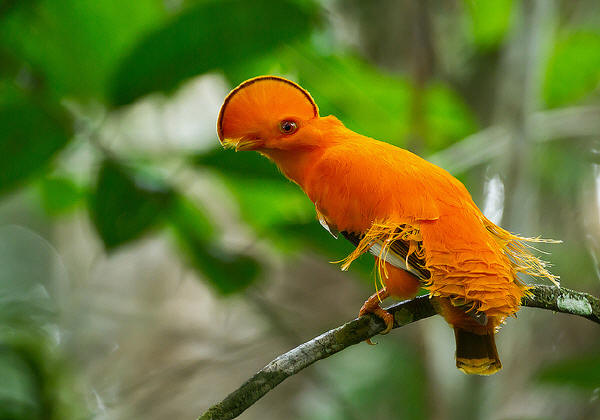
The Andean cock-of-the-rock is a true treasure of nature. Its feathers are a vibrant and unmistakable spectacle. The plumage of the males is predominantly bright orange, accented with black and gray spots. These colors are not only a visual wonder but also an essential part of their social interactions, particularly during mating. The females, while less flamboyant, display a more subdued plumage, being a deep shade of brown. This difference accentuates the importance of the male in displays during courtship.
During the mating season, the males become even more exhibitionistic. They perform a series of impressive dances and vocalizations. It is interesting to observe that the Andean cock-of-the-rock gathers in specific locations known as leks. In these spots, the males compete, each trying to outdo the other in displays that include wing movements and melodic songs. This vibrant display is not only a demonstration of strength but also a call to the females.
These birds also exhibit intriguing social behavior. They tend to form small groups, where they interact with one another, sharing information about food locations and imminent dangers. This behavior is essential for survival in the dense vegetation they inhabit. The Andean cock-of-the-rock is not only a bird of vibrant colors but also plays a crucial role in the balance of its ecosystem. To better understand the habitat and life of this magnificent bird, it is worth checking out this article on the toucan, another equally fascinating bird that, although different, also attracts attention for its colors and behaviors.
Feeding and Interaction with the Ecosystem
The Andean cock-of-the-rock is a fascinating bird, not only for its vibrant colors but also for its vital role in the ecosystem of South America. The diet of the Andean cock-of-the-rock is predominantly frugivorous, with a strong preference for high-energy fruits. This bird is particularly attracted to fruits such as berries and those from the genus Melastomataceae. These foods not only provide the necessary nutrients but also play a crucial role in seed dispersal. While feeding, the Andean cock-of-the-rock consumes the fruits and subsequently excretes the seeds in new areas, promoting the regeneration of forest vegetation. In addition to fruits, the Andean cock-of-the-rock also feeds on insects, especially during the breeding season. The extra protein is vital as it helps sustain the energy needed for mating and raising chicks.
The interaction of the Andean cock-of-the-rock with other species is equally remarkable. It often shares its habitat with smaller birds that benefit from the presence of the larger bird. For example, while the Andean cock-of-the-rock feeds, the movement of its bright plumage attracts the attention of other birds, who take the opportunity to join it in search of food. This creates an interesting example of mutualism, where various species coexist and benefit from one another. This interdependence highlights the importance of preserving these vibrant birds for the health of Andean ecosystems. Maintaining healthy forests is essential to ensure that the Andean cock-of-the-rock continues to play its vital ecological role, helping to maintain the natural balance around it.
Challenges and Conservation
The Andean cock-of-the-rock, with its vibrant splendor, faces serious challenges that threaten its existence. The primary threat is habitat loss, resulting from agricultural expansion and deforestation. The tropical forests where this bird resides are rapidly disappearing. As a result, populations of the Andean cock-of-the-rock are becoming fragmented. This hinders reproduction and decreases genetic diversity.
In addition to habitat loss, hunting and bird trafficking also pose significant threats. The Andean cock-of-the-rock is often captured due to its attractive appearance. This illegal trade not only reduces the number of birds in the wild but also disrupts the ecological balance. The pressure on the species is increasing, necessitating urgent intervention.
Fortunately, various conservation initiatives have been implemented to protect the Andean cock-of-the-rock. Non-governmental organizations and local governments are working together to raise awareness among communities about the importance of conservation. Rehabilitation programs and sustainable forest management are being developed. Protected areas have been created, allowing these birds to thrive in a safe environment.
Environmental education is a powerful tool in this process. By educating communities about the value of the Andean cock-of-the-rock and the crucial role it plays in the ecosystem, it is possible to foster a sense of responsibility. This encourages local actions to protect not only the Andean cock-of-the-rock but also the habitat it represents. To learn more about conservation efforts, check out this article.
Cultural Importance and Symbols of Beauty
The Andean cock-of-the-rock, with its vibrant plumage, is an icon of the natural beauty of South America. It holds a special place in indigenous cultures and local traditions. Many communities see this bird not only as an animal but as a manifestation of their environment. The song of the Andean cock-of-the-rock, resonating in the forests, is considered a symbol of hope and renewal.
In the Andean mountains, the Andean cock-of-the-rock is part of local legends. For indigenous people, its presence represents the connection between heaven and earth. The vibrant colors of these birds are depicted in crafts and folk art, reflecting their importance in cultural identity. It is as if it were a living palette, bringing colors to the landscape.
The beauty of the Andean cock-of-the-rock also attracts naturalists and birdwatching enthusiasts. For many, spotting this bird is a magical moment. The Andean cock-of-the-rock symbolizes the rich biodiversity of the tropical forests of South America, reminding everyone of the need to preserve these habitats.
The conservation of the Andean cock-of-the-rock is essential not only for wildlife but also for local communities that depend on this bird for their cultural identity. Recognizing the Andean cock-of-the-rock as a symbol of beauty and biodiversity reinforces the importance of preservation, allowing future generations to enjoy its splendor. For another fascinating tropical bird, discover the toucan and its incredible beauty, available at this link.
Conclusions…
The Andean cock-of-the-rock is more than just a beautiful bird; it is a symbol of biodiversity and the South American forests. Its protection is essential for maintaining ecological balance and the continuity of its species. Through preservation and respect for its habitat, we can ensure that future generations can also appreciate this magnificent bird.
Did you know?
Where does the Andean cock-of-the-rock live?
The Andean cock-of-the-rock inhabits the tropical forests of South America, particularly in countries like Brazil, Peru, and Ecuador.
What is the most beautiful bird on Earth?
While beauty is subjective, the Andean cock-of-the-rock is often considered one of the most beautiful birds due to its vivid colors and impressive plumage.
How many species of Andean cock-of-the-rock are there?
There are about six species of Andean cock-of-the-rock, each with unique characteristics and habitats.
What are the habits of the Andean cock-of-the-rock?
The Andean cock-of-the-rock is known for its elaborate courtship displays and its diet that includes fruits and insects.
What are the characteristics of the cock?
It has vibrant plumage, mainly in shades of orange and red, along with a large crest on its head that is a distinctive feature.
Why does the cock crow in the morning?
Cocks often crow at dawn to mark their territory and attract females.
At what times do cocks crow?
Besides dawn, cocks can crow at any time of day or night, especially in response to environmental stimuli.
When the cock crows at night, what does it mean?
Nighttime crowing may indicate that the cock feels threatened or is simply being provoked by sounds in the environment.
Why do cocks crow out of time?
This can occur due to factors such as artificial lighting, changes in routine, or environmental stress.