Gibellula Attenboroughii: A Marvel of Nature
The fungus Gibellula attenboroughii is one of the many treasures of biodiversity that inhabit our planet. This fascinating fungus plays a crucial role in ecosystems, interacting uniquely with the insects around it. Delving into the characteristics and importance of this organism may reveal surprising secrets of nature.
The Discovery of Gibellula Attenboroughii
In the mysterious forests of the Amazon, a true treasure was revealed to the attentive eyes of mycologists. This remarkable fungus, later named in honor of the iconic naturalist David Attenborough, emerged from the shadows to take center stage in science. The discovery occurred serendipitously during a scientific expedition aimed at cataloging the biodiversity of spores in the region.
The defining moment took place on a humid morning when the team was scouring the fallen, decaying trunks that covered the forest floor. Among lichens and mosses, the delicate structures of an unknown fungus emerged. The uniqueness of Gibellula attenboroughii resided not only in its form but also in its incredible biological properties that challenged contemporary knowledge.
The choice to honor Sir David Attenborough was almost unanimous among the scientists involved. The naturalist has inspired generations with his stories filled with admiration for nature. His journey has always been marked by devotion to the mysteries of wildlife, encouraging discoveries like this one, which illuminate the connectivity of all beings. The naming ceremony, though modest, evoked reflections on the importance of conservation and scientific exploration in areas still little known.
The scientific context of the discovery of this fungus sheds light on the complex webs of ecological interaction. Gibellula attenboroughii is part of an intricate tapestry of symbiotic and predatory interactions. Soon, we will dive into how these relationships shape life in the forest, seeking to understand their morphological and biological characteristics. Thus, the discovery transcends a simple taxonomic record, revealing a tenuous connection between science and nature, a symbol of admiration for a forest that draws closer to us with each new discovery.
Morphological and Biological Characteristics
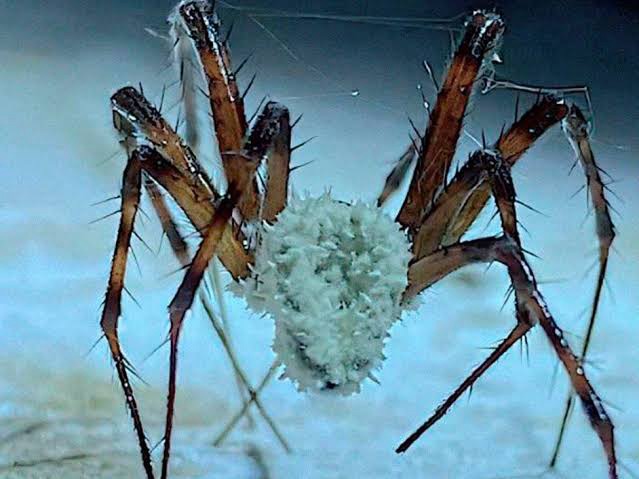
In the fascinating world of fungi, Gibellula attenboroughii stands out as a marvel of nature. With a delicate and almost translucent swelling, these fragile fungi take on an ethereal appearance when observed in the damp and shadowy understory of tropical forests. Its structure is a symphony of pale colors and textures reminiscent of delicate down. This gives it the ability to blend into its environment in an almost imperceptible way.
The ideal habitat for Gibellula attenboroughii is where moisture is omnipresent. Amid decaying leaves and deteriorating tree bark, it thrives. This fungus seems to find silent beauty in places that most of us would overlook. There, it fulfills its life cycle with precision, transitioning from fluid and nearly invisible spores to robust and intricate growth forms.
Biologically, Gibellula attenboroughii is a fascinating example of ecological adaptation. Its ability to decompose organic matter is crucial for recycling nutrients in the ecosystem. This fungus lives in a complex harmony with its environment. It becomes an integral part of the life cycle in dense forests rich in biodiversity.
The interaction of Gibellula attenboroughii with the environment is subtle. It establishes a balance between life and decomposition; a vital process that maintains the health and sustainability of the rainforest. In such a context, Gibellula attenboroughii maintains a crucial role and perpetuates nature’s silent motto: nothing is lost, everything transforms. For a broader understanding of life in these lush ecosystems, also see a new fungus discovered in the Brazilian Amazon that shares this magnificent tapestry of nature.
Interactions with Insects
Amid the lush environment of the rainforest, we find the fascinating Gibellula attenboroughii, a fungus that exhibits intricate interactions with the world of insects. Acting as a parasite, this fungus demonstrates a surprising example of the complexity of nature and its ability to shape ecosystems.
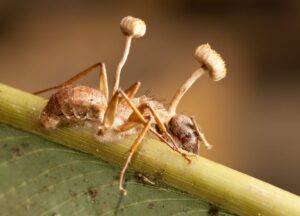
Gibellula attenboroughii has a special relationship with certain species of spiders, such as jumping spiders, where the fungus colonizes the arachnid’s body. Initially, fungal spores attach to the spider’s exoskeleton, penetrating through it and growing inside the host’s body. During this process, the fungus slowly consumes the internal tissues, an adaptation that maximizes the dispersion of its spores.
This parasitic interaction results in the host’s death but also fosters biodiversity. The fungus benefits from a continuous supply of nutrients while the spider’s body serves as a natural cultivation ground for Gibellula attenboroughii. This process, although lethal for the spider, creates opportunities for other organisms to take advantage of the change in the immediate environment. Species of scavenging insects and decomposers utilize the remains of the infected spider, continuing the cycle of life in the forest.
The presence of Gibellula attenboroughii reflects the skilled coexistence of parasitism and mutualism in nature. Its interaction with insects may seem brutal, but it highlights the intricate dance of biodiversity. Ultimately, the balance maintained by these interactions is vital for the survival of many other organisms in the ecosystem.
Ecological Importance
In the mysterious and humid forests where Gibellula attenboroughii resides, the intricate tapestry of life weaves stories of interdependence and harmony. This fungus, with its unique ability to parasitize insects, plays a vital role in controlling arthropod populations, especially spiders. By regulating the populations of its prey, the fungus maintains balance in the food chain, preventing pest outbreaks that could devastate plants and flowers.
The death of the hosts, promoted by the fungus, releases precious nutrients into the soil, enriching it and promoting the growth of new plant life. This process recycles organic matter, ensuring that nutrients return to the forest’s environmental cycle. Gibellula attenboroughii is thus part of a complex network of natural collaboration.
The rich diversity of organisms surrounding the fungus, such as other fungi, plants, and invertebrates, forms micro-habitats that amplify the biodiversity potential of these complex systems. The impact of Gibellula attenboroughii transcends simple population regulation; it facilitates biodiversity by creating space and resources for other species to thrive.
If we look closely, we can see that Gibellula attenboroughii‘s connection to its ecosystem resembles the very links of life, fragile yet resolute. This close relationship with its ecological community highlights the importance of conserving these delicate environments. In the silent and discreet beauty of this fungus, we can see the dust of a balanced forest. For more on these fascinating natural dynamics, I recommend reading about the intelligence of jumping spiders.
Conservation and the Future of Gibellula Attenboroughii
In the delicate balance of the rainforest, every organism plays a crucial role. Gibellula attenboroughii, our precious fungus, is no exception. This fungus, like many others, faces increasing challenges in today’s natural world.
The preservation of its habitat is essential. The tropical forests where Gibellula grows are threatened by deforestation and the advance of human activities. To protect this jewel, we need to adopt sustainable practices that ensure the integrity of these biodiversity-rich areas. By protecting habitats, we protect species like Gibellula attenboroughii, keeping the cycle of life intact.
It is urgent that governments and local communities work together. Conservation programs require a committed investment. We must educate about the value of fungi in maintaining healthy ecosystems. This education can promote a deeper appreciation of fungi and their intrinsic diversity.
Moreover, climate change poses a significant threat. Changes in temperature and humidity can profoundly impact fungal growth and affect their complex relationships with other organisms. Preserving fungi also means facing climate change head-on.
We must emphasize the importance of ongoing scientific research. Without a comprehensive understanding, effective protection is impossible. Scientists must document the details of the life cycle of Gibellula attenboroughii. This research will support precise and successful conservation efforts.
Finally, we must remember that each species is a thread in the vast tapestry of life. Protecting our beloved fungus requires a collective and continuous effort. Ultimately, preserving biodiversity is preserving our planet. For more information on species conservation, visit our post on New Fungi in the Amazon.
Conclusions…
The understanding of the fungus Gibellula attenboroughii invites us to reflect on the complexity and interconnectedness of all living beings. This fungus not only plays a functional role in the ecosystem but also symbolizes the beauty of biodiversity that we must preserve. Protecting such wonders ensures our own future.