Wonders of the Giant Pacific Octopus
The giant Pacific octopus is a creature that evokes fascination and mystery. With extraordinary biology, this species captivates the imagination of scientists and the general public alike. We will explore its unique characteristics, intriguing behavior, and the vital role it plays in its marine ecosystem.
The Physical Structure of the Octopus
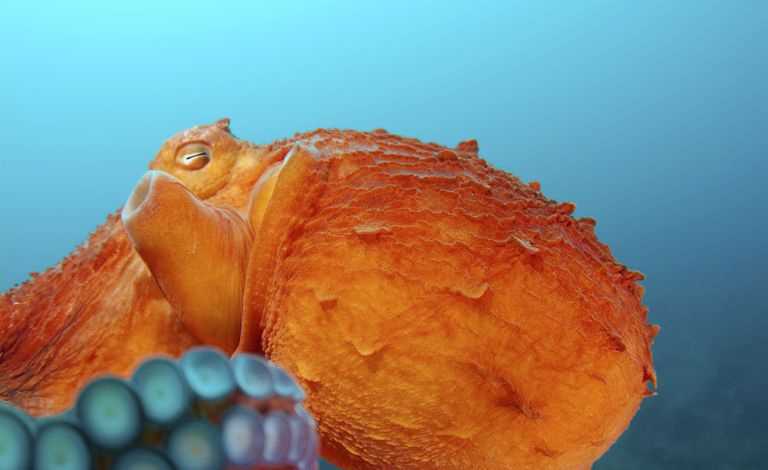
It is fascinating to observe the physical complexity of the giant Pacific octopus. This magnificent animal has eight robust tentacles, each equipped with hundreds of suckers. These suckers allow for impressive adhesion to surfaces, facilitating agile movements over rocks and corals. Each tentacle is a sensory organ, filled with neurons that detect changes in the environment. The tentacles move with grace and precision, allowing the octopus to execute clever maneuvers during hunting.
The octopus’s brain is remarkable for its structure. With over 500 million neurons, it is considered one of the most complex among invertebrates. More than two-thirds of these neurons are located in its tentacles. This means that the tentacles not only respond to commands from the brain but can also act independently, a unique feature among marine animals. This unique configuration contributes to the octopus’s ability to maneuver and grasp prey, such as crustaceans and fish.
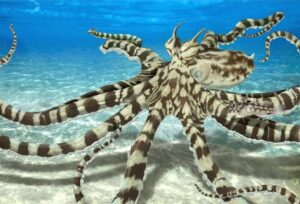
In addition to its flexible body and powerful tentacles, camouflage is an emblematic skill of the giant Pacific octopus. Its skin can change color and texture, adapting to the surrounding environment. Using cells called chromatophores, it can become almost invisible, escaping from predators and sneaking up on its prey. This ability to camouflage is one of the secrets of its survival in this vast and competitive marine habitat.
For more information about camouflage abilities in the animal kingdom, click here.
Intelligence and Behavior
The giant Pacific octopus stands out not only for its majestic size but also for its impressive intelligence. These cephalopods have complex brains and a highly developed central nervous system. Their ability to learn and solve problems is fascinating. They can open jars to reach prey, demonstrating remarkable cognitive skills with a simple movement of their tentacles.
The hunting behavior of the giant octopus is a combination of cunning and patience. Equipped with sharp vision, it hides in holes and crevices, waiting for the right moment to strike. Utilizing its camouflage, the octopus transforms its skin, confusing both predators and prey. When the prey approaches, a burst of rapid movement results in capture. The octopus uses its tentacles to hold the prey while its sharp beak disintegrates it.
The adaptability of the giant Pacific octopus makes it an effective predator. In different marine habitats, it adjusts to environmental and dietary variations. It has been observed that it can change its eating habits according to resource availability. In times of scarcity, it does not hesitate to become an opportunistic hunter, feeding on crustaceans or mollusks that are not part of its usual diet.
This ability to adapt is an example of marine resilience. The complex interactivity between the octopus and its ecosystem shows the importance of these creatures. To learn more about the incredible intelligence of cephalopods, check out this article about squids, which also reveal fascinating behaviors and adaptability.
Habitats and Ecosystems
The giant Pacific octopus, one of the most intriguing creatures of the ocean, primarily inhabits the seabeds along the North Pacific coast. It prefers resource-rich areas, such as coral reefs, rocky outcrops, and sandy bottoms. This remarkable creature exhibits stealthy behavior, using its camouflage ability to blend into its environment. The capacity to change color and texture is crucial for its survival. In search of food, such as crustaceans and fish, the octopus explores every inch of its habitat.
This magnificent cephalopod plays a vital role in marine ecosystems. By controlling prey populations, it helps maintain ecological balance. Furthermore, its interactions with other marine organisms are complex and fascinating. Predators like seals and sharks include the giant octopus in their diet. On the other hand, the octopus is also a skilled predator, using its high intelligence to hunt.
The diversity of life in the habitats of the giant Pacific octopus is impressive. The vibrant ecosystem it inhabits is home to a variety of fish species, invertebrates, and algae. This biodiversity is crucial for the health of the ocean. Each component of this ecosystem, from the smallest organism to the large predator, interacts in ways we are just beginning to understand. To explore more about the mystery and beauty of marine habitats, check out Squid, the animal that has its feet on its head.
Reproduction and Life Cycle
The life of the giant Pacific octopus is a fascinating testament to natural beauty. From the moment the egg is fertilized, this life cycle reveals complexity and uniqueness. Each female can produce up to 100,000 eggs, carefully protected in underwater caves. The female, in an act of devotion, dedicates herself to caring for these eggs, keeping them clean and oxygenated. This parental behavior is remarkable, as it deprives the mother of nourishment during this critical time, often leading her to a tragic end after the hatchlings are born.
The eggs, which take four to six months to hatch, are a charming sight. When they finally emerge, the hatchlings are fully independent. They quickly disperse into the waters, defying the odds against larger predators. The juvenile stage of life is a challenging existence. In the first months, the hatchlings will roam vast areas, foraging for small crustaceans and fish.
However, reproduction is not the only intriguing characteristic of octopuses. Their strategies include choosing safe spawning sites and selecting partners. Some males perform elaborate dances to attract females. These rituals play a vital role in the survival of the species, ensuring a strong and healthy offspring. Even in the most extreme solitude of the deep sea, the giant Pacific octopus exemplifies the delicate dance of life. The development of its offspring is a journey filled with challenges and glimmers of hope, illustrating the complexity of nature. For more on the adaptations and fascinating behaviors of animals, consult this article about squids.
The Threat and Conservation
As the giant Pacific octopus glides majestically through the cold ocean waters, threatening shadows loom. Among the countless wonders that nature offers us, this incredible mollusk is not immune to the consequences of human activity. Overfishing presents itself as one of the most significant threats, with nets indiscriminately dragging everything in their path. Adult specimens, which play a crucial role in their ecosystem, fall into traps intended for smaller fish.
Additionally, marine pollution, resulting from plastic waste and chemicals, compromises essential habitats. Microplastics infiltrate food chains, affecting not only the octopus’s prey but the octopus itself in its complex interactions within the ecosystem. Global warming also plays a nefarious role. Warmer oceans alter species distributions and deteriorate coral reefs, environments that provide shelter and protection.
In light of this alarming context, various conservation initiatives are emerging. Groups dedicated to marine protection are implementing sustainable fishing practices, ensuring that octopus populations and their habitats are preserved for future generations. Environmental monitoring projects seek to understand the populations of these creatures, allowing for appropriate interventions. Furthermore, partnerships between governments and non-governmental organizations aim to raise awareness about the importance of the giant Pacific octopus in the ecosystem.
As we look to the future, it is essential to recognize and protect these fantastic creatures. Only together can we ensure that the giant Pacific octopus continues to embrace the depths of the ocean, a testament to the beauty and complexity of marine life. For more on threats to marine species, check out this article about squids.
Conclusions…
The giant Pacific octopus reveals an underwater world filled with complexity and beauty. Its unusual biology, intelligence, and role in the ecosystem highlight the need to protect it and preserve its habitat. Understanding this creature is essential to ensuring the health of our oceans.
Did you know?
What is the size of the giant Pacific octopus?
The giant Pacific octopus can grow up to 16 feet long and weigh over 110 pounds, making it one of the largest cephalopods in the world.
How does the giant Pacific octopus camouflage?
Using special cells in its skin, called chromatophores, this octopus can change color and texture to blend into its environment and avoid predators.
What does the giant Pacific octopus eat?
This octopus is carnivorous and primarily feeds on crustaceans, fish, and other mollusks, using its remarkable hunting skills to capture its prey.
What is the habitat of the giant Pacific octopus?
Found in the waters of the North Pacific, it inhabits rocky areas and seabeds, where it can hide from predators.
How does the giant Pacific octopus reproduce?
The giant Pacific octopuses have a peculiar reproduction; the female lays thousands of eggs and dies shortly after, while the male dies shortly after fertilizing them.