The Fascinating Caracara Hawk
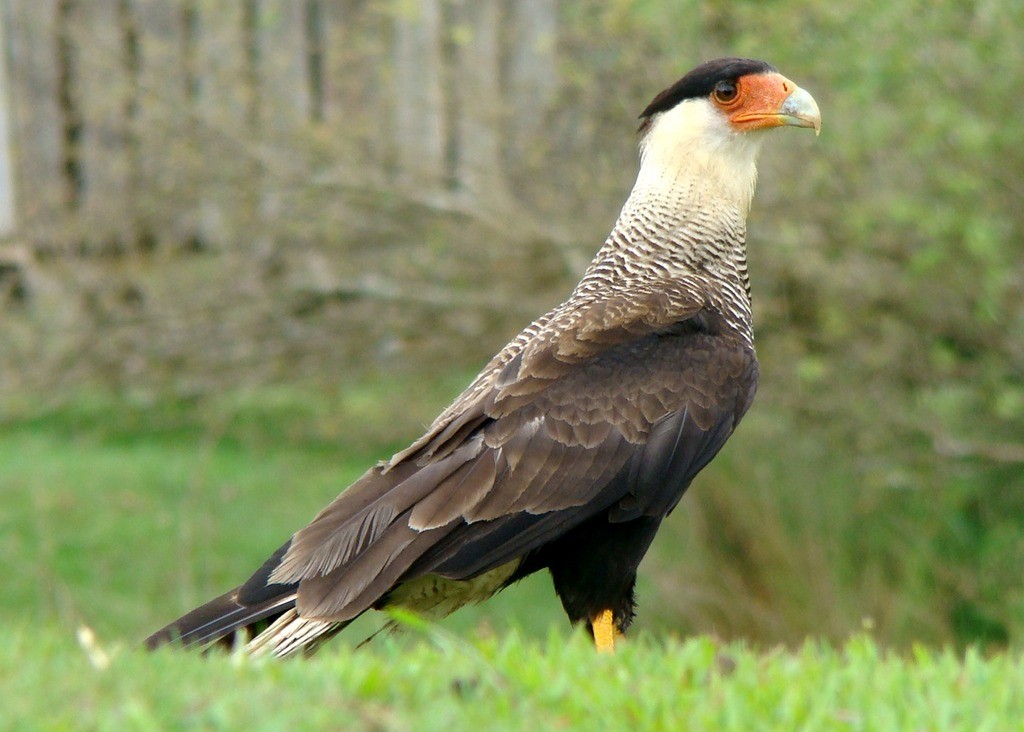
The beauty and adaptability of the caracara hawk are worthy of admiration, reflecting the diversity of Brazilian habitats. This article explores the biology, behavior, diet, and ecological importance of this impressive bird of prey. Throughout the text, we will uncover the secrets of the caracara hawk, revealing its unique place in nature.
Physical Characteristics
The red-headed woodpecker is a fascinating bird, whose appearance stands out in dense forests. Its plumage is a symphony of vibrant colors. The head is adorned with an intense red, which contrasts magnificently with the predominantly black body. The wings display a remarkable pattern of white and black, serving both for camouflage and display during mating.
This bird reaches a length of about 22 to 25 centimeters. Its compact size is ideal for moving quickly among tree trunks. The legs are robust, with sharp claws adapted for climbing vertical surfaces. The long, strong beak is a perfect tool for drilling into wood in search of insects.
The juvenile plumage exhibits a somewhat different pattern. Young woodpeckers have a less vibrant head, with more muted tones. Over time, as they mature, the colors become more vivid, reflecting the health and vitality of the bird. This color change is a clear example of evolutionary adaptation, allowing red-headed woodpeckers to integrate into their environment.
In addition to their lush plumage, these birds have highly adaptable behavior. During foraging activities, they demonstrate an incredible ability to scan the environment and locate wood infested with larvae. The plumage is not just decorative; it also plays a crucial role in the species’ survival. To explore more about the relationship between physical characteristics and survival in nature, check out this article on fascinating birds.
Hunting Behavior and Skills
The caracara hawk, with its piercing gaze and agile flight, stands out as a natural predator. This hawk is solitary but can also be found in small groups, especially during the breeding season. During these times, social interaction is fundamental. Males, while courting females, perform impressive aerial displays. They fly in circles, dive down, and occasionally present a series of characteristic vocalizations to attract attention. These rituals not only promote reproduction but also strengthen the bonds among group members.
The hunting behavior of the caracara hawk is as impressive as its social display. This diurnal predator is known for its cunning and physical conditioning. With its sharp claws and curved beak, it is capable of capturing a variety of prey. The caracara commonly spots its victims from above, using gliding flight to search for small vertebrates and invertebrates. It is also an opportunistic hunter, taking advantage of any chance that arises, whether attacking small mammals or scavenging.
When in groups, caracara hawks demonstrate cooperative behavior in some hunting situations. Although they often feed solitarily, the presence of others can trigger vigilance behavior. Thus, one hawk may alert others to the presence of predators or food discoveries. In these moments, teamwork becomes essential for their survival. Overall, the caracara hawk is a remarkable example of adaptation and resilience in the wild, with hunting skills that mirror the complexity of its social life. To learn more about the relevant nature of hawks, visit Biguatinga: Discover the fascinating bird of Brazil’s waters.
Diet and Feeding
The caracara hawk is a versatile predator, adapting to different food sources depending on what is available in its habitat. Its diet is quite varied and includes small mammals, birds, reptiles, and even insects. This dietary diversity is one of the keys to its survival in environments that can change rapidly. In its search for food, the caracara hawk employs ingenious hunting methods. It often flies at considerable heights, carefully observing the ground. When it identifies prey, it makes a quick and precise dive, using its sharp claws to capture it. This hunting technique is notable for the agility and precision that the caracara demonstrates in mid-flight.
One of the most impressive adaptations of the caracara hawk is its ability to adjust its diet according to the season and prey availability. During dry periods, for example, it may rely more on reptiles and insects. In rainy seasons, favorable for vegetation growth, small mammals become more abundant, providing good hunting opportunities. This hawk is also known for its ability to scavenge, triggering opportunistic behavior. Furthermore, it can adapt to different habitats, from open areas to forests, increasing its chances of finding food. The dietary characteristics of the caracara hawk are fascinating and exemplify how nature teaches survival. To learn more about how other birds feed, you can check out this article on toucans, which also showcase food-seeking strategies.
Reproduction and Life Cycle
The red-headed woodpecker, with its dramatic plumage, has a fascinating reproductive cycle. The mating season begins in spring when males initiate a stunning dance. They perform a spectacle, making rhythmic drumming on trees to attract females. Once partners are chosen, nest construction begins. Woodpeckers excavate cavities in trees, carefully selecting safe and high locations. The nests are made in decaying wood trunks, which provide an ideal environment for the chicks.
After the nest is built, the female lays between four to six eggs. The eggs are bright white and are incubated for about two weeks. During this period, the male takes on the responsibility of feeding the female. Once the chicks are born, both parents become dedicated caregivers. They constantly bring food, offering larvae, insects, and fruits, essential for the chicks’ growth.
The chicks remain in the nest for approximately four weeks. During this time, they rapidly develop their feathers and motor skills. Parental planning is not just about feeding but also about protection. The parents maintain constant vigilance against predators.
When the chicks are ready to leave the nest, a new phase begins. They venture outside but continue to be cared for by their parents for a while. This delicate balance of reproduction and care is essential for the species’ survival. To understand more about the fascinating world of nature, explore this topic on birds.
Ecological Importance
The red-headed woodpecker plays a crucial role in its ecosystem, acting as a balancing agent. By drilling into the bark of trees in search of insects, it helps control pest populations. This behavior not only sustains its diet but also ensures the health of the trees it feeds on.
In addition to serving as a pest controller, the red-headed woodpecker also contributes to the formation of holes in trees that other animals use as shelter. Many species, such as bats and small mammals, benefit from these shelters. Thus, its actions transform trees into microhabitat ecosystems that promote biodiversity.
The interaction with other species goes beyond competition for food. During its search for insects, the woodpecker also accidentally pollinates some plants, although this is not its primary role. The presence of this bird in an environment is often associated with a greater number of other bird species that share the habitat and feed on insects that would otherwise be controlled solely by the woodpecker.
Moreover, the foraging activity of the red-headed woodpecker has a direct impact on the decomposition of dead wood. By opening holes in rotten wood, it accelerates the decomposition process, releasing essential nutrients into the soil. This promotes a nutrient cycle that supports a wide variety of plants and organisms. Thus, the woodpecker not only feeds on what is available but also contributes to the health of the ecosystem. To learn more about how species interactions are essential for the ecosystem, check out this article on bats, which share the same role in the environment.
Conclusions…
The caracara hawk is a fascinating bird of prey that exemplifies adaptability and resilience in the diverse regions of Brazil. Its varied diet and intriguing behavior demonstrate the complexity of wildlife. Understanding this bird is an important step towards conserving its natural habitats.
Did You Know?
What is the habitat of the caracara hawk?
The caracara hawk is found in various habitats such as savannas, open fields, and urban areas, showcasing its adaptability.
What is the diet of the caracara hawk?
This hawk is omnivorous and feeds on small mammals, birds, insects, and even fruits, demonstrating a quite varied diet.
What is the behavior of the caracara hawk?
The caracara hawk is known for its hunting skills and curious behavior, often spotted hunting and exploring its territory.
Is the caracara hawk a migratory bird?
No, the caracara hawk is resident and territorial, adapting well to its environment without the need for migration.
What is the ecological role of the caracara hawk?
The caracara hawk plays an important role in controlling populations of small animals, contributing to ecological balance.